Cite
MLA
“The genetics debate after Rakhigarhi.” Hindu History, 2026, https://www.hinduhistory.in/vimarsha/aryan-migration-genetics/. Accessed .
APA
Hindu History. (2026). The genetics debate after Rakhigarhi. Retrieved , from https://www.hinduhistory.in/vimarsha/aryan-migration-genetics/
What defines it
- 01
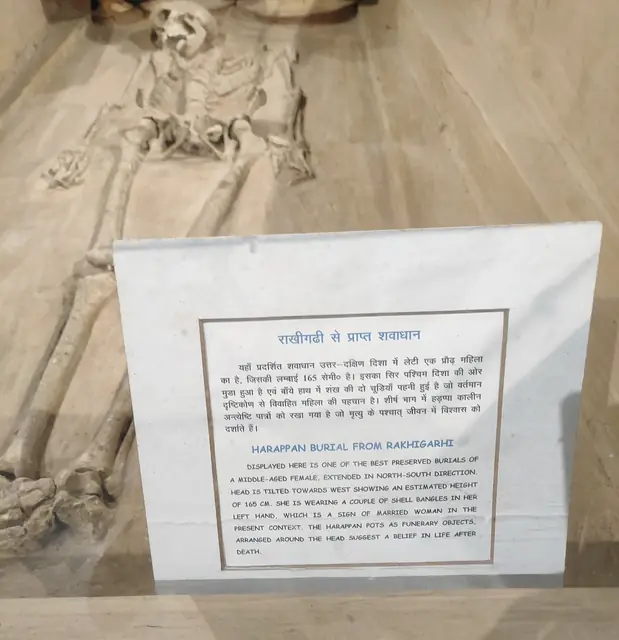
Rakhigarhi woman, c. 2500 BCE: no steppe ancestry
- 02
Her ancestry the main source of South Asians today
- 03
Steppe ancestry enters from about 2000 BCE
- 04
Up to about a fifth of ancestry in some groups today
- 05
Genes do not carry language
01The two papers
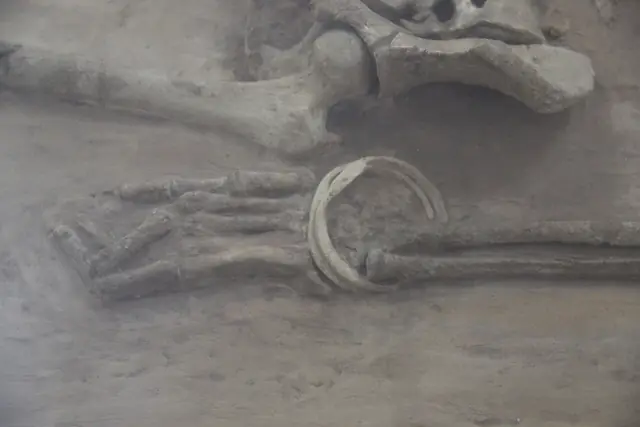
In the first week of September 2019 the journal Cell published the genome of a woman buried at Rakhigarhi in Haryana, the first ancient DNA from a Harappan city; Vasant Shinde of Deccan College was lead author. She carried no ancestry from steppe pastoralists or from Iranian farmers. Her line was a mix of ancient South Asian hunter-gatherers and an Iran-related people who had separated from the Iranian plateau before farming began, and this mix is the main ancestral source of most South Asians today. Alongside it, Science published Vagheesh Narasimhan, David Reich and colleagues on 523 ancient individuals. They found steppe-related ancestry entering South Asia from about 2000 BCE, seen in some hundred samples from the Swat valley, and present in people today at up to about a fifth of their ancestry.
02Why the same data reads two ways
The two findings do not contradict each other. A Harappan with no steppe ancestry, and steppe ancestry arriving later, fit together. The quarrel is about language and culture, and genes do not carry a language. Narasimhan himself said in a 2019 interview that there will never be direct proof, since bones cannot speak; whether the people who brought steppe ancestry also brought the language of the Rigveda, or took up the speech and rites they found, is an inference. The Rakhigarhi result rests on one individual, though the Science paper adds eleven outliers from sites in contact with the Indus cities, none with steppe ancestry. And no ancient DNA yet comes from the Ganga plain after 1000 BCE, so how the steppe share spread across India is unknown.
The positions
A steppe migration brought Indo-European speech
David Reich (Who We Are and How We Got Here, 2018), Vagheesh Narasimhan, Tony Joseph (Early Indians, 2018)
Steppe-related ancestry appears in South Asia only after about 2000 BCE, later than the Rakhigarhi woman, and its spread across Eurasia matches the spread of the Indo-European languages from Europe to India. The Science paper found that groups of traditional priestly status, custodians of the Sanskrit texts, tend, with exceptions, to have more steppe ancestry than expected. In societies without states, these scholars argue, languages spread mainly when many people moved, and a share of up to a fifth of ancestry implies a large movement, not a few travellers.
It is an inference from ancestry to language, as Narasimhan admits. The arrival window collides with the dispute over the Rigveda’s date: if the oldest hymns are older than 2000 BCE, the steppe arrival came too late to bring them. Vedic rites such as Soma and homa have no steppe precedent, and the ground shows no cultural break.
The Harappans are the ancestors; the culture is indigenous
Vasant Shinde; B. B. Lal; many Indian archaeologists
The Rakhigarhi genome shows that the builders of the cities were a South Asian people, and that their ancestry, not the steppe, is the main root of almost every Indian today. At the press conference in Delhi in September 2019, Shinde said the finding set aside the invasion and migration theories and showed the Harappans to be indigenous, untouched by outside migration. Archaeology agrees that there was no conquest and no break in material culture, and the steppe share in modern Indians is a minority in every group.
Shinde’s own co-authors, Reich and Narasimhan among them, date a steppe arrival to the second millennium BCE, and the Cell paper did not claim to rule out a later migration. Several critics in India and abroad said the press conference went beyond the papers. One genome, however important, cannot speak for a civilisation of many regions.
Out of India: the language spread outward, and earlier
Shrikant Talageri (The Rigveda and the Avesta: The Final Evidence, 2008), Koenraad Elst
These writers argue from the texts. Talageri orders the Rigveda’s books by their rishi families, places mandalas 6, 3 and 7 earliest, and reads the names shared with the Avesta and the Mitanni as belonging to the later books, so the Indo-European languages would have spread out of north-west India. On this view steppe ancestry in India is a fact about bloodlines that need not tell us which way a language moved, and an arrival after 2000 BCE, whatever it was, could not have brought hymns already being sung.
Ancient DNA so far shows ancestry moving from the steppe into South Asia, and has not found a South Asian component on the steppe or in Bronze Age Europe at the time the model needs. The case rests on a very early Rigveda date that most linguists reject, and critics say it does not reckon with the late hymns inside the family books.
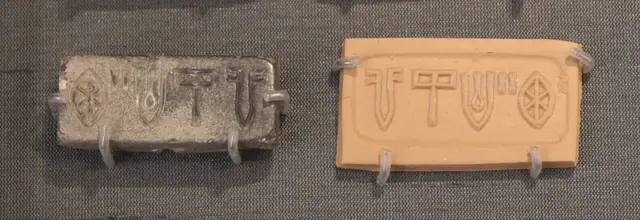
More ancient genomes, above all from the Ganga plain, from late Harappan sites and from burials such as Sinauli, dated across 2500–500 BCE. A deliberate search for South Asian ancestry in Bronze Age burials of Central Asia and the steppe. And, again, a reading of the Indus script, because only words can tie a people to a language.