Cite
MLA
“Vedanta.” Hindu History, 2026, https://www.hinduhistory.in/darshana/vedanta/. Accessed .
APA
Hindu History. (2026). Vedanta. Retrieved , from https://www.hinduhistory.in/darshana/vedanta/
What defines it
- 01
Brahman: the source, support and end of the world (1.1.2)
- 02
Prasthanatrayi: Upanishads, Gita, Brahma Sutra
- 03
Four adhyayas: samanvaya, avirodha, sadhana, phala
- 04
The open question: how jiva and world relate to Brahman
01Athato brahma-jijnasa
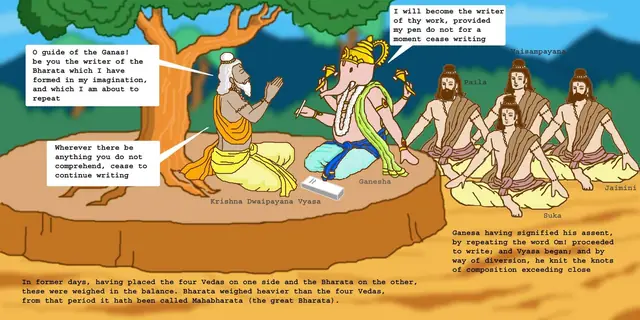
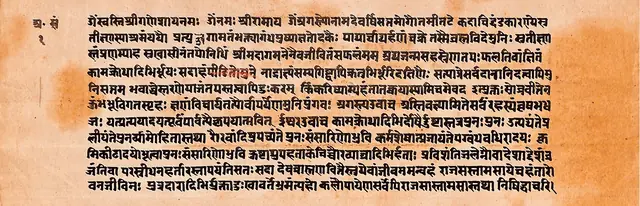
Vedanta means the end of the Veda, the Upanishads, and the darshana that reads them. Its sutra is the Brahma Sutra, also called the Vedanta Sutra or Shariraka Sutra, by Badarayana, whom tradition identifies with Maharshi Vyasa. It begins “Now, therefore, the inquiry into Brahman” (1.1.1), and defines Brahman as that from which the birth, sustenance and dissolution of this world proceed (1.1.2). Brahman is known through the shastra (1.1.3), and all the Upanishads agree in teaching it (1.1.4). The text has four adhyayas: samanvaya, harmony of the texts; avirodha, answering objections; sadhana, the means; and phala, the fruit. Different schools count between about 545 and 564 sutras.
02The three foundations
Vedanta rests on the prasthanatrayi, three starting points: the Upanishads, called shruti-prasthana; the Bhagavad Gita, smriti-prasthana; and the Brahma Sutra, nyaya-prasthana, the one that reasons. An acharya who wished to found a Vedanta school was expected to comment on all three, or at least on the Brahma Sutra. The sutras are so brief that they cannot be read without a commentary, and that is where the schools part. All agree that Brahman is the cause of the world and that knowing it frees the soul. They differ on how the jiva, the world and Ishvara relate to Brahman: as identical, as body to soul, as eternally distinct, or as different and non-different at once.
03Many bhashyas, one sutra
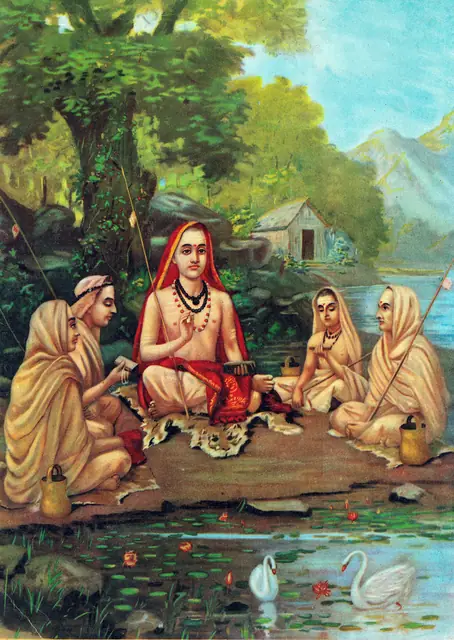
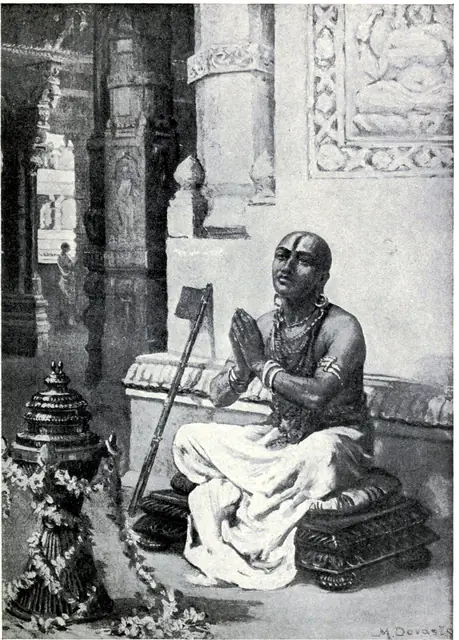
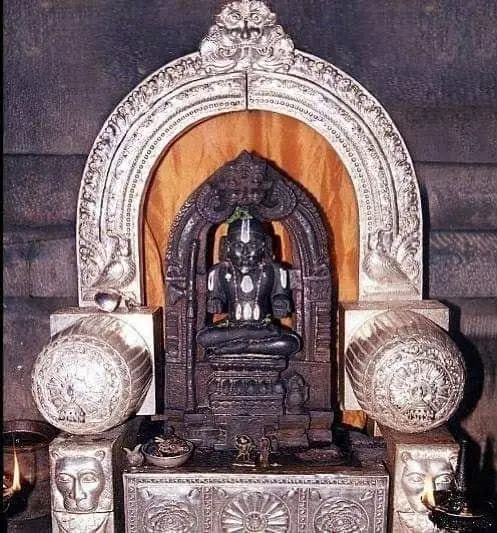
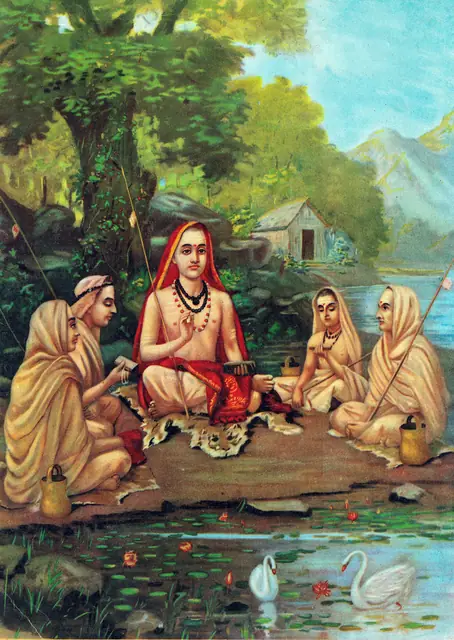
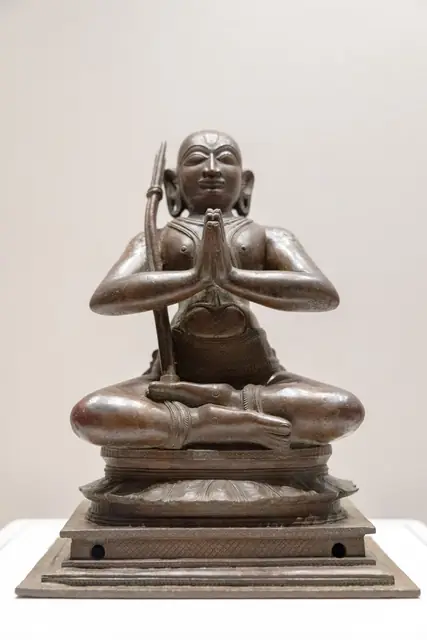
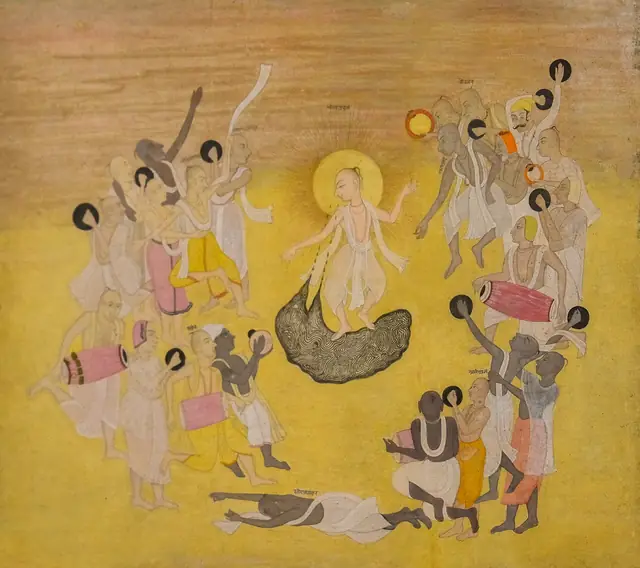
Earlier teachers such as Bodhayana, Tanka, Dramida and Bhartriprapancha are known only from quotations in later works. The oldest complete commentary that survives is Adi Shankaracharya’s, which founded Advaita. Bhaskara answered him with a bhedabheda reading. Ramanujacharya wrote the Sri Bhashya for Vishishtadvaita, Madhvacharya his Brahma Sutra Bhashya for Dvaita, Nimbarka the Vedanta Parijata Saurabha for Dvaitadvaita, Vallabhacharya the Anubhashya for Shuddhadvaita, and Baladeva Vidyabhushana the Govinda Bhashya for the followers of Chaitanya. Shaiva readings came from Shrikantha and, in Karnataka, from Shripati. In this pillar the Vedanta schools are listed under this entry as its branches.
Family tree
Great masters
In the texts
- Brahma Sutra 1.1.1–1.1.4
- The principal Upanishads
- Bhagavad Gita