Cite
MLA
“Bharatanatyam.” Hindu History, 2026, https://www.hinduhistory.in/kala/bharatanatyam/. Accessed .
APA
Hindu History. (2026). Bharatanatyam. Retrieved , from https://www.hinduhistory.in/kala/bharatanatyam/
What defines it
- 01
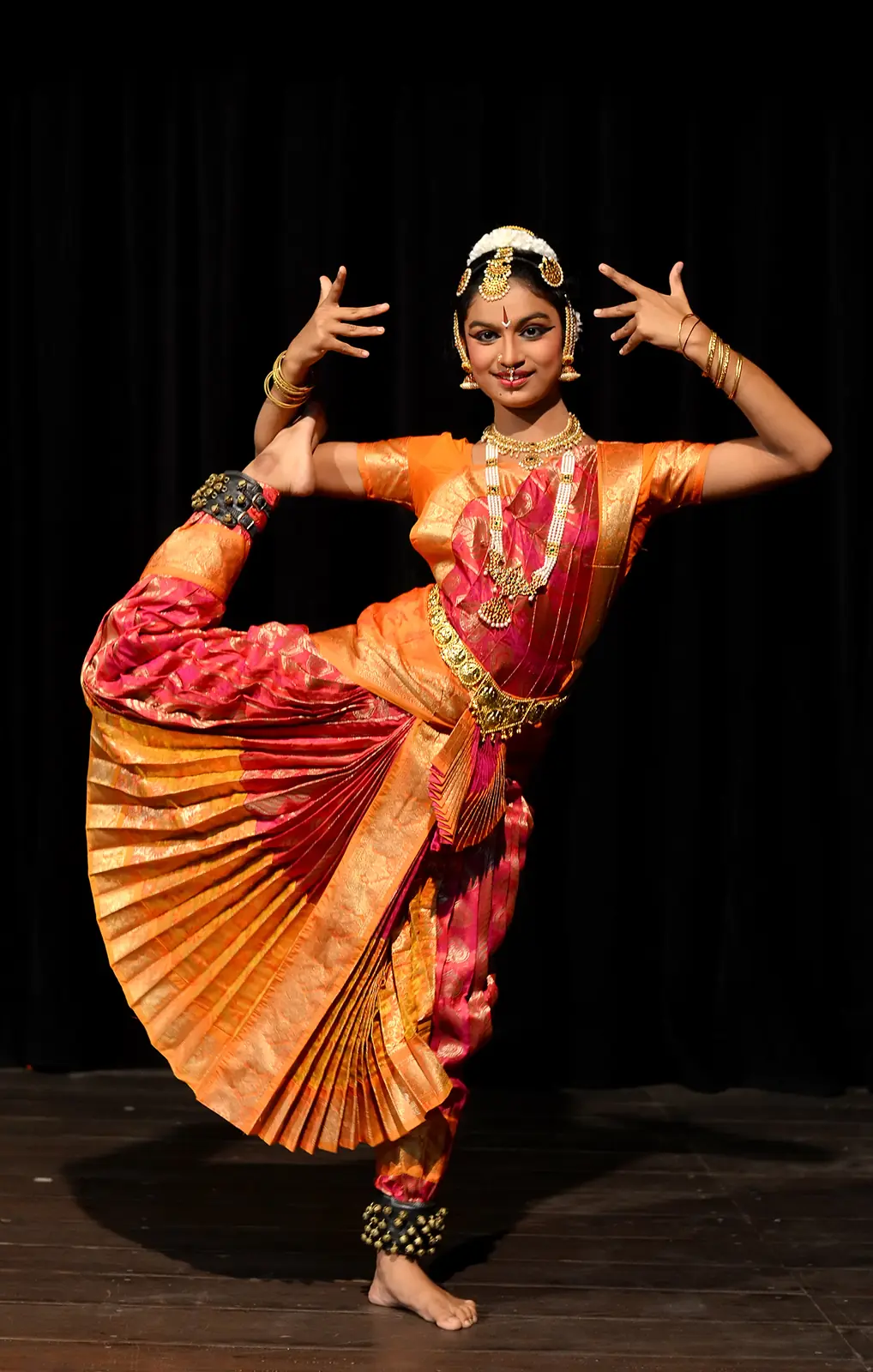
Aramandi, the half-seated stance
- 02
Adavus, the basic steps
- 03
Margam from alarippu to tillana
- 04
Nattuvanar conducting with cymbals
- 05
Hastas of the Abhinaya Darpana
01In stone and in the epics
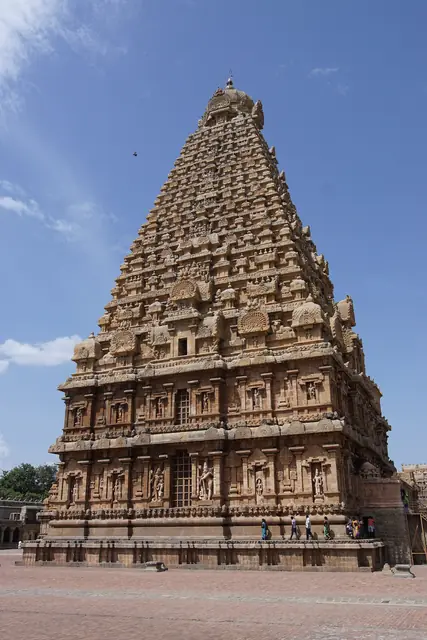
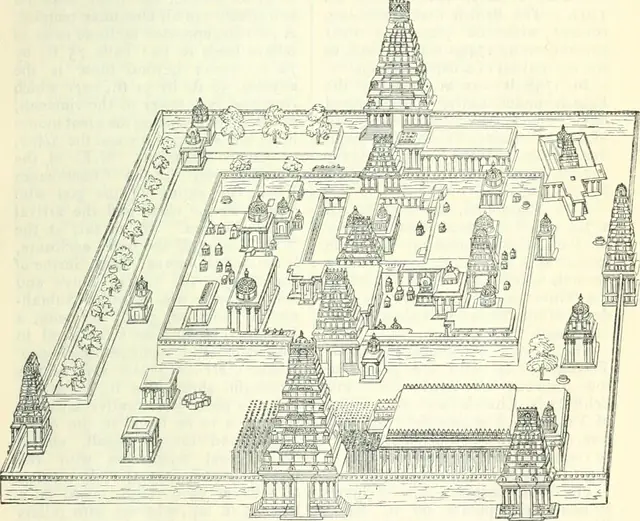
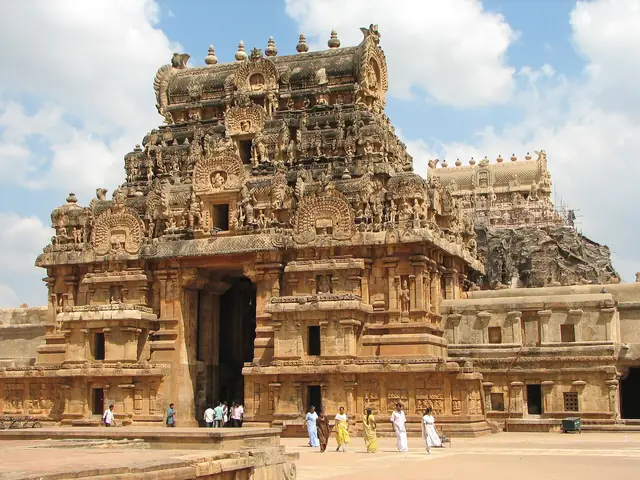
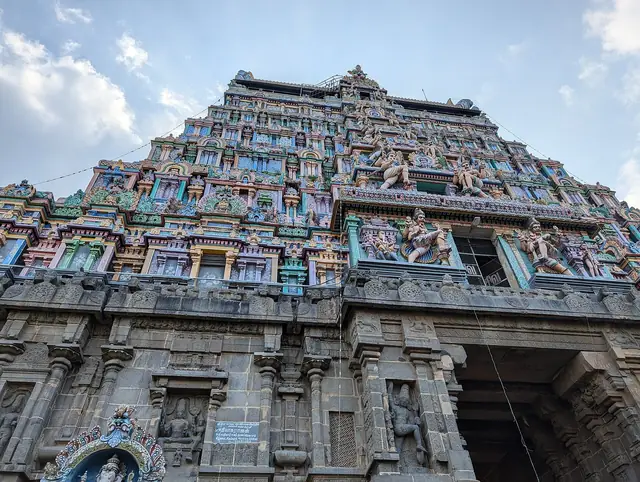
The Tamil epic Silappatikaram describes the dancer Madhavi’s debut at the Chola court in detail: the stage, the musicians, the eleven dances she knew. Rajaraja Chola carved 81 of Bharata’s 108 karanas in the Brihadeeswara temple, and in the same temple an inscription lists the dancers and musicians on its pay rolls. At Chidambaram all 108 karanas stand on the gopurams with their verses from the Natya Shastra. The dancer’s handbook is Nandikeshvara’s Abhinaya Darpana.
02The Tanjore Quartet and the margam
At the court of the Maratha king Serfoji II (r. 1798–1832) four brothers, Chinnaiah, Ponniah, Sivanandam and Vadivelu, pupils of Muthuswami Dikshitar, set the order of a recital that is still followed: alarippu, jatiswaram, shabdam, varnam, padam, javali and tillana. The varnam, the long centrepiece, alternates pure dance with abhinaya. The dancer holds the half-seated aramandi, strikes the floor in clean adavus and tells the story through hastas and the eyes.
03Revival and where to see it
By the early 20th century the temple dance was under attack and was finally banned in temples by the Madras Devadasis Act of 1947. E. Krishna Iyer championed it, Rukmini Devi Arundale learned it and in 1936 founded Kalakshetra in Chennai, and T. Balasaraswati, of a hereditary family, showed the world its abhinaya. Today watch it at the Natyanjali festival at Chidambaram on Maha Shivaratri, at the Brihadeeswara temple, or in the Chennai December season.