01The princess and the wedding
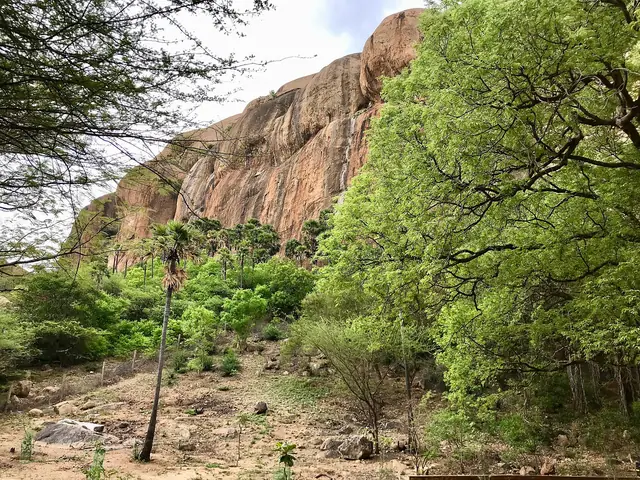
The Tiruvilaiyadal Puranam tells that Meenakshi was born from the sacrificial fire of the Pandya king Malayadhvaja with three breasts, and it was foretold that one would vanish when she met her lord. She conquered the directions and, at Kailash, saw Shiva; the third breast vanished. Shiva came to Madurai as Sundareswarar and married her, with Vishnu giving away the bride. Each April–May, at the Chithirai festival, the wedding is celebrated again, and Kallazhagar comes down from his hill to attend.
02Plunder and rebuilding
In 1311 Alauddin Khalji’s general Malik Kafur raided Madurai and the temple was stripped. From 1335 the Madurai Sultanate ruled the city until Kumara Kampana of Vijayanagara overthrew it in the 1370s; his queen Gangadevi wrote of the campaign in her Sanskrit poem Madhura Vijayam, describing the temple’s ruin and its restoration. The Nayaks of Madurai, above all Vishwanatha Nayak and Tirumala Nayak (1623–1659), then rebuilt on a vast scale: gopurams, the Golden Lotus tank, and the Hall of a Thousand Pillars, built in 1569 by the minister Ariyanatha Mudaliar.
03Fourteen gopurams
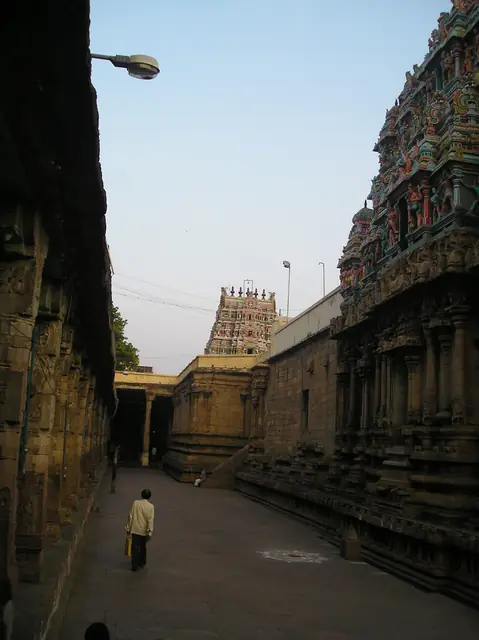
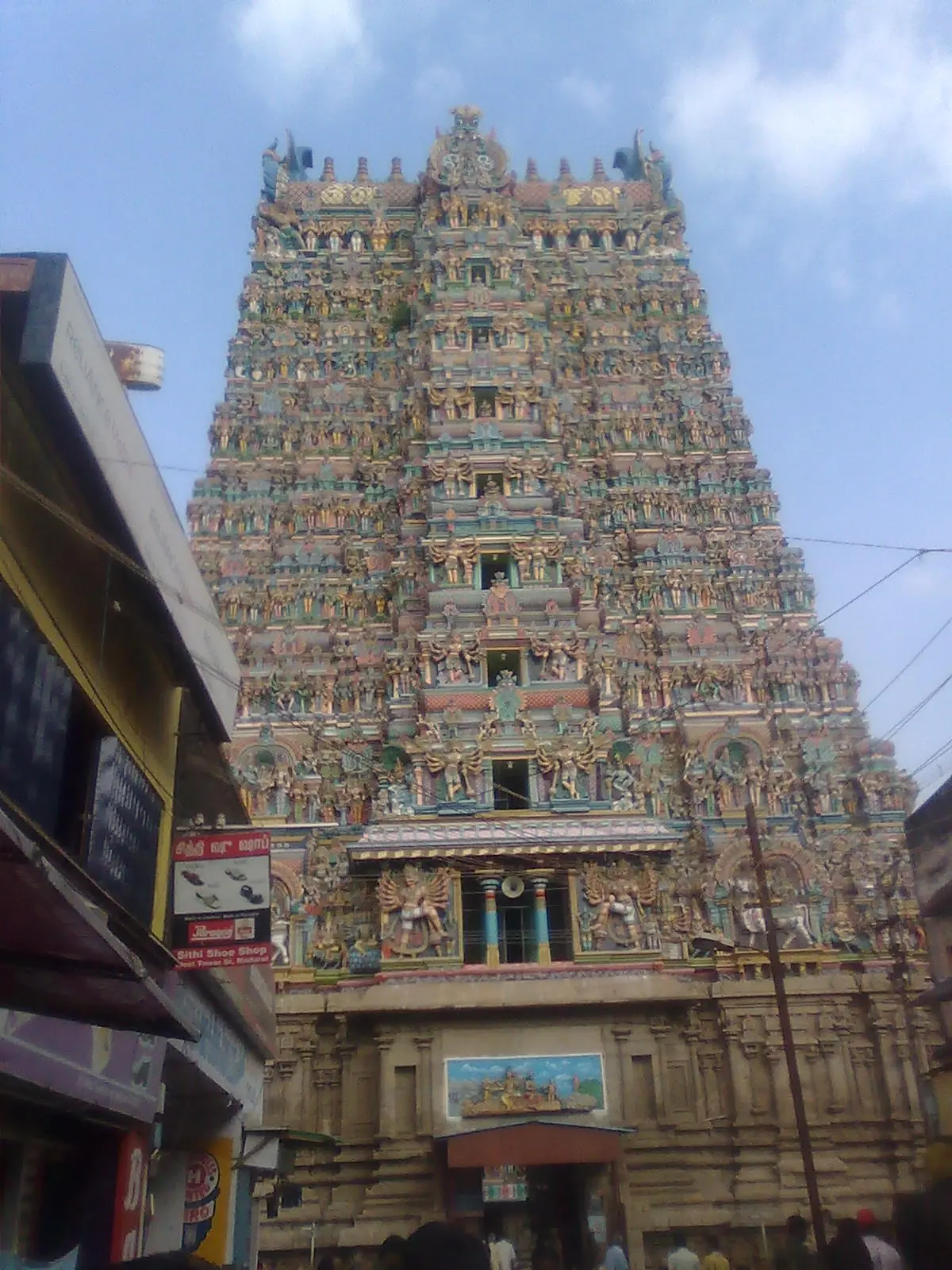
The complex covers about 14 acres and has fourteen gopurams; the southern one, about 52 m high, is the tallest, crowded with thousands of painted figures renewed at each kumbhabhishekam. Meenakshi is worshipped first, then Sundareswarar. Every night the utsava image of Shiva is carried in a palanquin to Meenakshi’s chamber, the palliyarai, and brought back at dawn.
The life of this place
- 1311Malik Kafur raids Madurai; the temple is plundered.
- 1370sKumara Kampana of Vijayanagara ends the Madurai Sultanate and restores worship.
- 1569Ariyanatha Mudaliar builds the Hall of a Thousand Pillars.
- 1623–1659Tirumala Nayak’s reign adds mandapas and enlarges the festivals.
Mobile phones are not allowed inside. The night palliyarai procession at about 9 p.m. is worth staying for.