01The peahen and Poompavai
Mylapore takes its name from mayil, the peacock. The temple’s sthala purana tells that Mata Parvati, cursed to be born as a peahen, worshipped the linga here under a punnai tree until Shiva restored her; a small shrine under the tree in the courtyard shows the scene. The Tevaram gives the second katha. A merchant named Sivanesar had kept the bones and ashes of his daughter Poompavai, who died of a snakebite, in a pot. When Tirugnanasambandar came in the 7th century he sang a padigam to Kapaleeshwarar, verse after verse, and the girl rose from the pot alive.
02From the shore to the tank
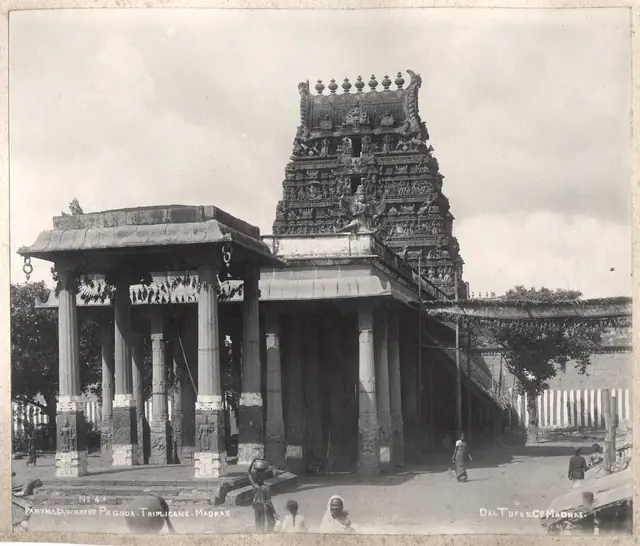
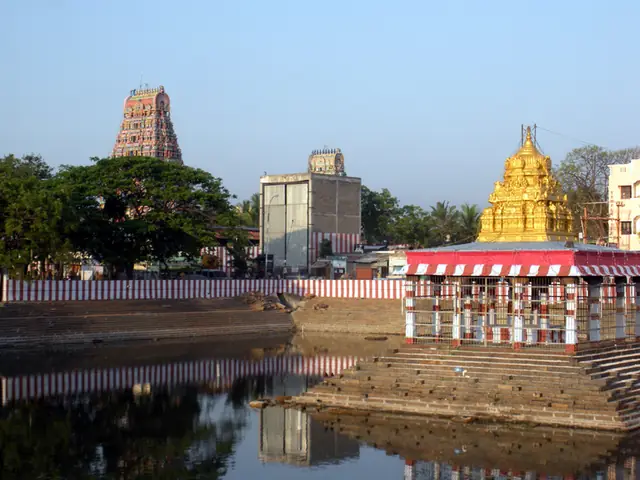
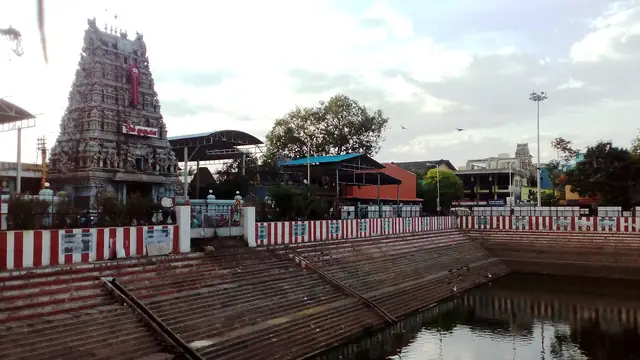
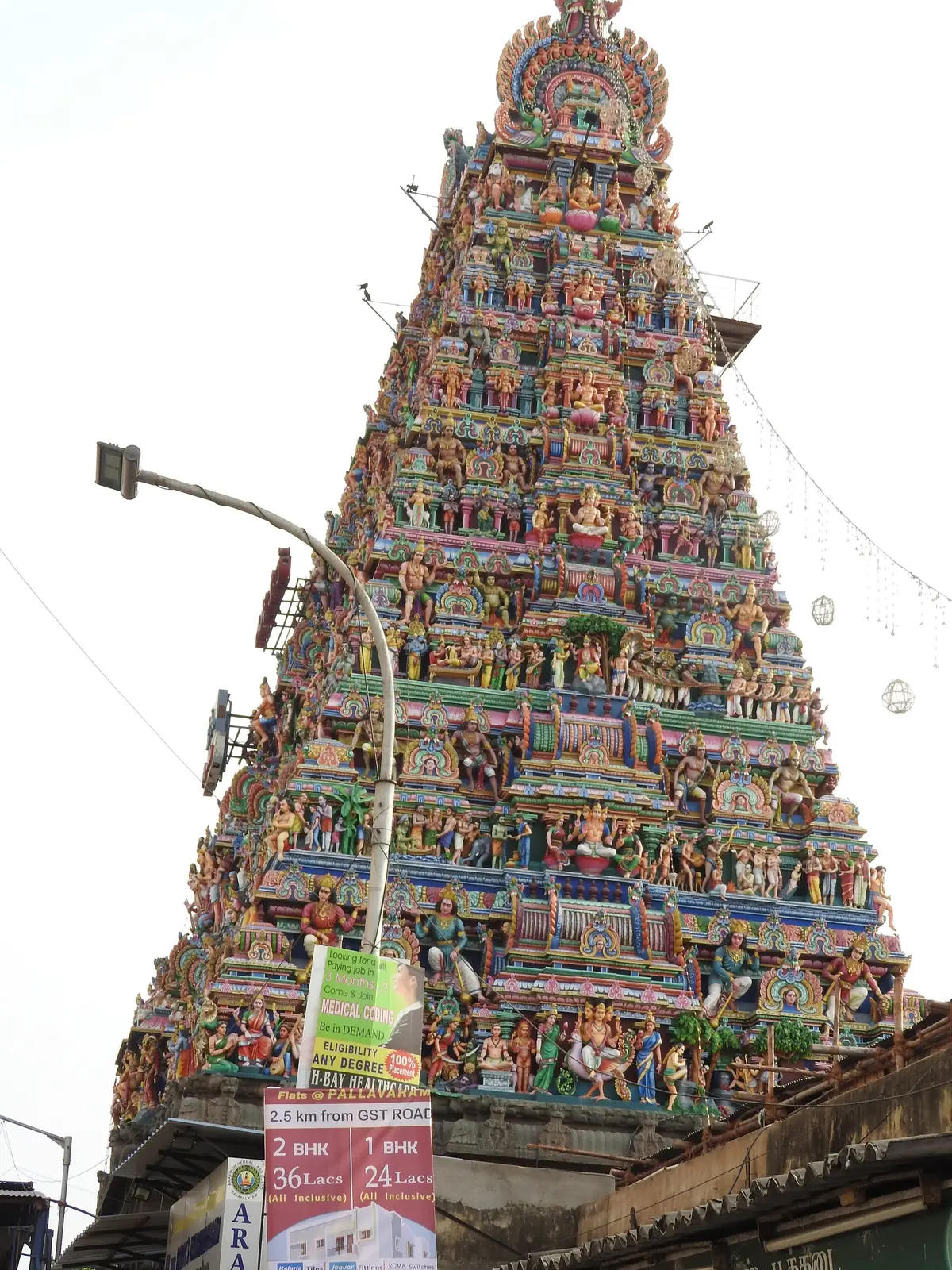
The Tevaram hymns place the temple by the sea. In the 16th century the Portuguese built the church of San Thome on the shore at Mylapore, and the temple’s tradition, accepted by many historians, holds that the old shrine stood there. The present temple, of the Vijayanagara period, stands inland beside a large tank. Its east gopuram, about 37 metres high, was completed in 1906. At the Panguni festival the sixty-three Nayanmars are carried round the streets in procession, the Arupathimoovar, and the whole of Mylapore comes out to watch.
The life of this place
- 7th centuryTirugnanasambandar sings the Poompavai padigam here.
- 16th centuryThe Portuguese build San Thome church on the Mylapore shore; the temple is raised again inland.
- 1906The east gopuram is completed.
In Mylapore, central Chennai; Thirumayilai station on the MRTS line is a short walk. The Panguni Brahmotsavam (March–April) is the great festival.