Cite
MLA
“Megasthenes.” Hindu History, 2026, https://www.hinduhistory.in/people/megasthenes/. Accessed .
APA
Hindu History. (2026). Megasthenes. Retrieved , from https://www.hinduhistory.in/people/megasthenes/
Life in moments
- 01
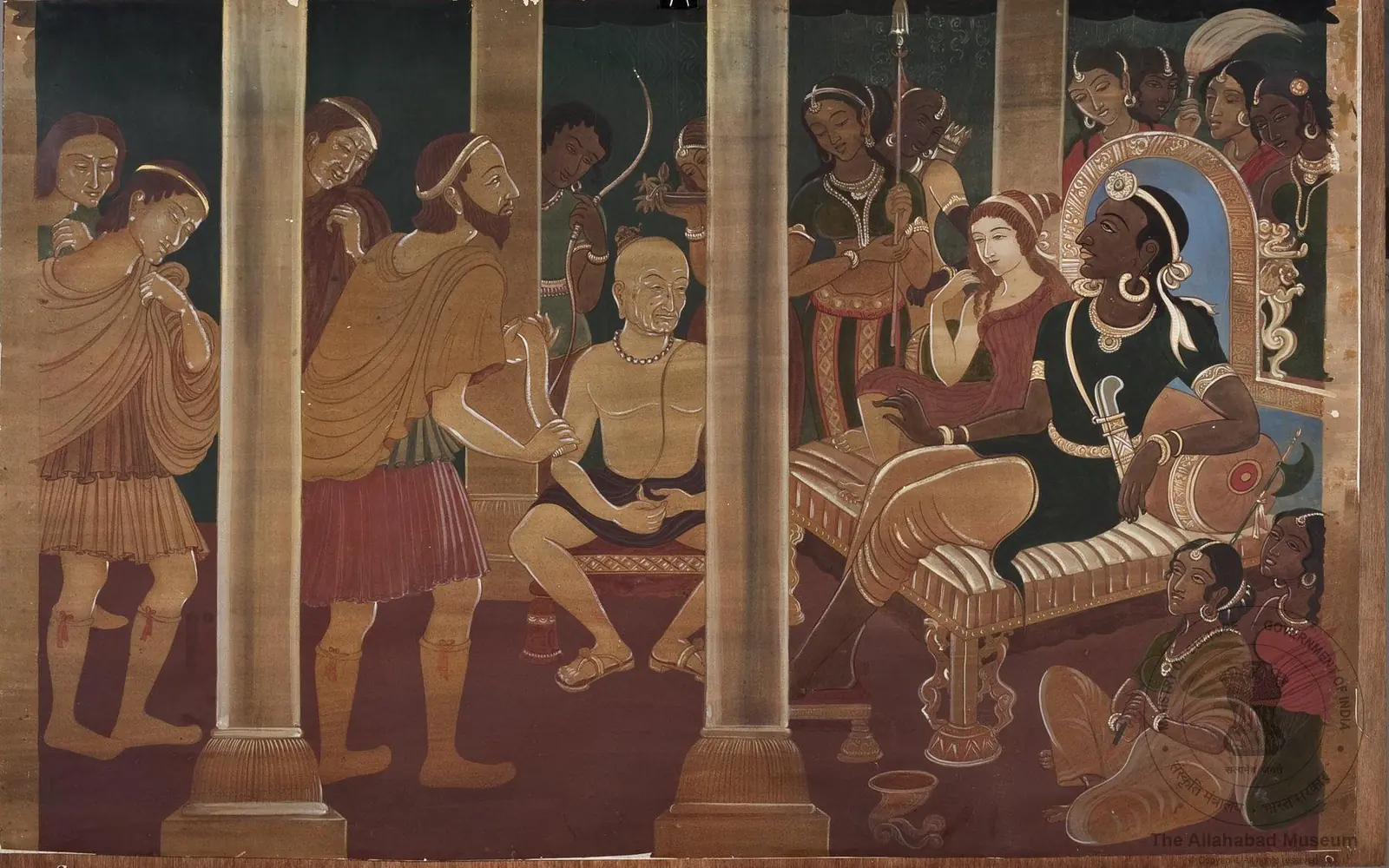
Sent by Seleucus I as envoy to Chandragupta Maurya
- 02570
Described Pataliputra’s timber wall with 570 towers and 64 gates
- 03
Divided Indian society into seven classes
- 041846
Schwanbeck collected the Indika fragments in 1846
- 051877
McCrindle published the English translation in 1877
01At Pataliputra
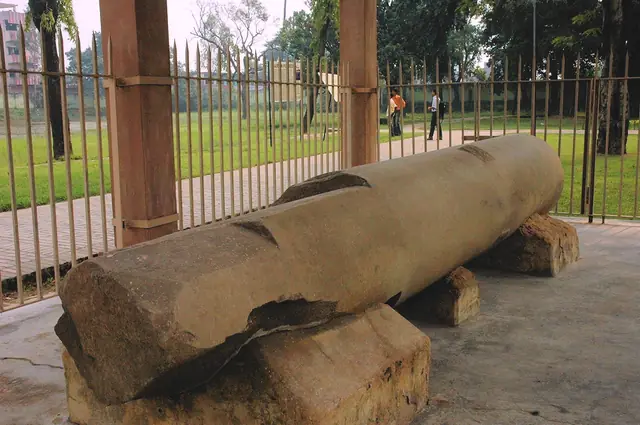
After Seleucus Nicator failed to win back Alexander’s eastern provinces and made peace with Chandragupta, ceding Arachosia and Gandhara for five hundred war elephants, he sent Megasthenes as his envoy. Megasthenes had served with Sibyrtius, the satrap of Arachosia, and visited Pataliputra more than once. He describes the city on the Ganga and the Son as a parallelogram about eighty stadia long, ringed by a ditch and a timber wall with 570 towers and 64 gates. Excavations at Bulandi Bagh in Patna have uncovered long lines of timber palisade that match his account.
02What the Indika tells
Megasthenes divides the people into seven classes: philosophers, farmers, herdsmen and hunters, artisans and traders, soldiers, overseers and councillors. He says no Indian was a slave, that theft was rare, and that the farmers tilled in peace even while armies fought nearby. He writes of Brahmanas and Sramanas, of a god the Greeks called Herakles honoured by the Sourasenoi of Methora, which many read as Shri Krishna at Mathura, and of Dionysus worshipped in the hills. Some of his tales, gold-digging ants and men without mouths, came from hearsay. The fragments were gathered by E. A. Schwanbeck in 1846 and put into English by J. W. McCrindle in 1877.