Cite
MLA
“Kharoshthi.” Hindu History, 2026, https://www.hinduhistory.in/lipi/kharoshthi-script/. Accessed .
APA
Hindu History. (2026). Kharoshthi. Retrieved , from https://www.hinduhistory.in/lipi/kharoshthi-script/
01The script of Gandhara
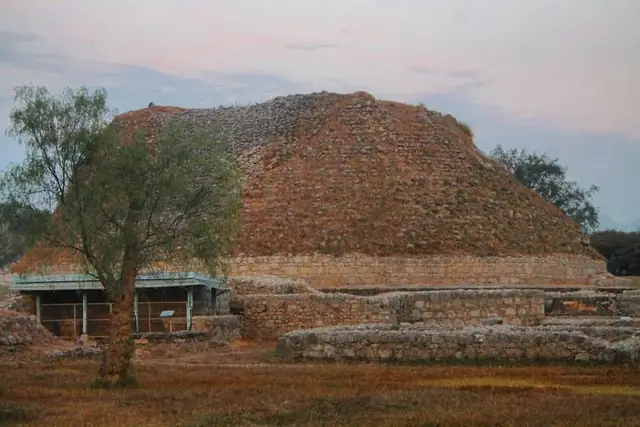
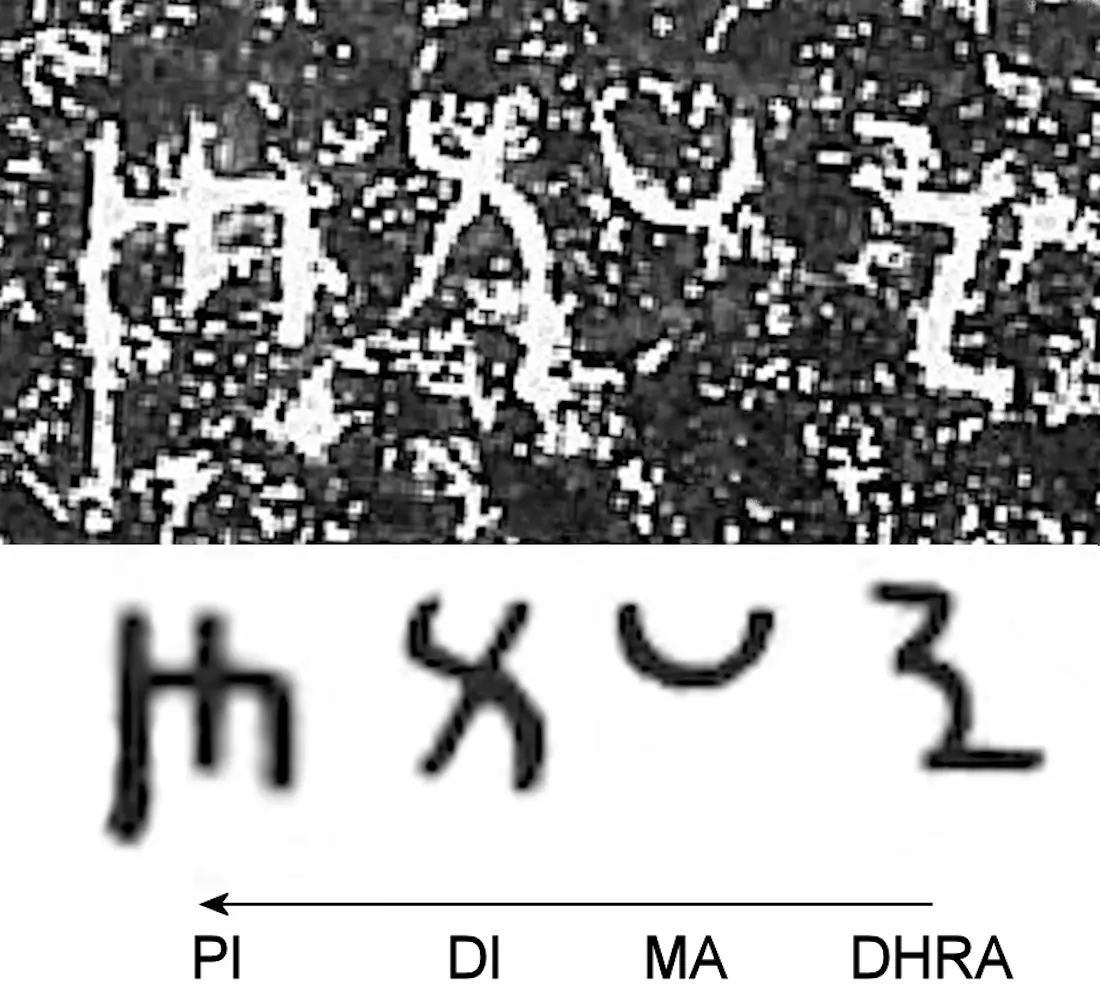
At Shahbazgarhi near Mardan and at Mansehra in the Hazara hills, Ashoka’s fourteen rock edicts are cut in Kharoshthi, not Brahmi, because that was what the people of Gandhara read. The letters run from right to left. Most scholars trace their shapes to the Aramaic script that the Achaemenid Persian clerks had used in the region, reworked to mark Indian vowels and consonants. Takshashila, the great seat of learning, lay in the heart of the Kharoshthi country.
02Coins, scrolls and the Silk Road
Indo-Greek, Shaka and Kushana kings struck coins with Greek on one face and Prakrit in Kharoshthi on the other. Buddhist monks wrote sutras in the Gandhari language on birch bark in this script; rolls of them, among the oldest Buddhist manuscripts anywhere, are now in the British Library and other collections. The script travelled along the Silk Road to the kingdom of Kroraina in the Tarim basin, where officials used it for letters and contracts on wooden tablets, before it fell out of use around the 4th century CE.
03Read through bilingual coins
The coins gave the key. In the 1830s James Prinsep, Christian Lassen and others matched the Greek names on Indo-Greek coins, Menander, Apollodotus, Agathocles, with the Kharoshthi words on the reverse, and worked out the letters one by one. Edwin Norris then read the Shahbazgarhi edict. Sten Konow gathered the inscriptions in the Corpus Inscriptionum Indicarum in 1929. Kharoshthi left no living descendant; the scripts of Bharat all come from Brahmi.