Cite
MLA
“Dvaitadvaita.” Hindu History, 2026, https://www.hinduhistory.in/darshana/dvaitadvaita/. Accessed .
APA
Hindu History. (2026). Dvaitadvaita. Retrieved , from https://www.hinduhistory.in/darshana/dvaitadvaita/
What defines it
- 01
Svabhavika bhedabheda: natural difference and non-difference
- 02
Three realities: chit, achit, Ishvara
- 03
Brahman as Radha-Krishna
- 04
Sanakadi lineage: Hamsa, the Kumaras, Narada
- 05
Prapatti and madhurya bhakti
01The sun on the neem tree
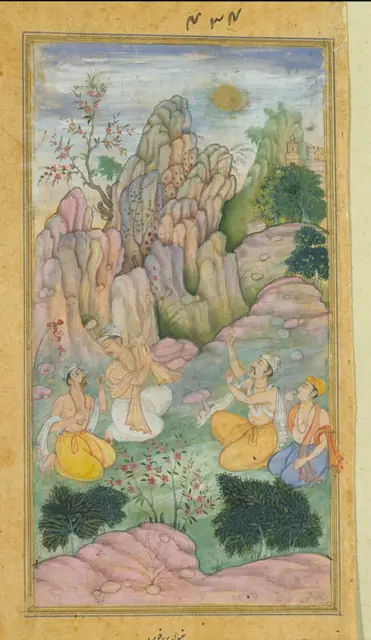
The sampradaya traces its teaching from Bhagwan Hamsa to the four Kumaras, Sanaka and his brothers, and from them through Devarshi Narada to Nimbarka, and so it is also called the Sanakadi or Kumara sampradaya. Nimbarka is said to have been born in the south, in a Telugu family, and to have lived in tapas near Govardhan. His name comes from a katha: a visiting ascetic who would not eat after sunset arrived late, and Nimbarka held the sun (arka) on a neem tree (nimba) until the guest had eaten. The sampradaya places him far back in time; the peeth at Salemabad celebrated his 5100th jayanti in 2004. Modern scholars place him anywhere from the 7th to the 13th century.
02One and other, by nature
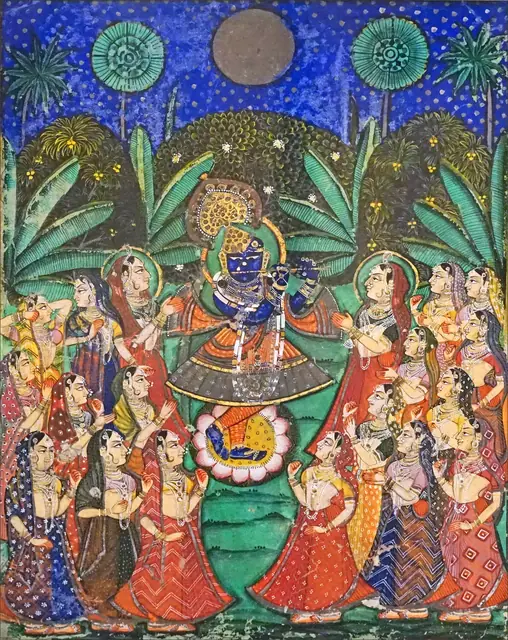
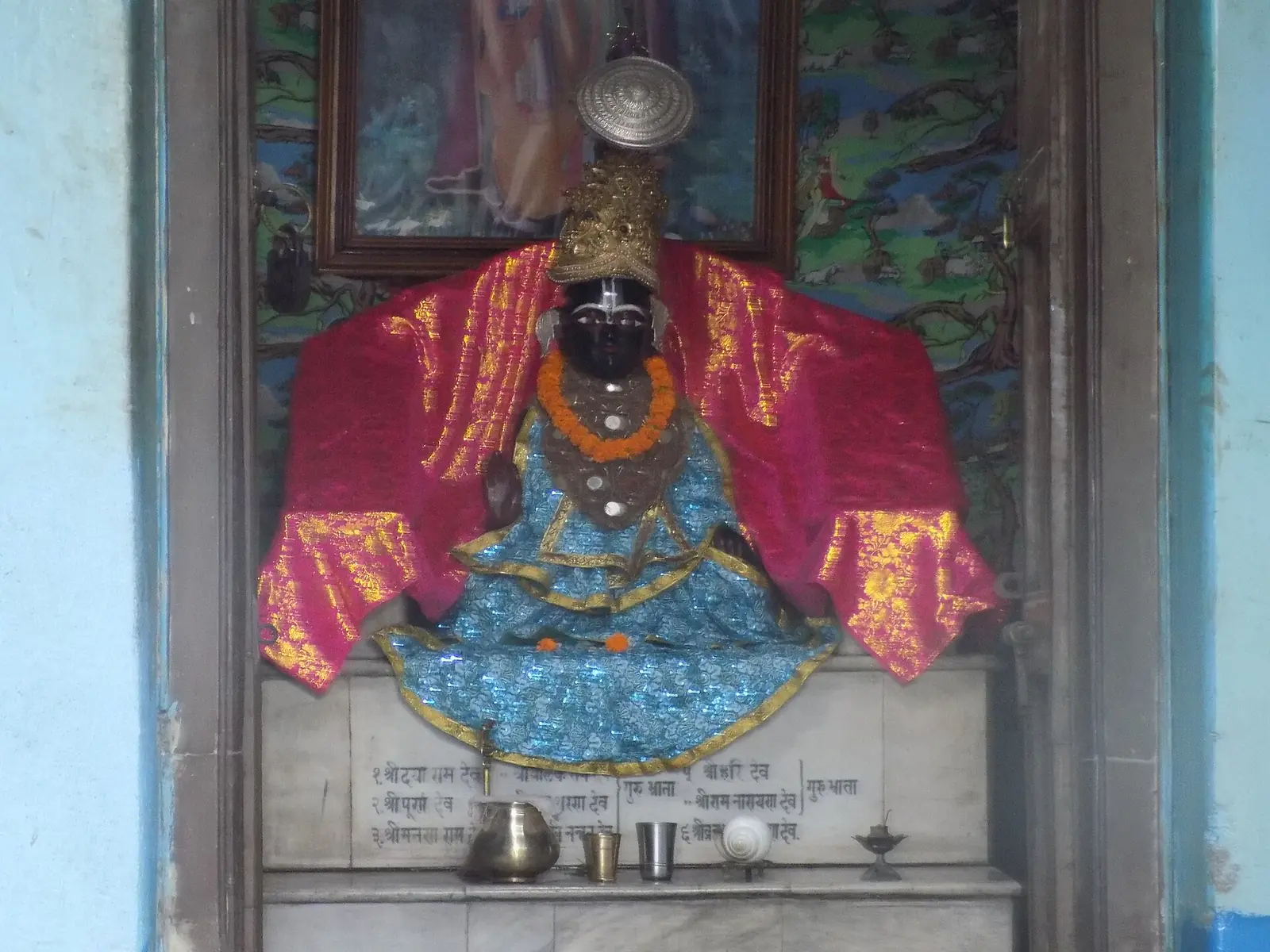
Nimbarka’s commentary on the Brahma Sutra, the Vedanta Parijata Saurabha, is brief, and his Dashashloki puts the whole teaching into ten verses. Three realities are accepted: chit, the souls; achit, matter; and Ishvara. Souls and matter depend on Brahman and are its parts and powers, so they are not separate from it, yet they are never simply Brahman either. This is svabhavika bhedabheda: difference and non-difference that belong to the nature of things, as the sun and its rays, or the coil and the snake. Brahman is not formless here; it is Shri Krishna, full of every auspicious quality, with Radha at his left. The path is prapatti, surrender, and loving bhakti to the divine couple.
03Srinivasa, Keshava Kashmiri and the peeth
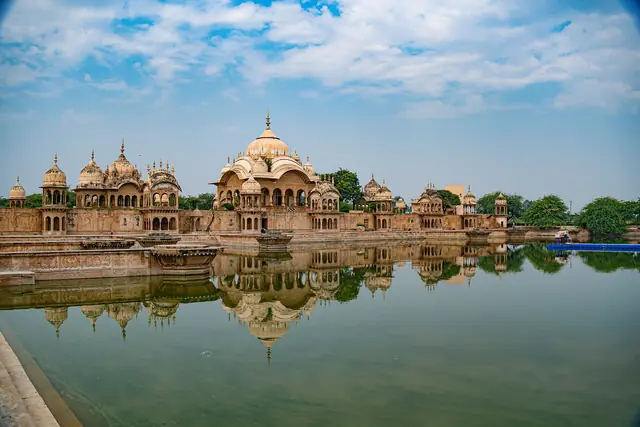
Nimbarka’s disciple Srinivasacharya expanded the Saurabha in the Vedanta Kaustubha, and Keshava Kashmiri Bhatta wrote the Kaustubha Prabha on it and a commentary on the Gita. The Harivyasa line and its Braj poetry, including the Yugal Shatak of Shribhatta, gave the sampradaya a strong place in Vrindavan’s bhakti. The chief seat today is the Akhil Bharatiya Nimbarkacharya Peeth at Nimbarka Tirtha, Salemabad, in Ajmer district of Rajasthan, and there are ashrams across Braj and as far east as Bengal. Many scholars count Nimbarka among the first to make Radha central in Vedanta, well before the Gaudiya and Pushti traditions.
Family tree
Great masters
In the texts
- Vedanta Parijata Saurabha
- Dashashloki (Vedanta Kamadhenu)
- Vedanta Kaustubha of Srinivasa