01From Govardhan
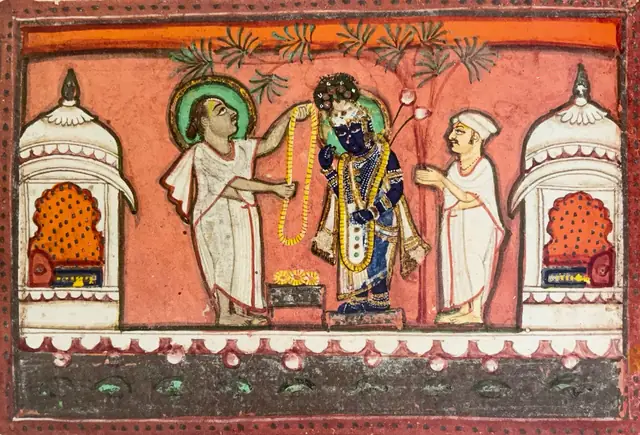
Pushti Marg tradition says the swaroop, Shri Krishna with his left hand raised as he held up Govardhan, emerged from the hill itself, and that Shri Vallabhacharya began its seva there in the early 16th century. In 1669 Aurangzeb ordered the temples of the Hindus demolished, and the Keshavdev temple at Mathura went down the next year. The Goswamis of the sampradaya put Shrinathji in a covered cart and left Braj. For two years and more they moved through Agra, Kota, Bundi and Kishangarh looking for a ruler who would shelter the deity. Maharana Raj Singh of Mewar said yes.
02The haveli of the Lord
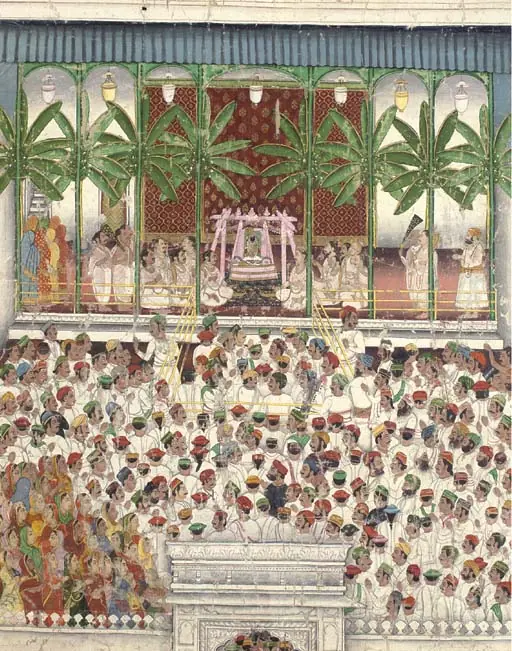
At the village of Sinhad the wheel of the cart sank into the earth and would not move, which was taken as the Lord’s wish to stay. The swaroop was installed there in 1672 and the village became Nathdwara, the door of the Lord. The temple is built as a haveli, a household, because Shrinathji is served as a child of seven: eight darshans a day from Mangala before dawn to Shayan at night, each with its own clothes, food and music. The painted cloth hangings made for the shrine, pichhwais, became a school of painting of their own.
The life of this place
- 1669 CESwaroop taken out of Braj after Aurangzeb’s order to demolish temples.
- 1672 CEInstalled at Sinhad under Maharana Raj Singh; the town becomes Nathdwara.
48 km north of Udaipur. Darshan opens only for short windows, eight times a day; the Mangala darshan before sunrise is the most crowded.