Cite
MLA
“Narmada Parikrama.” Hindu History, 2026, https://www.hinduhistory.in/yatra/narmada-parikrama/. Accessed .
APA
Hindu History. (2026). Narmada Parikrama. Retrieved , from https://www.hinduhistory.in/yatra/narmada-parikrama/
The route
- 1Amarkantak
- 2Mandla
- 3Bhedaghat, Jabalpur
- 4Narmadapuram (Hoshangabad)
- 5Omkareshwar
- 6Maheshwar
- 7Bharuch
- 8Narmada mouth, Gulf of Khambhat
What defines it
- 01
River kept on the right; never crossed except at the mouth
- 02
About 2,600–3,500 km depending on the path taken
- 03
Traditional span: 3 years, 3 months, 13 days
- 04
Every pebble a Shankar; Narmadeshwar banalingas
- 05
Greeting: ‘Narmade Har’
01The river whose sight is enough
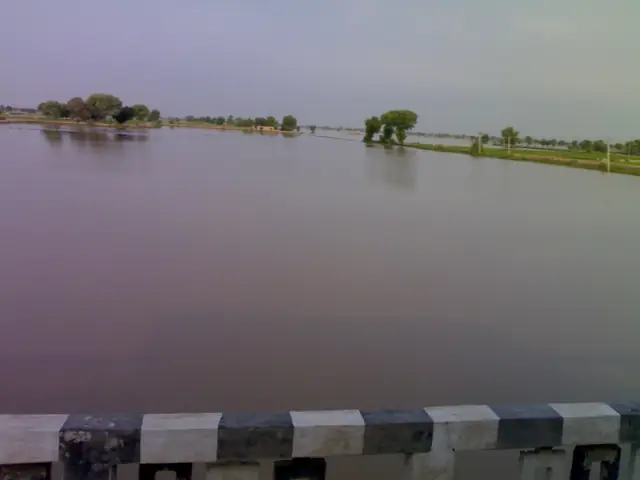
Narmada rises at Amarkantak in the Maikal hills and flows west for about 1,300 km to the Gulf of Khambhat. The Reva Khanda of the Skanda Purana praises her as born of Bhagwan Shiva, and a saying heard all along her banks holds that the merit Ganga gives by a bath, Narmada gives by sight alone. Every pebble of her bed is called a Shankar, and the smooth egg-shaped stones from her bed at Omkareshwar and nearby are worshipped as banalingas in homes across India. Tradition names Maharshi Markandeya as the first to walk round her. She is called Reva, from the leaping of her waters, and Mekalasuta, daughter of the Mekala hills.
02Rules of the walk
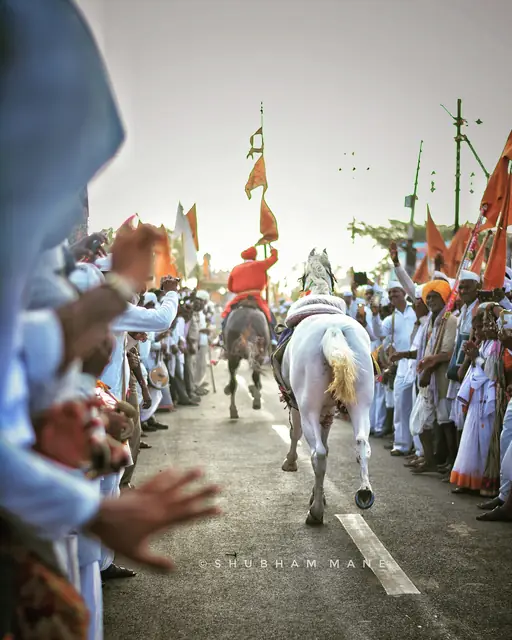
The parikramavasi, often starting from Amarkantak or Omkareshwar, walks downstream along one bank with the river on the right, never crossing it. At the sea near Bharuch, where the river becomes too wide to see across, a boat carries the walker over the mouth, the only crossing allowed, and the return runs upstream along the other bank to the starting point, where water carried all the way is offered. Popular reckoning puts the full walk at three years, three months and thirteen days, though most now finish in four to six months. Walkers carry little and are fed by villages and ashrams along the way; ‘Narmade Har’ is their greeting. Many stop during the rains, since Chaturmas is a time to stay in one place.
03Ghats, forests and dams
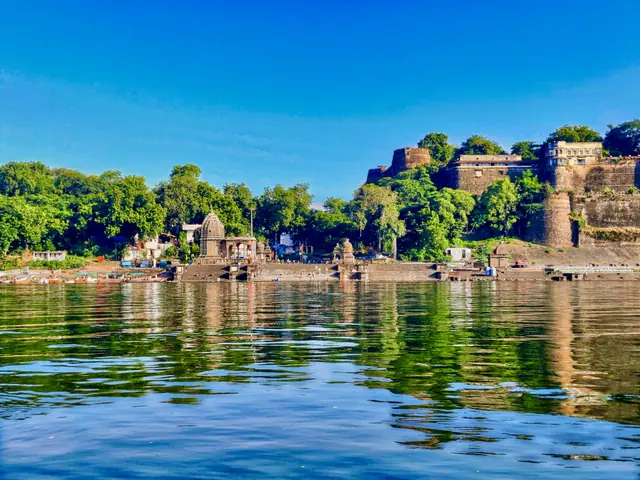
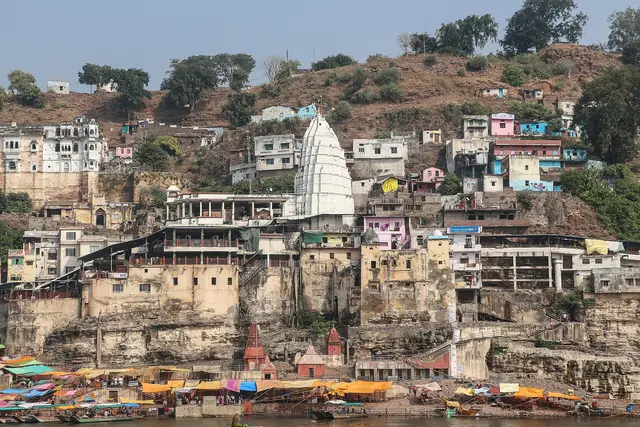
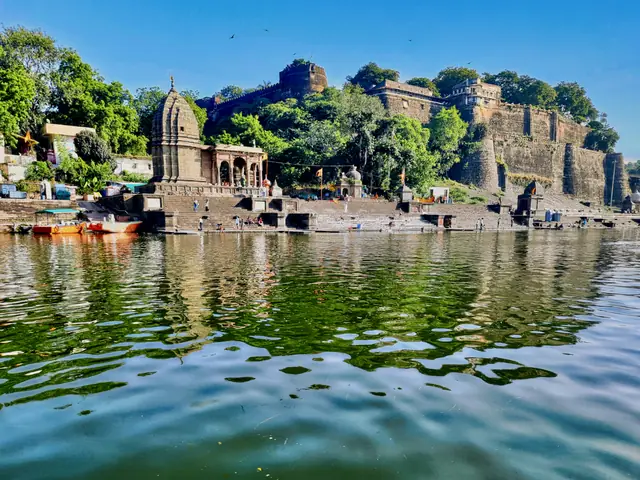
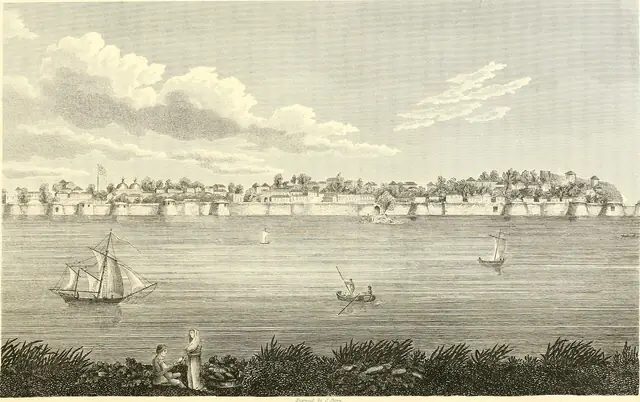
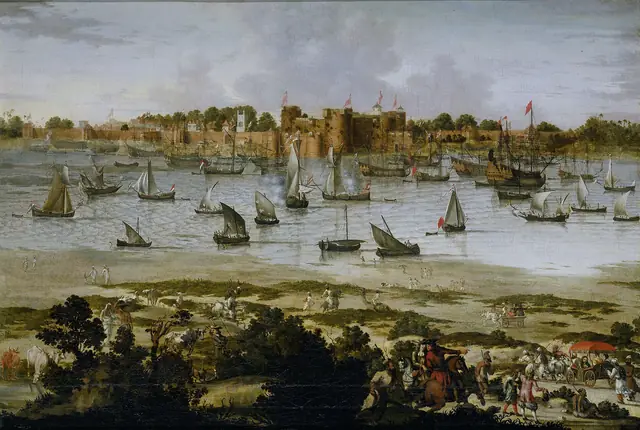
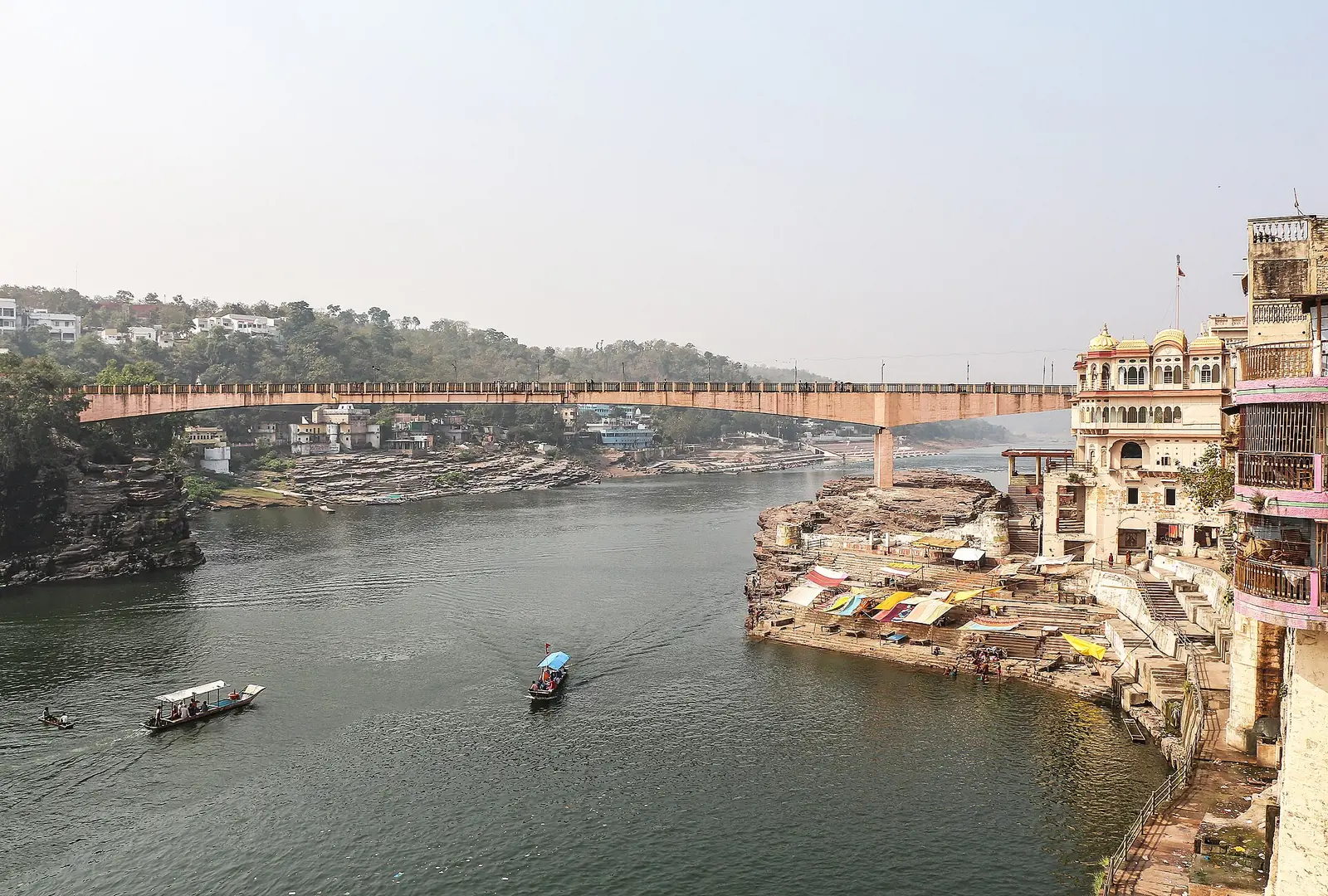
The path passes the marble gorge at Bhedaghat near Jabalpur, the island of Omkareshwar with its jyotirlinga, and Maheshwar, where Ahilyabai Holkar built the stone ghats and the fort palace from which she ruled in the eighteenth century, before reaching Bharuch, the old port of Bhrigukachchha. Between them lie long stretches of forest and tribal country in the Satpura and Vindhya, which walkers still describe as the hardest part. The big dams of the Narmada valley project, Sardar Sarovar above all, have drowned parts of the old bank path and some riverside temples, so walkers now detour around the reservoirs. The Hindi writer and painter Amritlal Vegad walked the river in stages and wrote of it in ‘Saundarya ki Nadi Narmada’.
Great masters
In the texts
- Reva Khanda of the Skanda Purana
- Amritlal Vegad, Saundarya ki Nadi Narmada