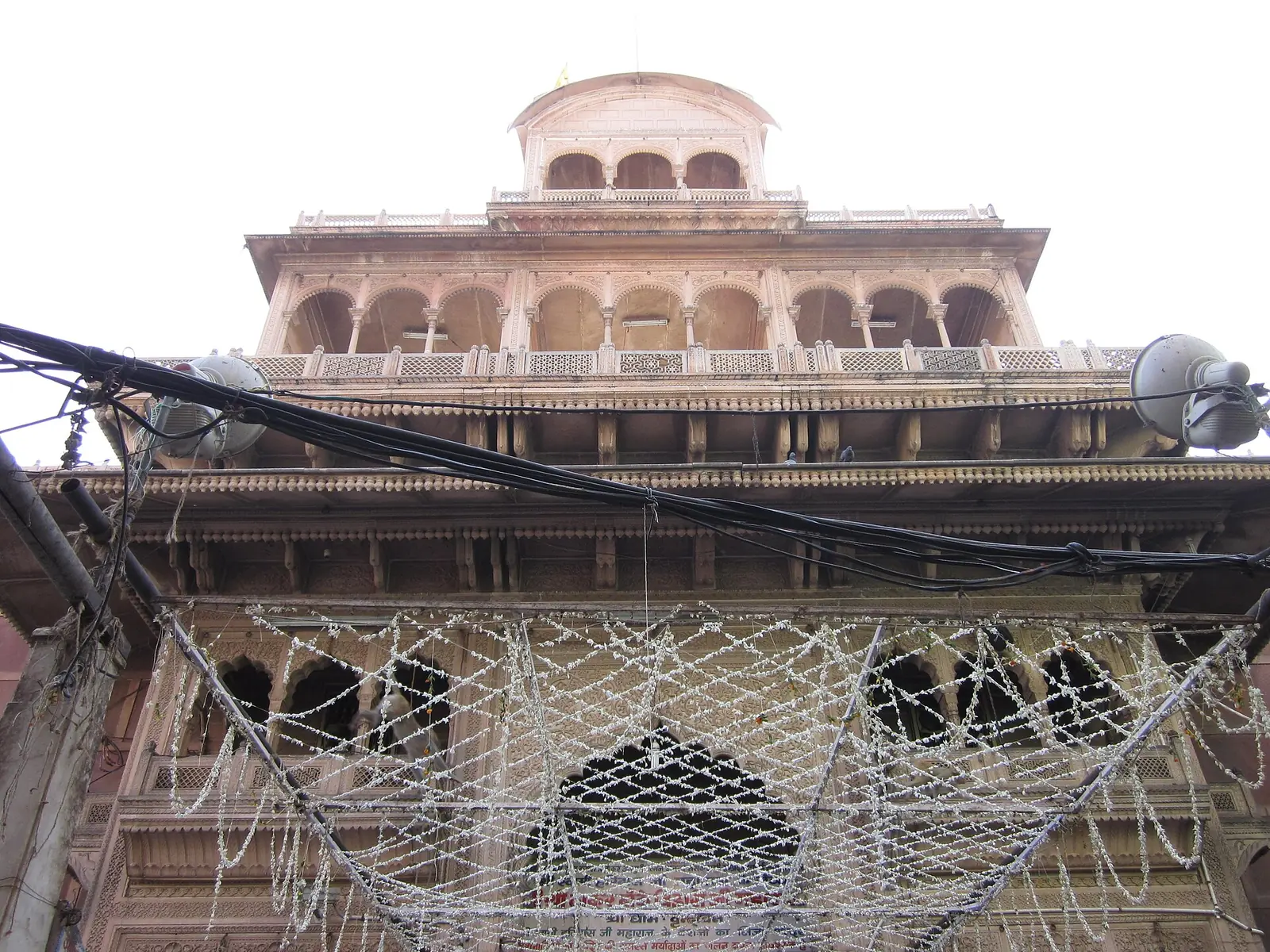
01Haridas in Nidhivan
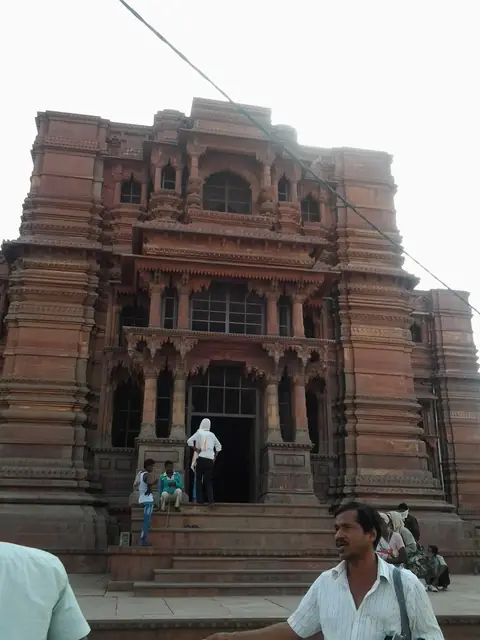
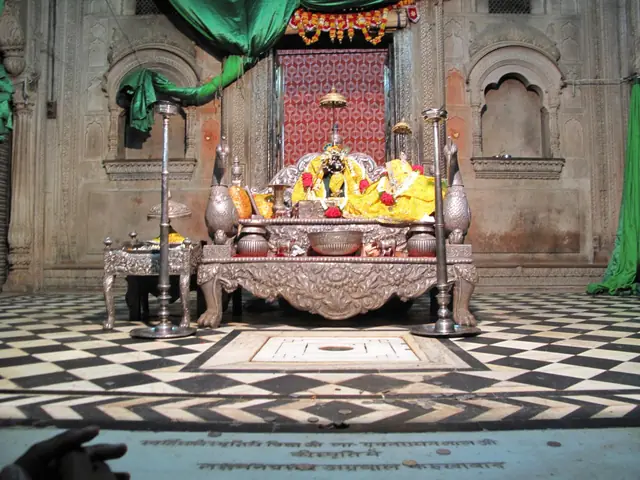
Swami Haridas, the musician whose line of dhrupad singing is remembered through Tansen, lived in the grove of Nidhivan and sang to Radha and Krishna. The temple’s tradition says that, moved by his song, the divine couple appeared before him and, at his prayer, merged into a single dark murti, which he worshipped as Kunj Bihari. His followers called it Banke Bihari for its graceful bent stance. The day of its appearance, Margashirsha Shukla Panchami, is kept as Bihar Panchami. The murti was worshipped in Nidhivan until 1864, when the goswamis of Haridas’s line built the present temple and moved it there.
02No bells, a drawn curtain
Worship here follows Haridas’s way of loving a child-like Lord. No bells or conches are sounded, for Bihari ji must not be startled. Mangala aarti is held only once a year, on Janmashtami night. His feet are shown only on Akshaya Tritiya, and he holds a flute only on Sharad Purnima. The curtain before the sanctum is pulled across every few minutes, because, the goswamis say, a devotee who gazes too long may draw Bihari ji away with him. In summer the sanctum is filled with flower bungalows, the phool bangla.
The life of this place
- 1864The present temple is built and the murti is moved here from Nidhivan.
The temple stands in the narrow lanes of old Vrindavan; go on a weekday morning and leave bags and footwear at your lodging. Darshan timings change between summer and winter.