Cite
MLA
“Can the Indus script be read?.” Hindu History, 2026, https://www.hinduhistory.in/vimarsha/indus-script-decipherment/. Accessed .
APA
Hindu History. (2026). Can the Indus script be read?. Retrieved , from https://www.hinduhistory.in/vimarsha/indus-script-decipherment/
What defines it
- 01
About 400 signs, lines of five or six
- 02
Written right to left
- 03
No bilingual inscription found
- 04
Fish sign: min, fish and star (Parpola)
- 05
Dholavira signboard, ten gypsum signs
- 06
Tamil Nadu’s one-million-dollar prize, 2025
01What we have
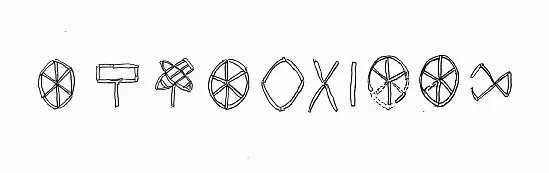
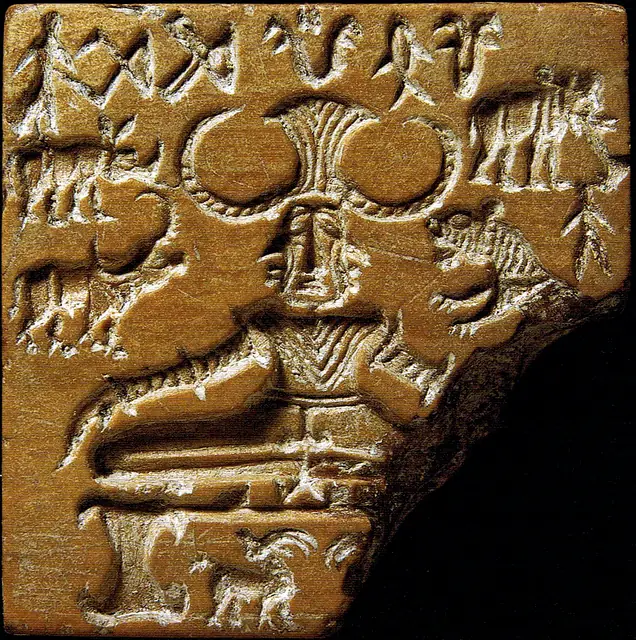
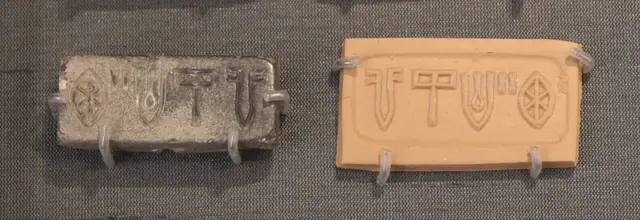
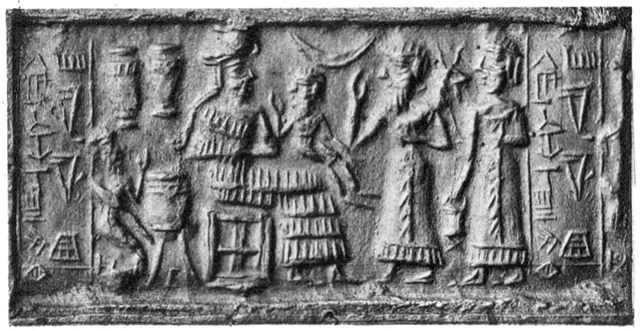
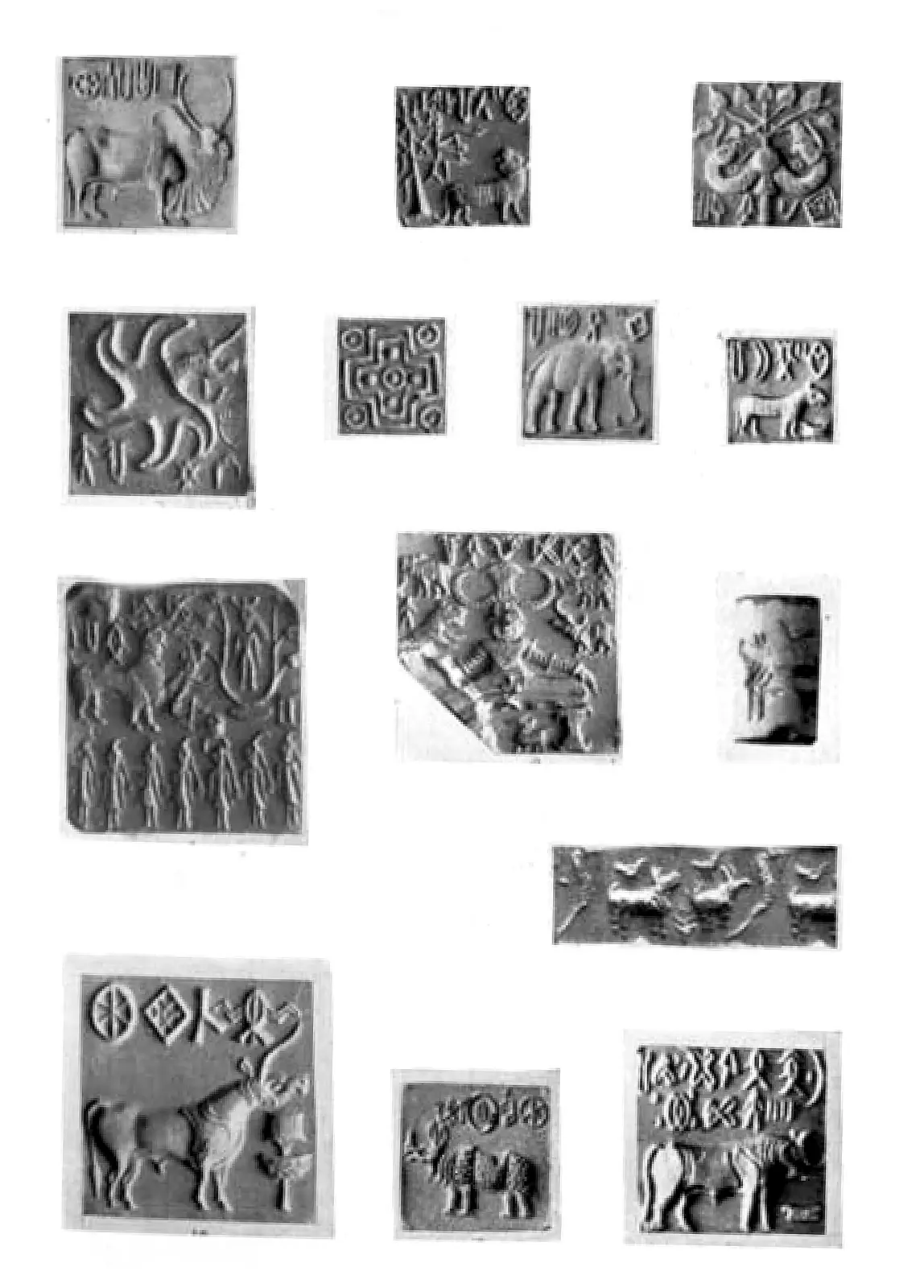
Most of what survives is short: a square steatite seal with a bull, an elephant or a seated figure, and above it a line of signs running from right to left. Scholars count roughly four hundred distinct signs, too many for an alphabet and too few for a script of whole-word pictures, which suggests a mixed system of word-signs and syllables. Iravatham Mahadevan published a concordance of the texts for the ASI in 1977, and Asko Parpola and colleagues built the Corpus of Indus Seals and Inscriptions. At Dholavira the ASI team under R. S. Bisht found ten large gypsum signs once set on a board by the northern gate. Our Lipi page on the Indus script describes the signs; here the question is whether, and how, they can be read.
02A prize and a chair
On 5 January 2025, at an event marking a century since John Marshall announced the discovery of the civilisation, Tamil Nadu’s Chief Minister M. K. Stalin offered a prize of one million US dollars to anyone who deciphers the script to the satisfaction of archaeological experts, and announced a research chair in Iravatham Mahadevan’s name. The prize stands unclaimed. Any proposed reading is tested against the same demands: it must read new inscriptions consistently, give sensible words in a known language, and be repeatable by others who did not make it. No decipherment so far has met all three.
The positions
An early Dravidian language
Asko Parpola (Deciphering the Indus Script, 1994), Iravatham Mahadevan, the Soviet team of Yuri Knorozov (1960s)
Dravidian languages are spoken today across the south and, in Brahui, in Balochistan close to the Indus heartland, and this school argues they are the most likely heirs of the Harappan tongue. Parpola’s best-known reading, building on a rebus first proposed by Father Heras, takes the frequent fish sign: in Dravidian min means both fish and star, so the fish could write a star or a deity of the sky, as the rebus principle worked in early Egyptian and Sumerian writing. Mahadevan, who built the concordance, came to support a Dravidian reading.
Mahadevan himself called the star reading unverifiable, though popular for its simplicity, and said the readings of diacritic marks rest on rather arbitrary meanings. No Dravidian reading has produced connected texts that others can check. The case also assumes an answer to the Harappan–Vedic question it is meant to settle.
An early Indo-Aryan language
S. R. Rao (The Decipherment of the Indus Script, 1982); Subhash Kak (1988); N. Jha and N. S. Rajaram (The Deciphered Indus Script, 2000)
If the Harappans were Vedic, as continuity scholars hold, the script should write an early form of Sanskrit. S. R. Rao, the excavator of Lothal, proposed sound values for the signs and read the seals as early Indo-Aryan words. Subhash Kak studied the frequencies of the signs and argued for a link with Brahmi, the script of Ashoka, which might then descend from them. Supporters point out that the Dravidian case is no more proved than theirs, and that the cultural continuity on the ground favours a language of Vedic type.
Rao’s readings were not taken up by other specialists. The 2000 book was badly damaged when Michael Witzel and Steve Farmer showed that its “horse seal” was a broken bull seal whose image had been altered in reproduction. No Indo-Aryan reading has yet been shown to read fresh inscriptions consistently.
Not a writing of language at all
Steve Farmer, Richard Sproat and Michael Witzel (“The Collapse of the Indus-Script Thesis”, Electronic Journal of Vedic Studies, 2004)
These three argued that the inscriptions are too short, that many signs appear only once or twice in the whole corpus, and that the texts lack the repetitions that writing of speech produces over thousands of examples. On their reading the signs were symbols, of the kind used for emblems, clans or deities, not a script recording language. In that case no decipherment is possible, because there is no spoken text to recover, and the cities ran their trade without writing in the full sense.
In 2009 Rajesh P. N. Rao, Mayank Vahia, Iravatham Mahadevan and others showed in Science that the sign sequences have a conditional entropy close to that of languages, though critics replied that this measure cannot settle the matter alone. The Dholavira signboard, a public inscription meant to be read from a distance, is hard to explain as mere emblem. Short texts are normal on seals in literate cultures.
A bilingual inscription would settle it, most likely from Mesopotamia, where Harappan traders lived and their seals have been found, or a long Harappan text. Short of that, a proposed reading that predicts the sense of a newly excavated inscription before anyone has read it, and is confirmed by specialists of every school, would convince the field.
Great masters
In the texts
- I. Mahadevan, The Indus Script: Texts, Concordance and Tables (ASI, 1977)
- Corpus of Indus Seals and Inscriptions