Cite
MLA
“Lost-wax casting: from the dancing girl to Swamimalai.” Hindu History, 2026, https://www.hinduhistory.in/vijnana/lost-wax-bronze-casting/. Accessed .
APA
Hindu History. (2026). Lost-wax casting: from the dancing girl to Swamimalai. Retrieved , from https://www.hinduhistory.in/vijnana/lost-wax-bronze-casting/
01Wax, clay, metal
The image is first modelled in a mix of beeswax and resin, every finger and ornament in place. It is coated with layers of fine clay, then coarser clay, with a channel for the metal. The mould is heated, the wax runs out, and molten metal is poured in. When it cools the clay is broken away, so each mould gives one image only. The Manasollasa, written for the Chalukya king Someshvara III in 1129, gives the method as madhuchchhishta vidhana, the wax method, in detail.
02Four thousand years of images
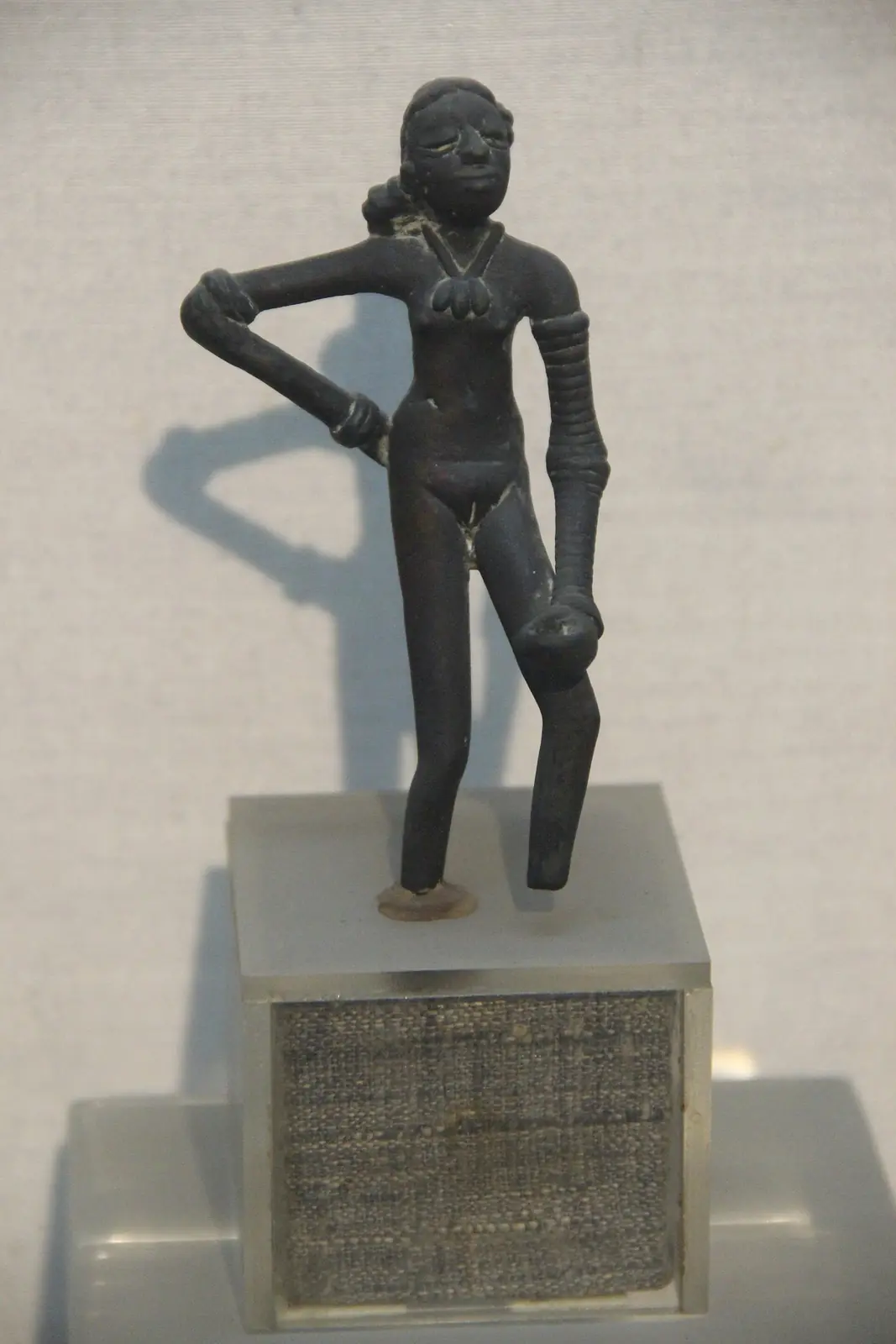
The dancing girl of Mohenjo-daro, about 10.5 cm tall and around 2500 BCE, is now in the National Museum, New Delhi. The copper figures from Daimabad in Maharashtra, and the Sultanganj Buddha of about the 6th–7th century, over two metres tall and now in Birmingham, show the craft at scale. Under the Cholas in the 10th–12th centuries it reached the Nataraja and the utsava murtis that are carried in procession. Analyses show Chola images are mostly copper with tin and lead, and the tradition calls the alloy panchaloha.
03Still being made
At Swamimalai near Kumbakonam, sthapati families still cast temple bronzes by this method, using clay from the bed of the Kaveri, and the Swamimalai bronze icons received a Geographical Indication. The method is not unique to Bharat; it was used in Mesopotamia, Egypt and China too. Bharat’s distinction is the unbroken use, the written canon of proportions in the Shilpa texts, and images made to be worshipped, bathed and carried as living deities.
In the texts
- Manasollasa of Someshvara III (1129)
- Shilpa Ratna