Cite
MLA
“The basin at Lothal.” Hindu History, 2026, https://www.hinduhistory.in/vijnana/lothal-dockyard/. Accessed .
APA
Hindu History. (2026). The basin at Lothal. Retrieved , from https://www.hinduhistory.in/vijnana/lothal-dockyard/
01What S. R. Rao found
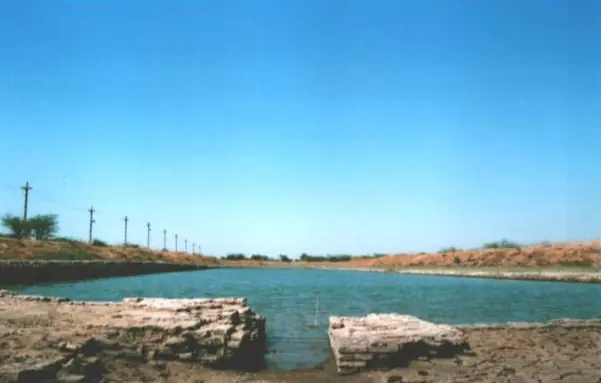
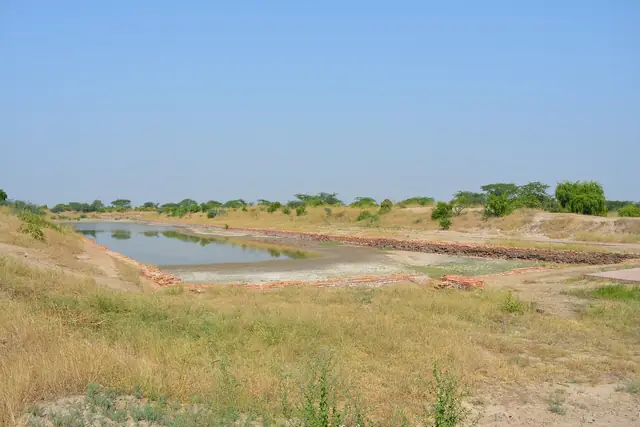
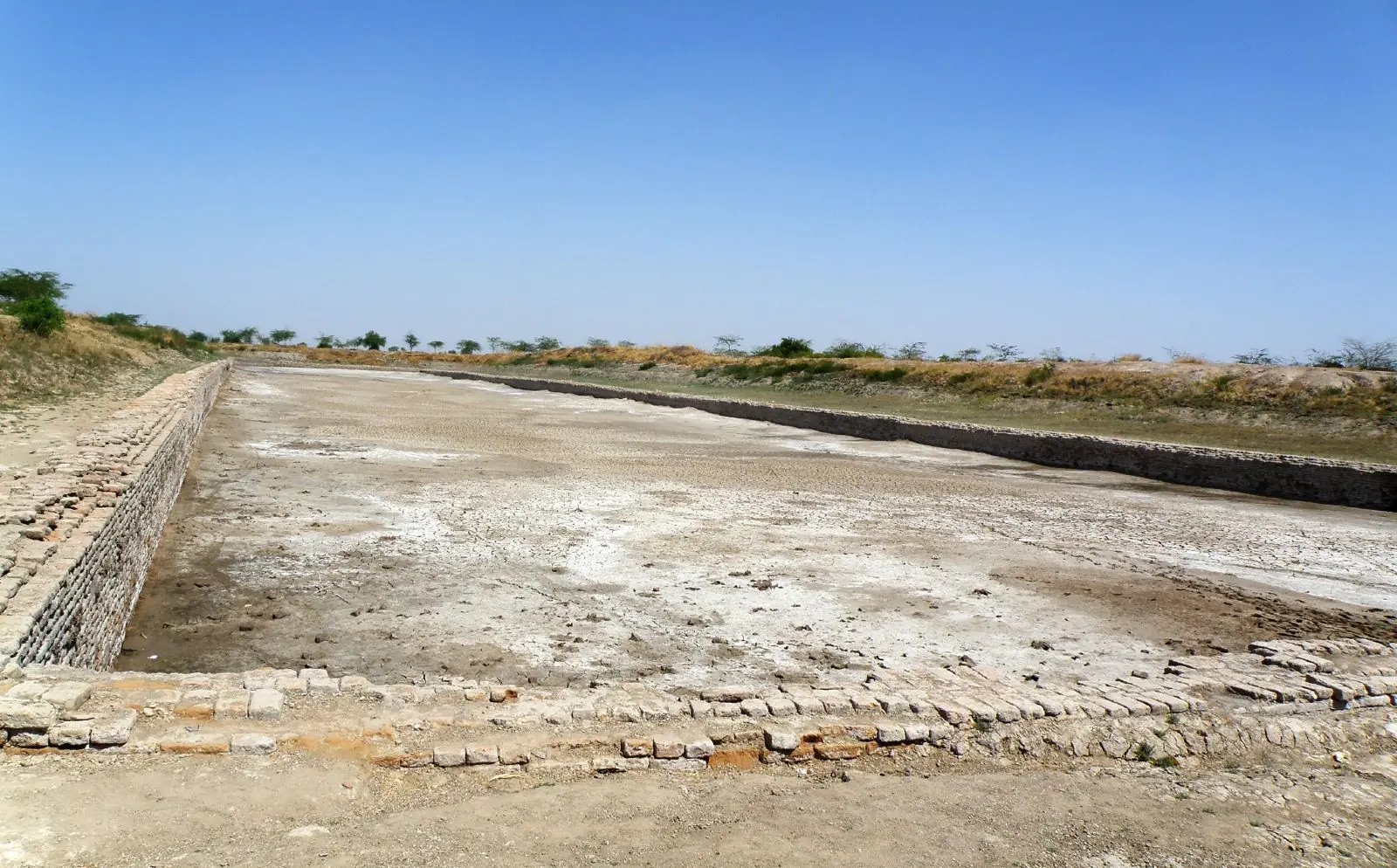
S. R. Rao of the Archaeological Survey excavated Lothal between 1955 and 1960. On the east of the town he uncovered a trapezoidal basin of burnt brick, roughly 215 by 36 metres, with an inlet channel from an old course of the river and a spillway with grooves for a wooden gate to hold water at low tide. Beside it ran a long wharf platform and a warehouse on a high base. The town also had a bead factory, furnaces for copper, and seals from as far as the Gulf.
02Dock or tank?
In 1968 Lawrence Leshnik argued in American Anthropologist that the basin was a reservoir for drinking and irrigation water, pointing to the narrow channel and doubts about whether boats could reach it. Rao answered with marine microfossils, foraminifera, from the basin floor studied by the National Institute of Oceanography, and with stone anchors found nearby. Later work on the old river channels has mostly supported a link to tidal water. The basin may have served more than one purpose over its life. The site gives both readings.
03A port of the sea trade
Whatever the basin was, Lothal was a sea-trading town. Harappan seals and beads reached Mesopotamia, whose texts speak of ships from Meluhha, generally identified with the Indus lands, and a Persian Gulf seal was found at Lothal itself. The government of India is building a National Maritime Heritage Complex beside the site. If you go, the basin is best seen in the early morning, from the top of the warehouse mound.