Cite
MLA
“Meluhha in Mesopotamian records.” Hindu History, 2026, https://www.hinduhistory.in/samudra/meluhha-mesopotamia/. Accessed .
APA
Hindu History. (2026). Meluhha in Mesopotamian records. Retrieved , from https://www.hinduhistory.in/samudra/meluhha-mesopotamia/
What defines it
- 01
Sargon of Akkad names Meluhha’s ships at Agade
- 02
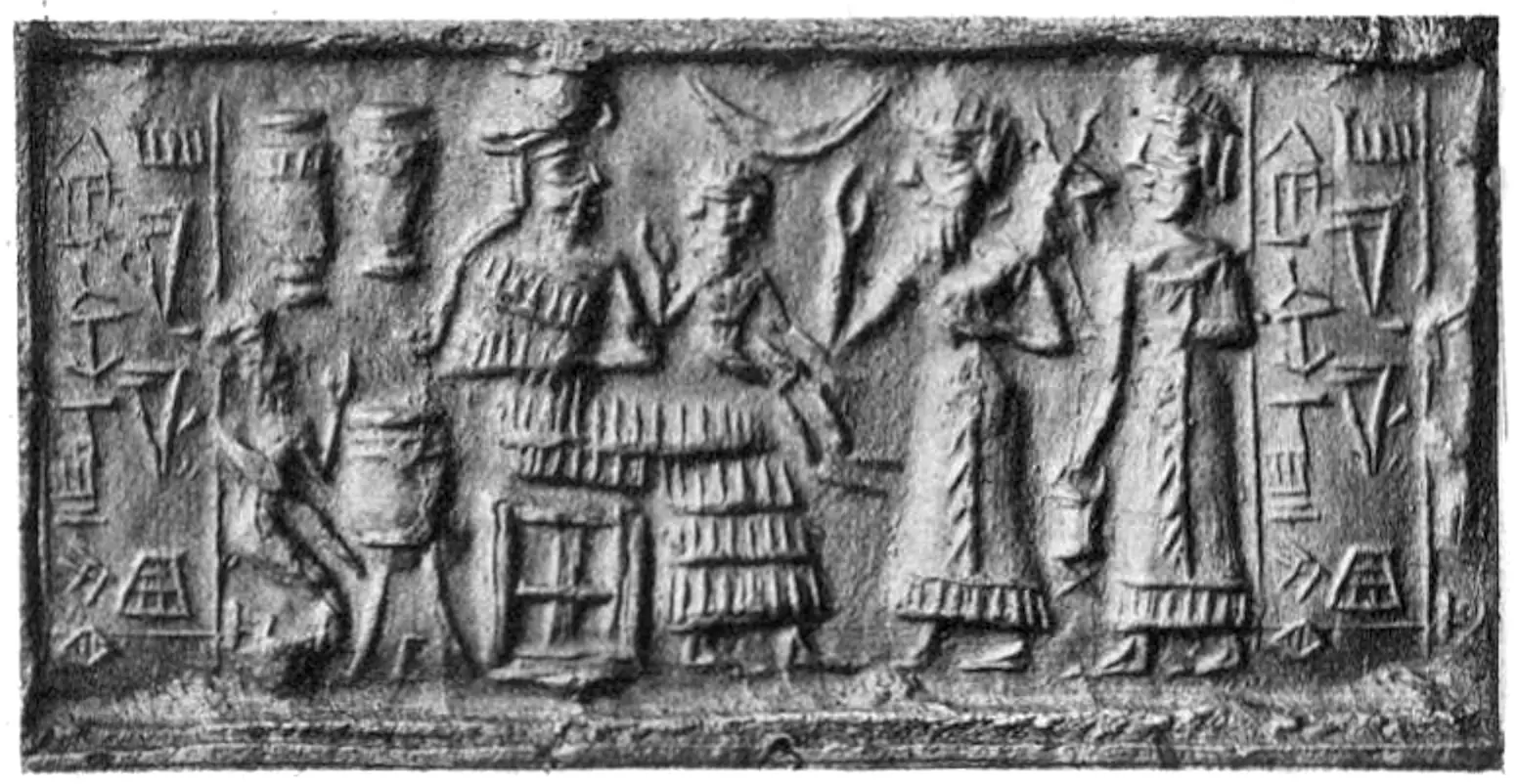
Seal of Shu-ilishu, interpreter of Meluhhan (Louvre AO 22310)
- 03
Harappan etched carnelian beads in the royal graves of Ur
01Ships at the quay of Agade
Sargon of Akkad, who ruled Mesopotamia around 2300 BCE, boasted in an inscription that ships of Meluhha, Magan and Dilmun were moored at the quay of his capital Agade. Magan is usually placed in Oman and Dilmun in Bahrain. Meluhha lay beyond both. A generation or two later, Gudea of Lagash recorded bringing wood and carnelian from Meluhha for his temple building.
02An interpreter of Meluhhan
A small cylinder seal of the Akkadian period, now in the Louvre, belonged to a man named Shu-ilishu. Its line of cuneiform calls him an interpreter of the Meluhhan language. Trade was steady enough that someone made a living translating for it. Later Ur III texts even speak of a village of Meluhha people living in southern Mesopotamia.
03What the ground confirms
Etched carnelian beads of Harappan make lie in the royal graves at Ur. Square Harappan seals and Harappan weights have been found in Mesopotamia and on the Gulf islands. The Indus script is still unread, so we do not know what the Harappans called themselves. The goods match what the Mesopotamians said they bought from Meluhha.