Cite
MLA
“Lothal and Harappan sea trade.” Hindu History, 2026, https://www.hinduhistory.in/samudra/lothal-harappan-dock/. Accessed .
APA
Hindu History. (2026). Lothal and Harappan sea trade. Retrieved , from https://www.hinduhistory.in/samudra/lothal-harappan-dock/
What defines it
- 01
Excavated by S. R. Rao, ASI, 1955–60
- 02
Brick basin with inlet and spillway, read as a dock
- 03
Bead factory working carnelian and agate
- 04
A Persian Gulf type seal found on site
01The basin S. R. Rao dug
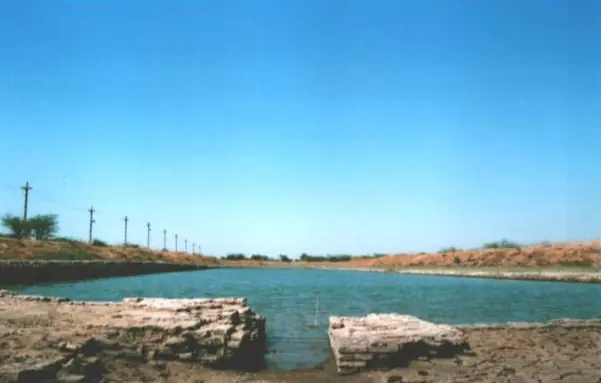
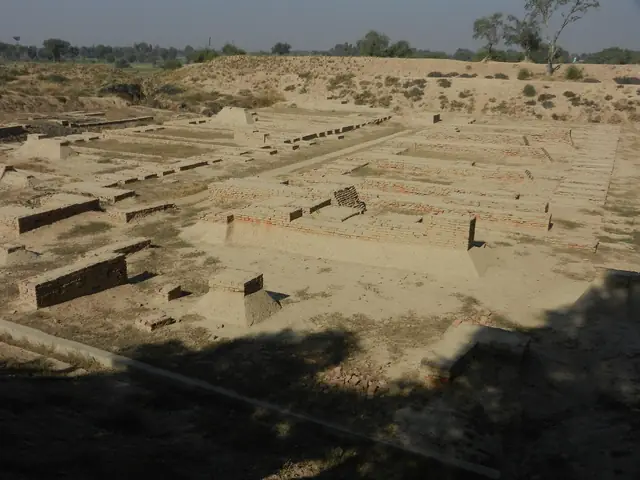
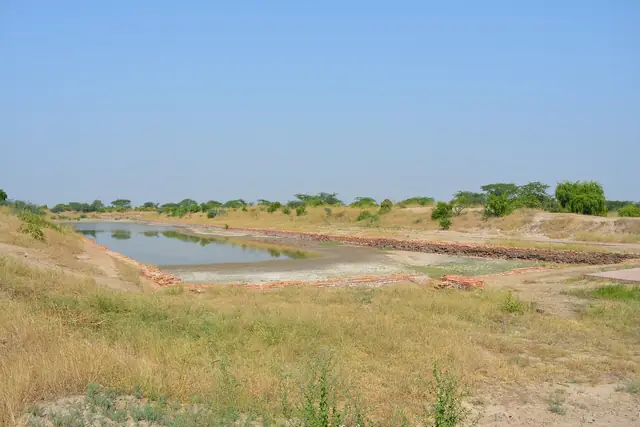
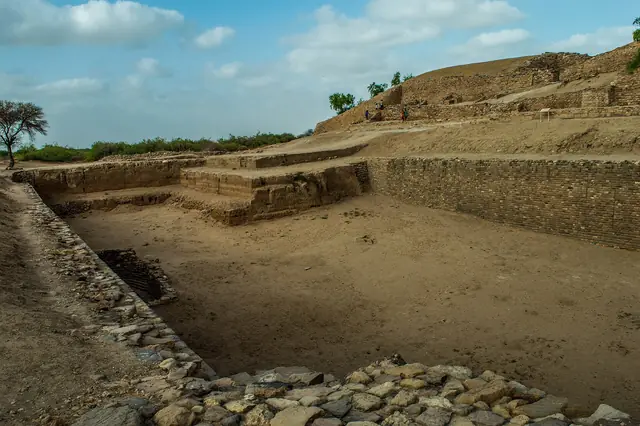
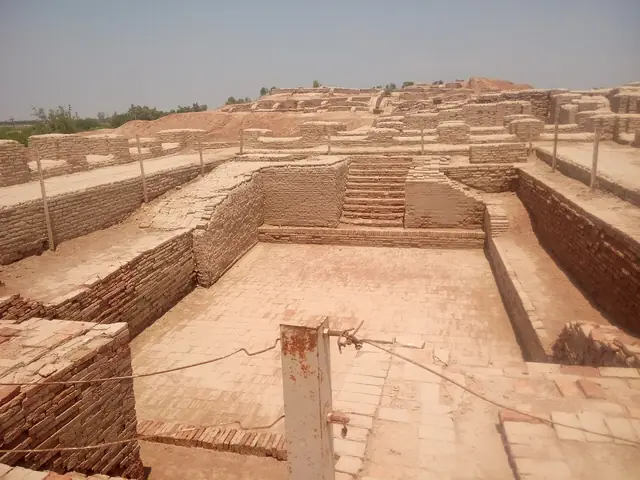
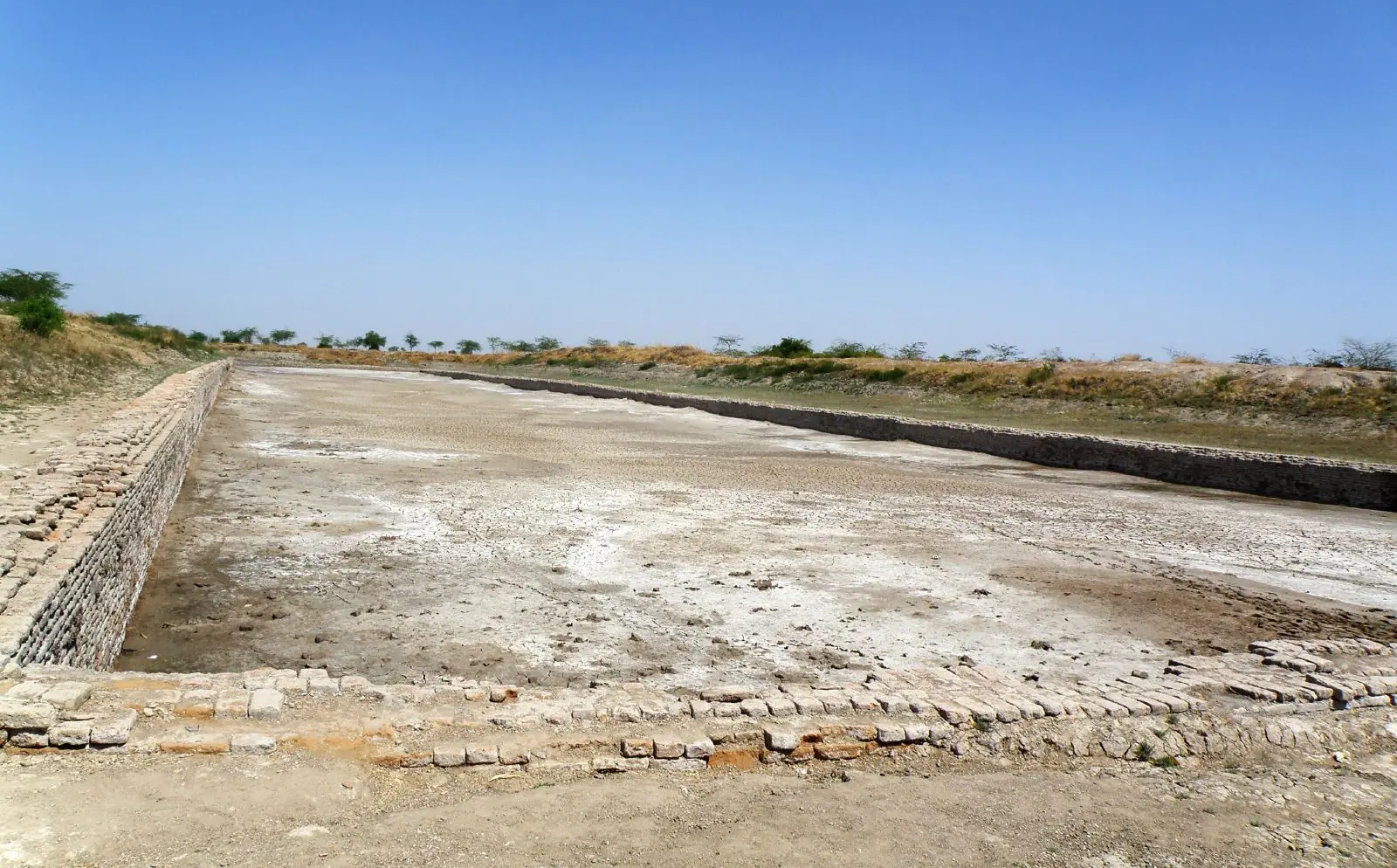
Between 1955 and 1960 the Archaeological Survey of India, led by S. R. Rao, cleared a long trapezoid of burnt brick on the east side of Lothal, with an inlet channel and a spillway. Rao argued that boats came up an old course of the Bhogavo river at high tide and lay in the basin to load. Not every archaeologist agreed; some have read it as a reservoir for fresh water. The wharf, the warehouse with sealed bales beside it, and the town’s workshops still make the trading reading the stronger one for most visitors and many scholars.
02Beads for distant markets
Lothal was a factory town. Its bead-makers drilled carnelian and agate brought from the Gujarat hills, and its coppersmiths and shell-cutters worked beside them. A round seal of the type common in the Persian Gulf islands turned up here, a sign that men from Dilmun knew this port. Harappan weights, cut in a strict binary-and-decimal series, let a merchant at Lothal and one at Mohenjo-daro weigh a load the same way.
03Lothal today
The site lies about 80 km south-west of Ahmedabad, with an ASI museum beside the mound. The Government of India is building a National Maritime Heritage Complex next to it, meant to tell the whole story of Indian seafaring from this first dock onward.