Cite
MLA
“Harappan town planning and drains.” Hindu History, 2026, https://www.hinduhistory.in/vijnana/harappan-town-planning-drainage/. Accessed .
APA
Hindu History. (2026). Harappan town planning and drains. Retrieved , from https://www.hinduhistory.in/vijnana/harappan-town-planning-drainage/
01Bricks and blocks
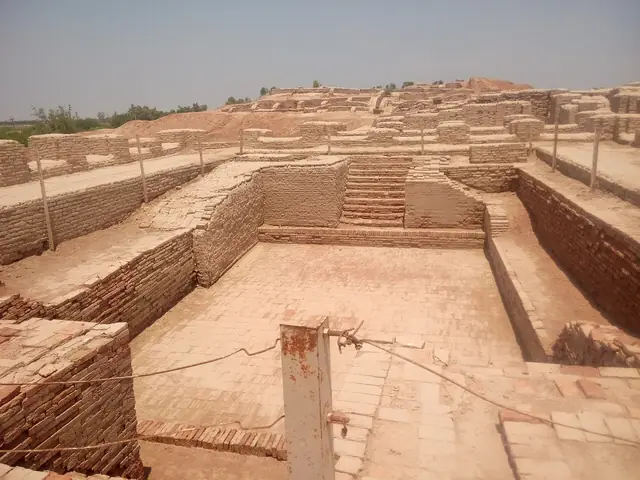
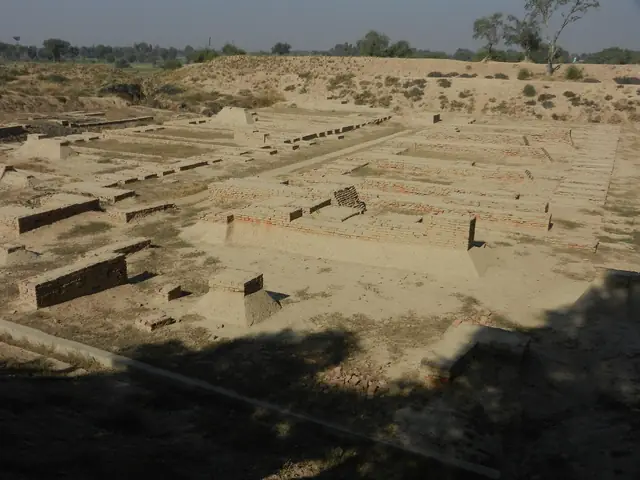
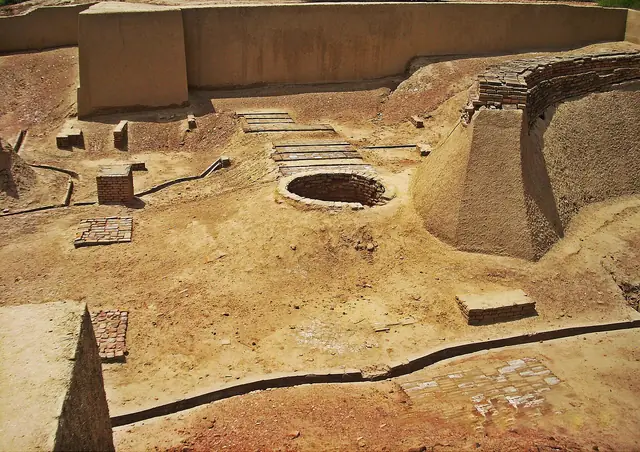
From Harappa and Mohenjo-daro to Kalibangan, Dholavira and Rakhigarhi, bricks were made in the ratio 1 : 2 : 4 of thickness, width and length, whatever their size. Mohenjo-daro had a raised citadel and a lower town of streets running roughly north-south and east-west, with houses opening on lanes, not on the main roads. Many houses had a bathing floor of fitted bricks and a toilet draining into the street. Michael Jansen counted around 700 wells at Mohenjo-daro.
02Drains and the Great Bath
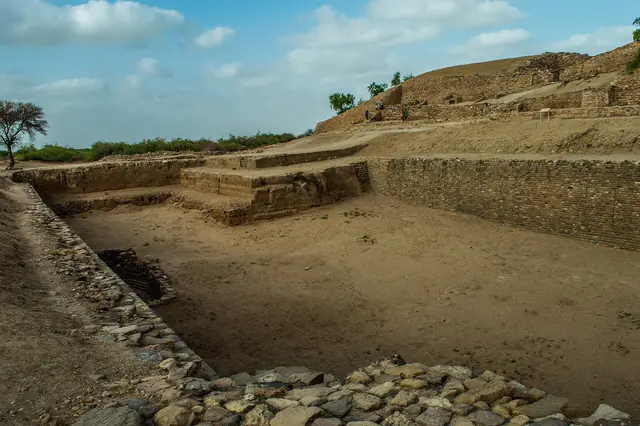
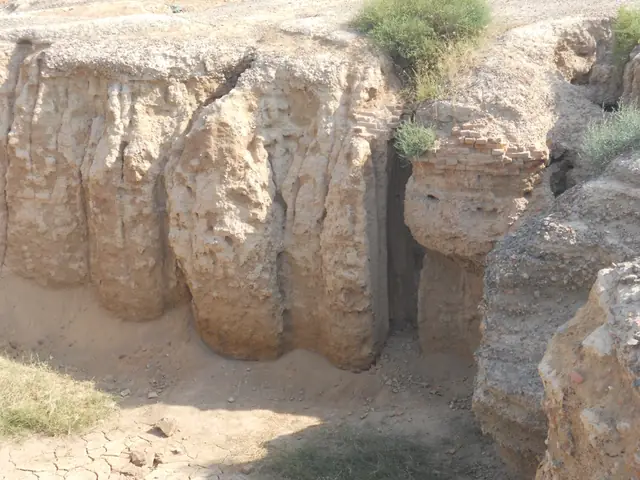
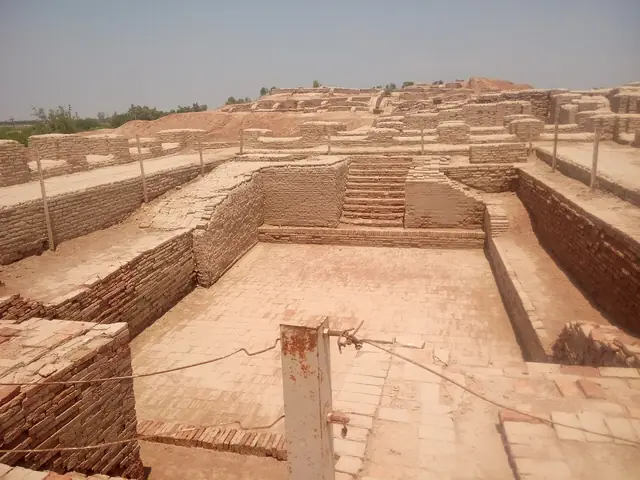
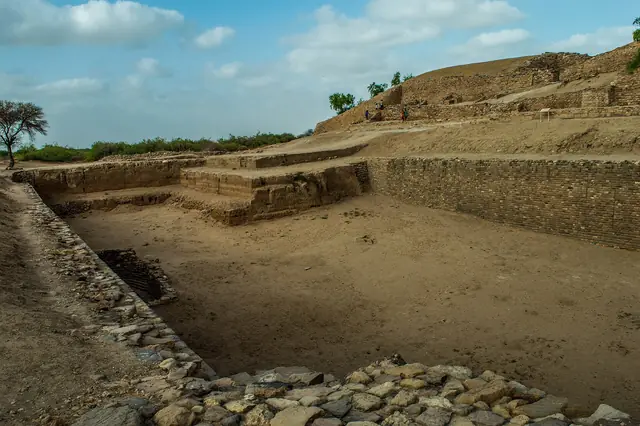
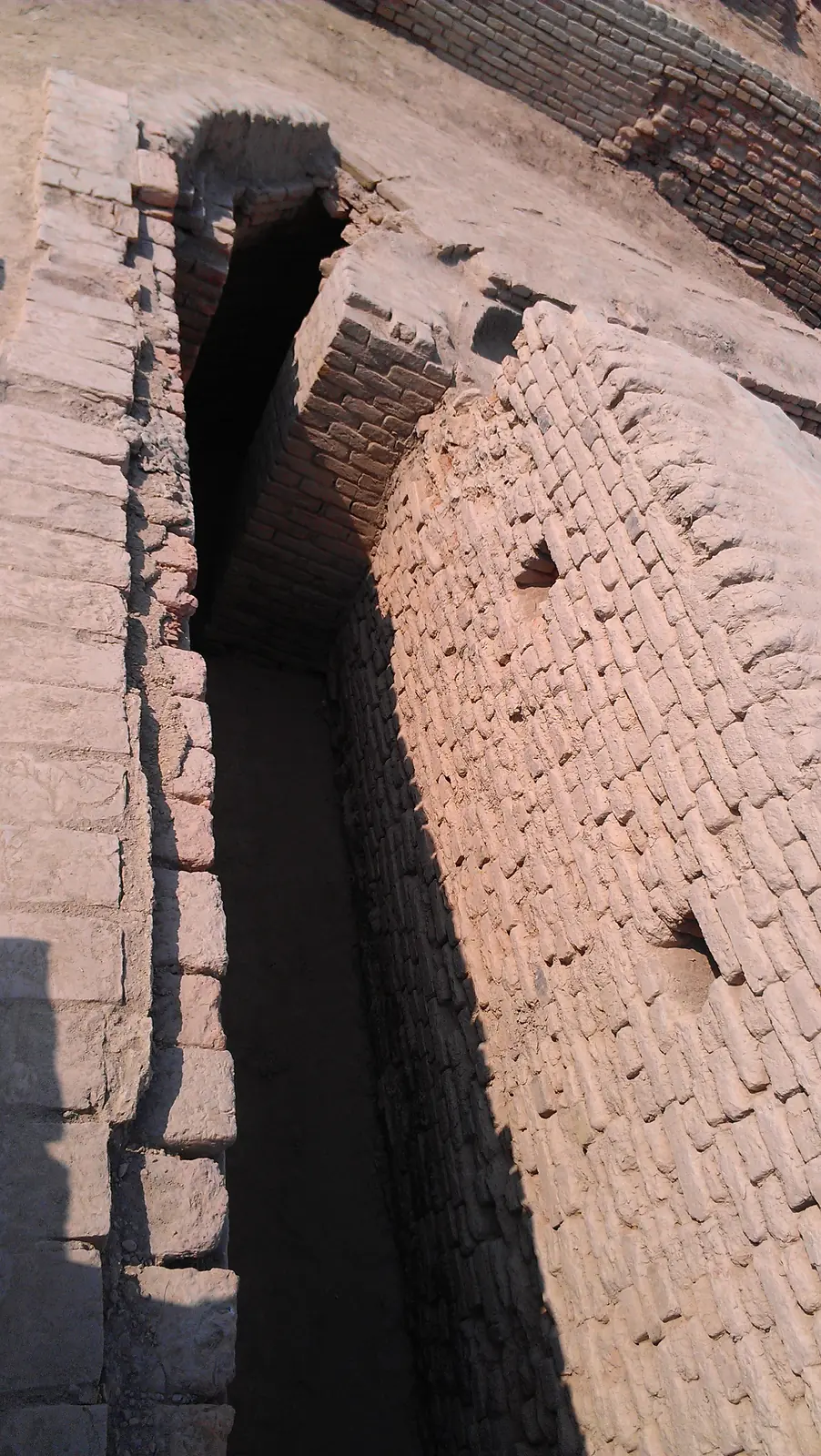
House drains ran into brick sewers along the streets, covered with bricks or stone slabs that could be lifted, with soak pits and inspection points where solids settled. The Great Bath at Mohenjo-daro, about 12 by 7 metres and 2.4 metres deep, was made watertight with fitted bricks set in gypsum and a layer of bitumen behind, and emptied by a corbelled drain. Dholavira in Kutch cut a chain of large reservoirs into rock and diverted two seasonal streams to fill them, in a dry land.
03What is not known
No palace or royal tomb has been found, and the Indus script is not yet read, so who planned and maintained all this is unknown. The idea of one central authority is debated; some archaeologists see guilds or councils of citizens. Continuity into later Bharat shows in fire altars at Kalibangan and Lothal, in the standard weights, and in the ploughing pattern still used in Rajasthan. Dholavira became a UNESCO World Heritage Site in 2021.