01Lalitaditya’s temple
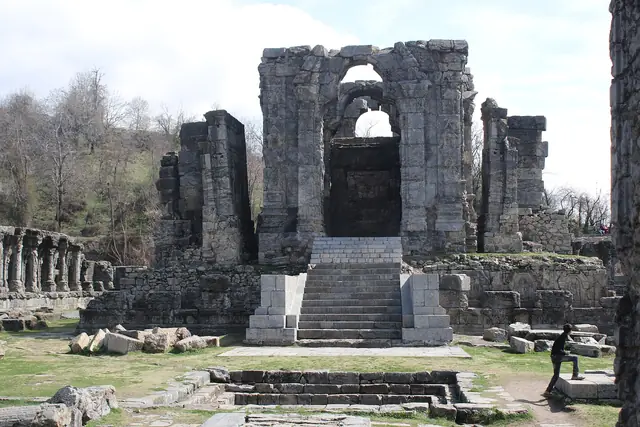
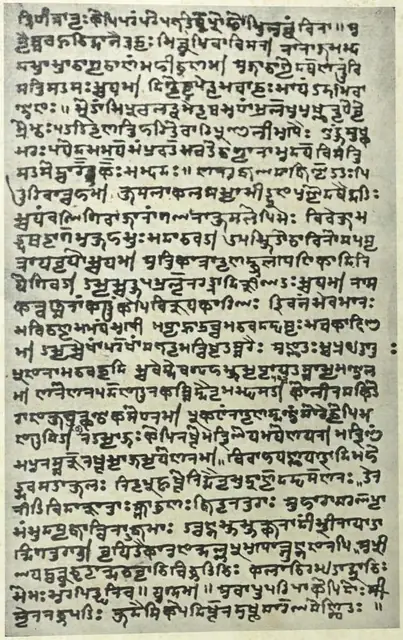
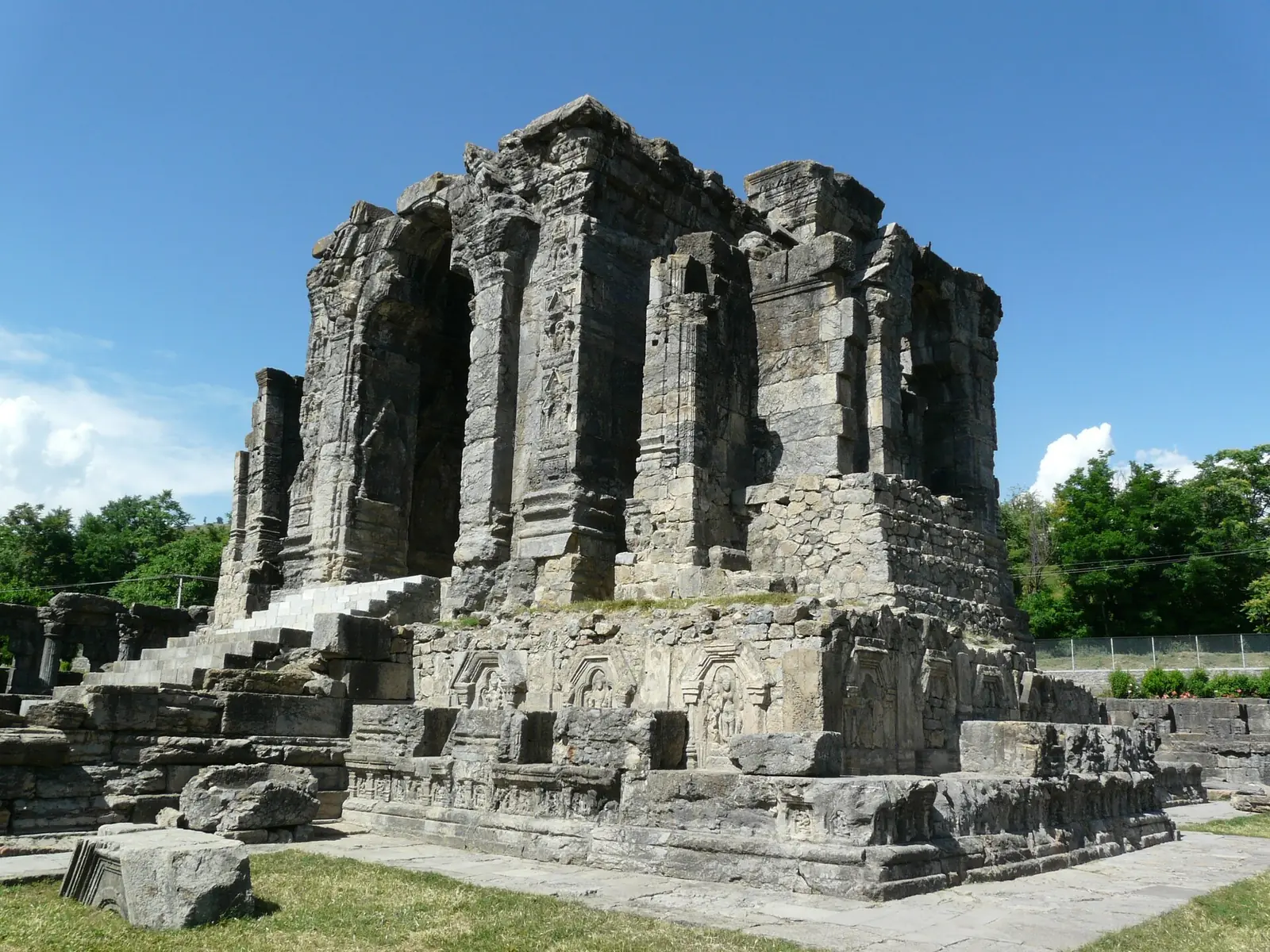
Kalhana writes in the fourth book of the Rajatarangini that Lalitaditya, the conqueror who carried Kashmir’s arms to the plains and beyond the mountains, built the wonderful shrine of Martanda with its massive walls and the town around it. The site was chosen with care: a high karewa plateau looking down the whole Lidder and Jhelum valley toward Anantnag. The main shrine stood in the middle of a great courtyard, ringed by a colonnade of 84 fluted columns and small cells, with a gateway on the west as high as the shrine itself.
02Destruction under Sikandar
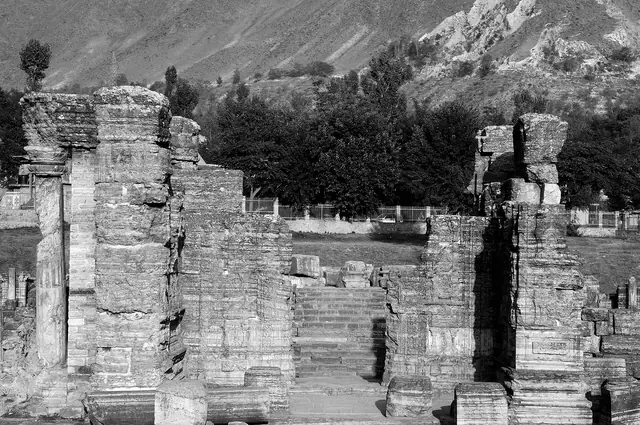
Jonaraja, who continued Kalhana’s chronicle in the 15th century, records that Sultan Sikandar of Kashmir (r. 1389–1413), urged on by his minister Suhabhatta, broke the temples of the valley, and names Martanda among them. Persian chroniclers of the next centuries give Sikandar the title Butshikan, the breaker of idols. The roof fell, the shrine was gutted, and the stones lay where they dropped. What you see today are the massive walls of the shrine, the colonnade and the gateway, still carrying worn figures of Ganga, Yamuna and Surya.
03The ruin today
The temple is a protected monument of the Archaeological Survey of India. John Burke photographed it in 1868, and those plates show almost exactly what stands now. Kashmiri Pandits still come to bathe in the springs at Mattan below, the Martand tirtha where shraddha is done for the ancestors. Stand at the western gate in the late afternoon and the light falls straight down the courtyard onto the shrine, as the builders meant it to for the Sun.
The life of this place
- 8th centuryLalitaditya Muktapida builds the temple of Martanda (Rajatarangini IV).
- c. 1389–1413Destroyed on the orders of Sultan Sikandar (Jonaraja’s Rajatarangini).
- 1868 CEJohn Burke photographs the ruins.
9 km east of Anantnag, above Mattan; an ASI ticketed site, open sunrise to sunset.