Cite
MLA
“Kashmir Shaivism (Trika and Pratyabhijna).” Hindu History, 2026, https://www.hinduhistory.in/darshana/kashmir-shaivism/. Accessed .
APA
Hindu History. (2026). Kashmir Shaivism (Trika and Pratyabhijna). Retrieved , from https://www.hinduhistory.in/darshana/kashmir-shaivism/
What defines it
- 01
Chaitanyam atma: the self is consciousness (Shiva Sutra 1.1)
- 02
Prakasha and vimarsha: Shiva and Shakti as one
- 03
Thirty-six tattvas and five kanchukas
- 04
Spanda: the pulse of consciousness
- 05
Pratyabhijna: liberation as recognition
01Sutras found on a rock
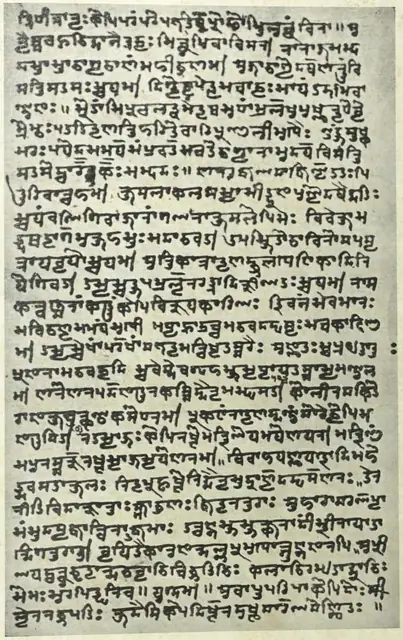
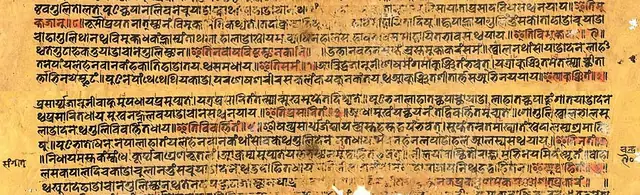
Tradition says that Bhagwan Shiva told the sage Vasugupta in a dream where to find his teaching, and that Vasugupta found the Shiva Sutras inscribed on a rock on Mahadev mountain near Srinagar. The first sutra is two words: chaitanyam atma, the self is consciousness. Vasugupta’s disciple Bhatta Kallata spread the Spanda teaching, of Shakti as the throb or pulse of consciousness; Kalhana’s Rajatarangini places Kallata and other siddhas in the reign of Avantivarman. Somananda wrote the Shivadrishti around 900, and his disciple Utpaladeva composed the Ishvara Pratyabhijna Karika, which gave the school its name: the Philosophy of Recognition.
02Light that knows itself
Shiva is prakasha, the light of consciousness, and vimarsha, that light’s awareness of itself; vimarsha is Shakti, so Shiva and Shakti are never two. Out of perfect freedom, svatantrya, Shiva shows himself as the world through thirty-six tattvas, from Shiva and Shakti down to earth. Where Sankhya stops at twenty-five, the Shaiva list adds the pure tattvas above and the five kanchukas, sheaths that limit universal power into a finite self. The world is real, a real self-display (abhasa) of Shiva, not an illusion. Bondage is forgetting; liberation is recognising, in this very life and body, that the limited self is Shiva himself.
03Abhinavagupta and after
Abhinavagupta (c. 975–1025) gathered the Trika and Krama streams into the Tantraloka, thirty-seven chapters on every aspect of Shaiva practice, and wrote its summary, the Tantrasara, and long commentaries on Utpaladeva. The same scholar wrote the Abhinavabharati on the Natya Shastra, so this pillar’s philosophy and the theory of rasa share an author. His disciple Kshemaraja wrote the Pratyabhijnahridayam, a short primer, and commentaries on the Shiva Sutras and Spanda Karika. In the 14th century the yogini Lal Ded sang the teaching in Kashmiri vakhs that people still quote. In the 20th century Swami Lakshman Joo of Srinagar (1907–1991) taught the texts to a new generation.
Great masters
In the texts
- Shiva Sutras of Vasugupta
- Ishvara Pratyabhijna Karika of Utpaladeva
- Tantraloka and Tantrasara of Abhinavagupta
- Pratyabhijnahridayam of Kshemaraja