Cite
MLA
“Kashmiri (Koshur).” Hindu History, 2026, https://www.hinduhistory.in/lipi/kashmiri-language/. Accessed .
APA
Hindu History. (2026). Kashmiri (Koshur). Retrieved , from https://www.hinduhistory.in/lipi/kashmiri-language/
01The speech of Sharada Desha
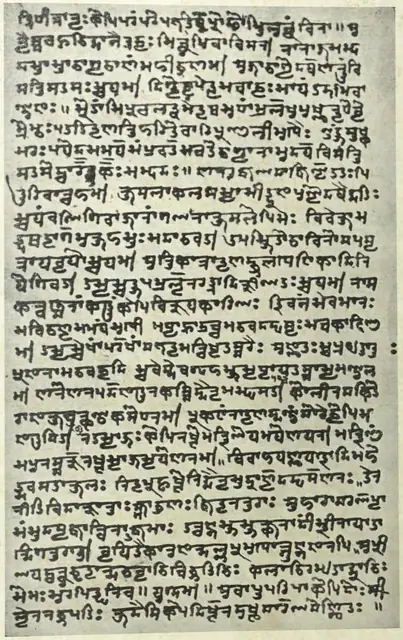
For centuries the learned of Kashmir wrote in Sanskrit, the language of Kalhana, Abhinavagupta and Kshemendra, while the people spoke Kashmiri. It is an Indo-Aryan language with sounds and a word order unusual among its neighbours; George Grierson grouped it with the ‘Dardic’ languages of the northwest, a classification many scholars now question. It was written in Sharada, then in Persian script, and Kashmiri Pandits also use Devanagari.
02Lal Ded’s vakhs
Lalleshwari, Lal Ded, a Shaiva yogini of the 14th century, left her home and wandered the valley, speaking short four-line verses, vakhs, about the search for Shiva within. They were kept in memory for centuries before anyone wrote them down. Sheikh Nooruddin, revered as Nund Rishi, composed shruks in the same tradition, and in the 16th century Habba Khatun sang lol, songs of longing, that are still sung.
03Today
Kashmiri is in the Eighth Schedule of the Constitution, and the Jammu and Kashmir Official Languages Act of 2020 made it one of the Union Territory’s official languages, with Dogri, Hindi, Urdu and English. The 2011 Census counted 67,97,587 Kashmiri speakers. Kashmiri Pandit families displaced from the valley in 1990 keep the language alive in Jammu, Delhi and abroad, and recite Lal Ded’s vakhs at family gatherings.