Cite
MLA
“Sharada.” Hindu History, 2026, https://www.hinduhistory.in/lipi/sharada-script/. Accessed .
APA
Hindu History. (2026). Sharada. Retrieved , from https://www.hinduhistory.in/lipi/sharada-script/
01The script of Sharada Desha
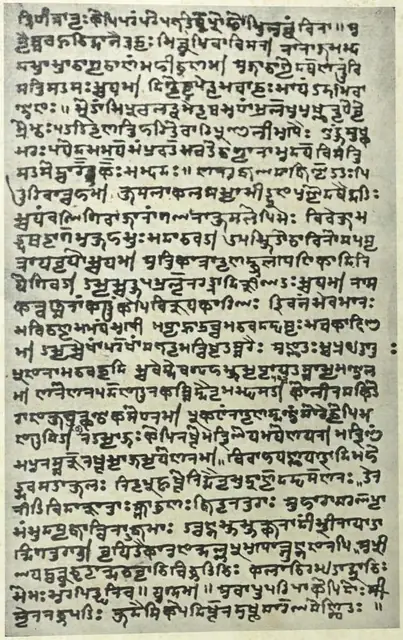
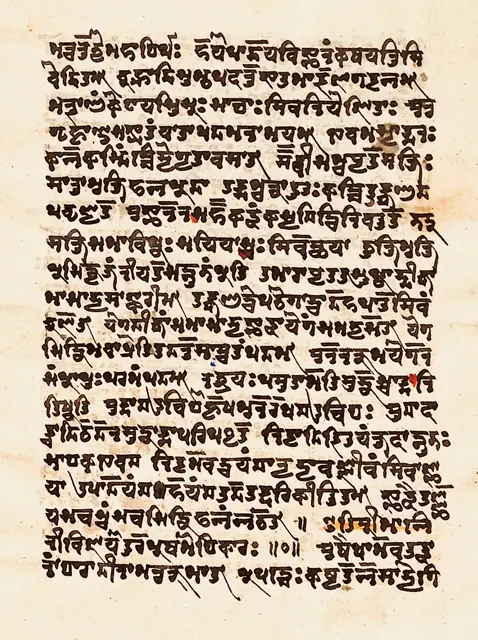
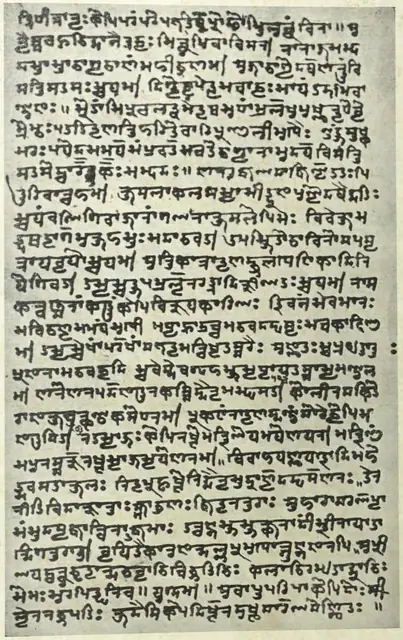
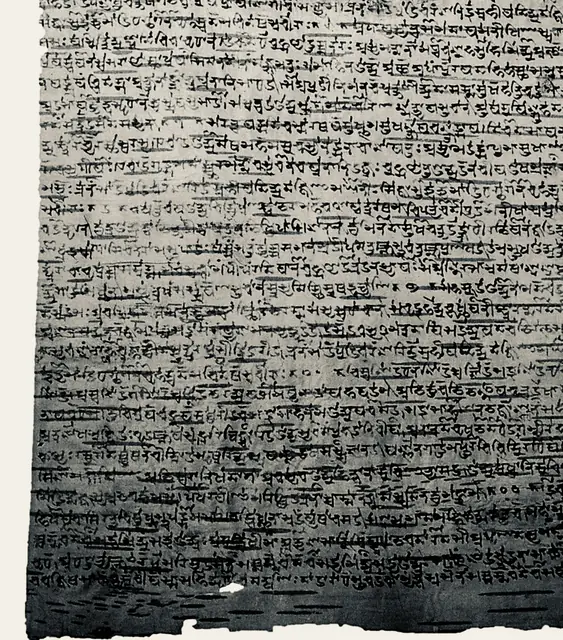
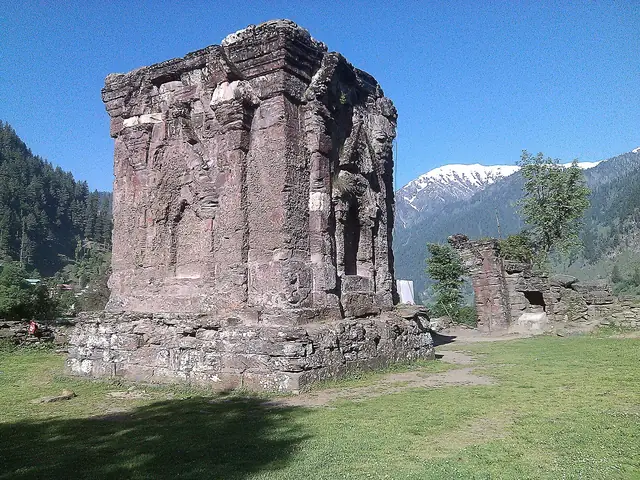
Kashmir was called Sharada Desha, the land of Devi Sharada, Saraswati, whose shrine at Sharada Peeth on the Kishanganga was a seat of learning. The script grew out of the Gupta letters in the northwest from about the 8th century and became the everyday hand of the valley and the hills around it. Kalhana wrote his Rajatarangini in it in the 12th century, and the commentaries of Abhinavagupta were copied in it on birch bark.
02Birch bark and its children
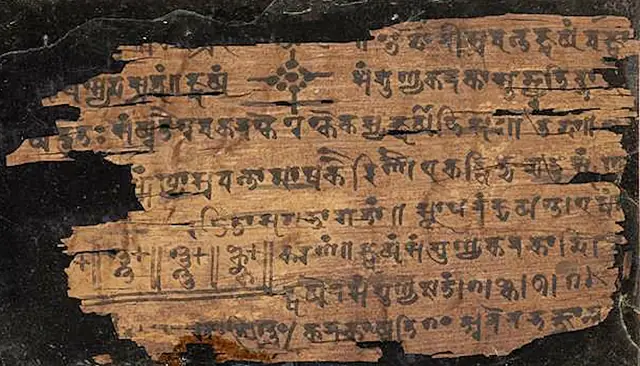
The Bakhshali manuscript, the old mathematical text with its dot for zero, is written in Sharada. So are many of the Rigveda manuscripts that came from Kashmir, which preserve readings found nowhere else. In the Punjab hills Sharada gave rise to Takri, used for Dogri and the Pahari languages, and to the Landa merchant scripts; from that line Guru Angad Dev’s Gurmukhi took its letters in the 16th century.
03Stein’s codex and today
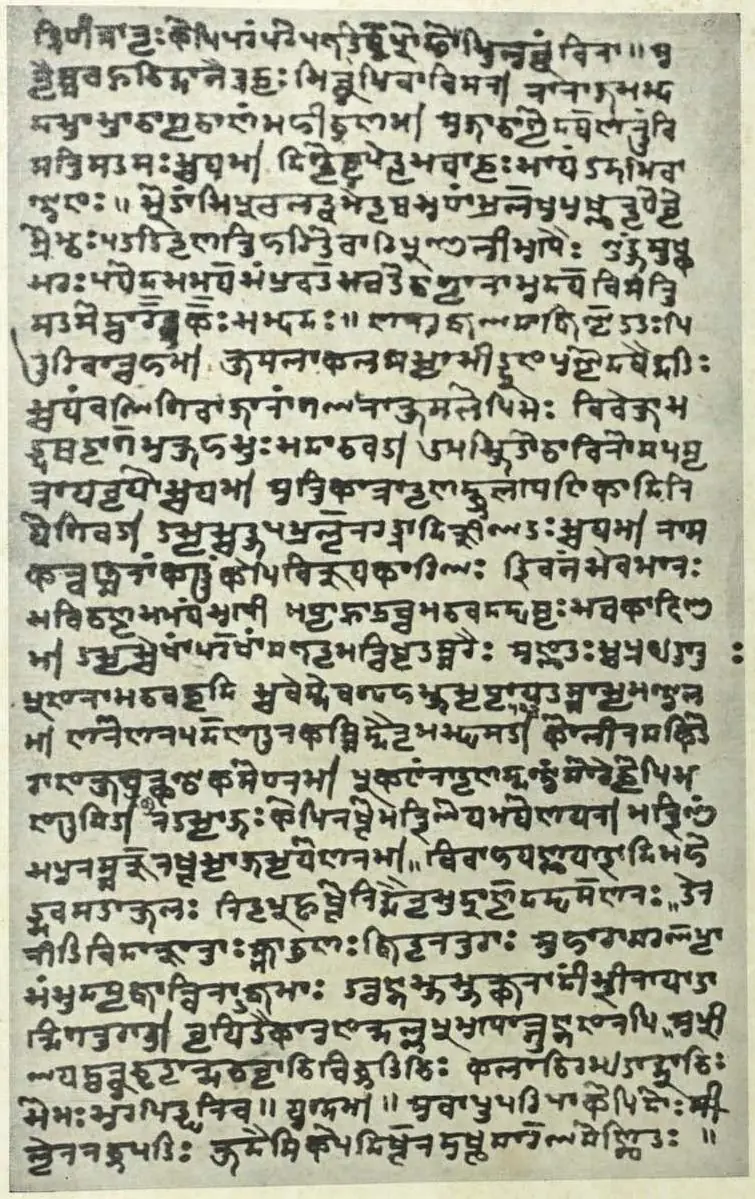
Aurel Stein edited the Rajatarangini in 1892 from a Sharada codex copied in the 17th century, and his translation of 1900 is still in use. Persian replaced Sharada in the courts of Kashmir, and Devanagari replaced it in print. A few Kashmiri Pandit priests still write horoscopes and ritual texts in the old letters, and the script has been encoded in Unicode, so it can again be typed.