Cite
MLA
“Pandharpur Wari.” Hindu History, 2026, https://www.hinduhistory.in/yatra/pandharpur-wari/. Accessed .
APA
Hindu History. (2026). Pandharpur Wari. Retrieved , from https://www.hinduhistory.in/yatra/pandharpur-wari/
The route
- 1Alandi
- 2Pune
- 3Saswad
- 4Jejuri
- 5Lonand
- 6Phaltan
- 7Natepute
- 8Wakhari
- 9Pandharpur
What defines it
- 01
Jnaneshwar palkhi from Alandi, Tukaram palkhi from Dehu
- 02
About 250 km in roughly three weeks
- 03
Dindis singing abhangas; tulsi mala; ‘Ram Krishna Hari’
- 04
Ringan: the horse of the saint runs the circle
- 05
Palkhi begun by Narayan Maharaj in 1685
01The saints of the wari
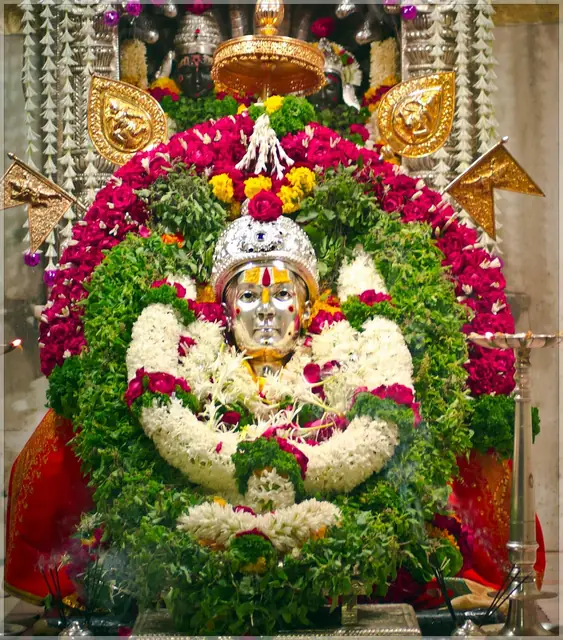
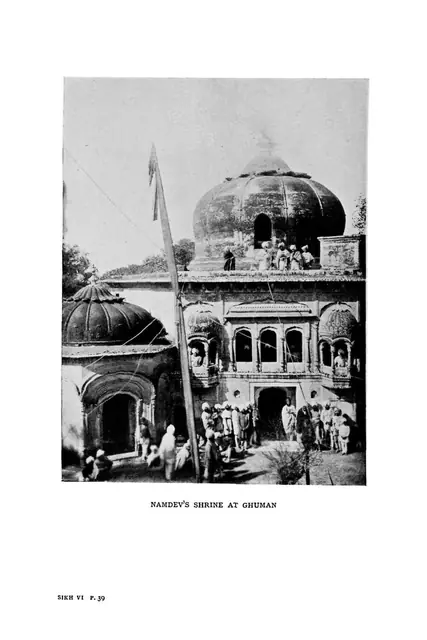
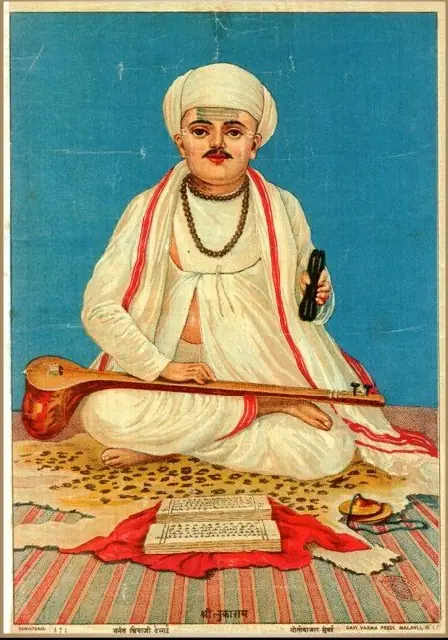
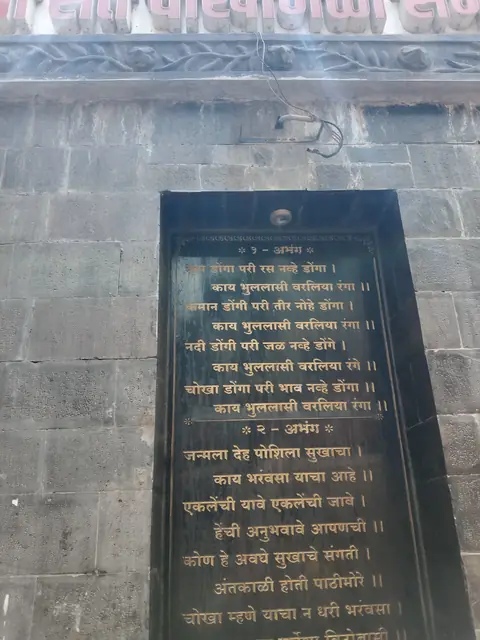
Wari means a pilgrimage made again and again, and a warkari is one who keeps it. The sampradaya looks back to Pundalik, whose seva to his parents made Bhagwan Vitthal wait on a brick at Pandharpur, and then to the saints who sang him in Marathi: Jnaneshwar of Alandi in the thirteenth century, his contemporary Namdev the tailor, Eknath of Paithan in the sixteenth, and Tukaram of Dehu in the seventeenth. Their abhangas are what the dindis, the singing groups, still carry along the road. The warkari wears a tulsi mala, keeps the Ekadashi fast and says ‘Ram Krishna Hari’ as a greeting; caste is left at home for the length of the walk.
02How the palkhi began
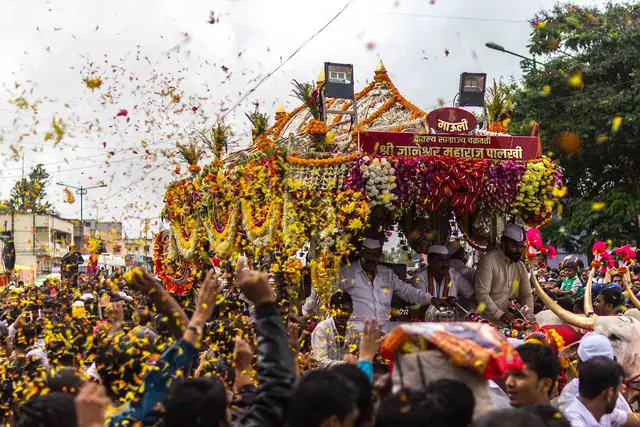
Warkaris walked to Pandharpur long before anyone carried a palanquin. In 1685 Narayan Maharaj, the youngest son of Tukaram, put his father’s silver padukas in a palkhi, went with his dindi to Alandi, added Jnaneshwar’s padukas to the same palkhi and took both to Pandharpur. Later the two were separated. In the early nineteenth century Haibatravbaba Arphalkar, a courtier of the Scindias from the Satara region, gave the Jnaneshwar palkhi the form it keeps today, with fixed halts and an order for the dindis; sources place this in the 1820s or simply the early 1800s. His descendants, the hereditary Chopdars, still manage that palkhi with the Alandi Devasthan Trust.
03On the road in 2025
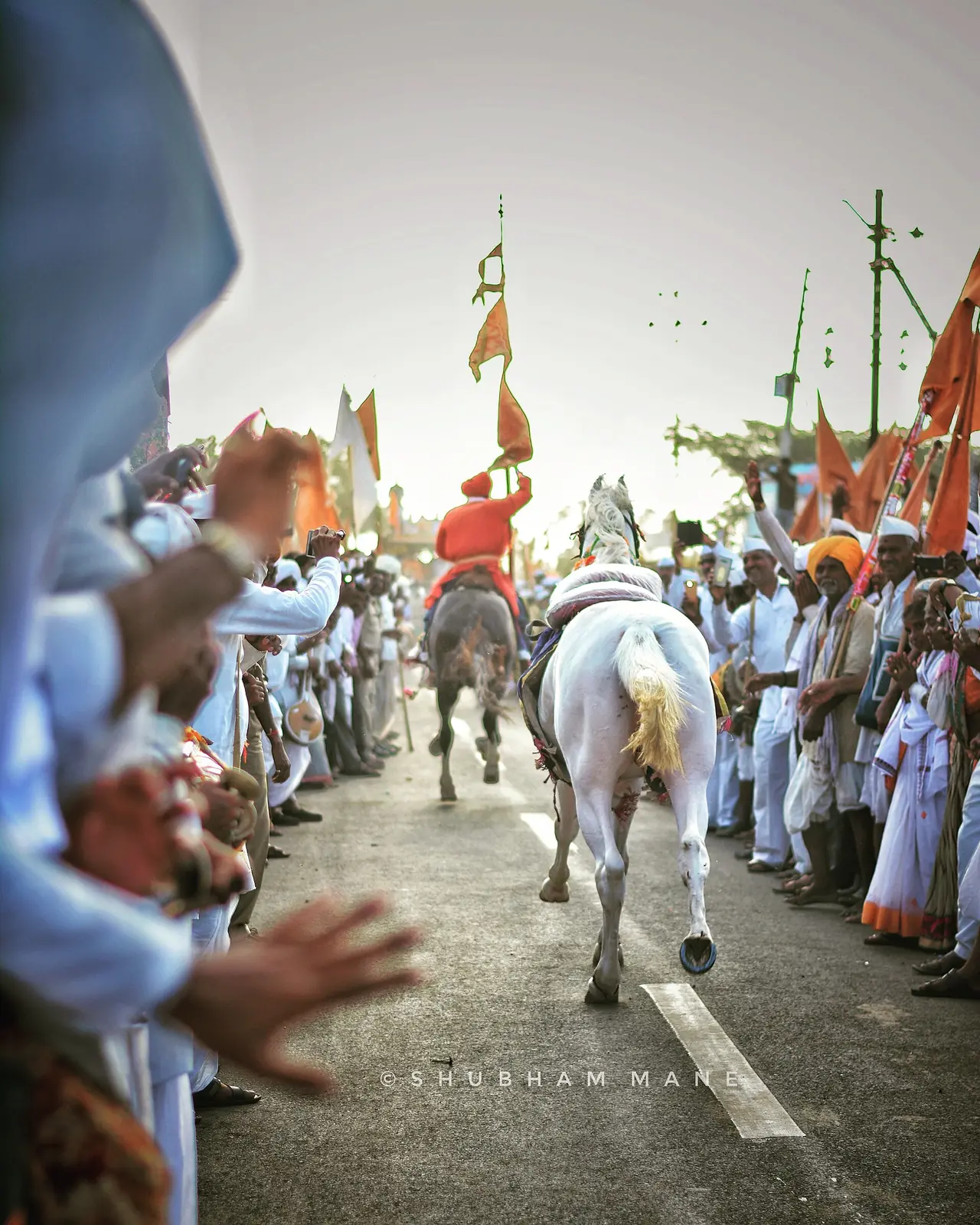
In 2025 Tukaram’s palkhi left Dehu on 18 June and Jnaneshwar’s left Alandi on 19 June. They passed through Pune together, then parted: Jnaneshwar’s over the Dive Ghat to Saswad, Jejuri, Lonand and Phaltan, Tukaram’s by Indapur. On the way come the ringans, where a riderless horse, said to carry the saint, gallops round a circle of warkaris. The palkhis met again at Wakhari and entered Pandharpur for Ashadhi Ekadashi on 6 July, when the Chief Minister of Maharashtra performs the official mahapuja. Counts are rough: newspapers put the walkers at 15 to 20 lakh a year, and the Maharashtra government now pays compensation to the family of any warkari who dies on the road.
Great masters
In the texts
- Jnaneshwari
- Tukaram Gatha