Cite
MLA
“The Gharanas of Hindustani Music.” Hindu History, 2026, https://www.hinduhistory.in/kala/gharanas/. Accessed .
APA
Hindu History. (2026). The Gharanas of Hindustani Music. Retrieved , from https://www.hinduhistory.in/kala/gharanas/
What defines it
- 01
Lineage from a founding master
- 02
Distinct voice production and raga treatment
- 03
Ganda bandhan initiation
- 04
Family-held compositions (bandishes)
01Gwalior, the mother gharana
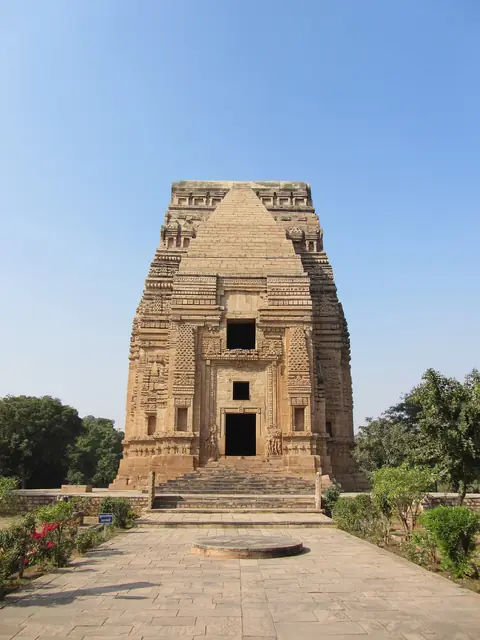
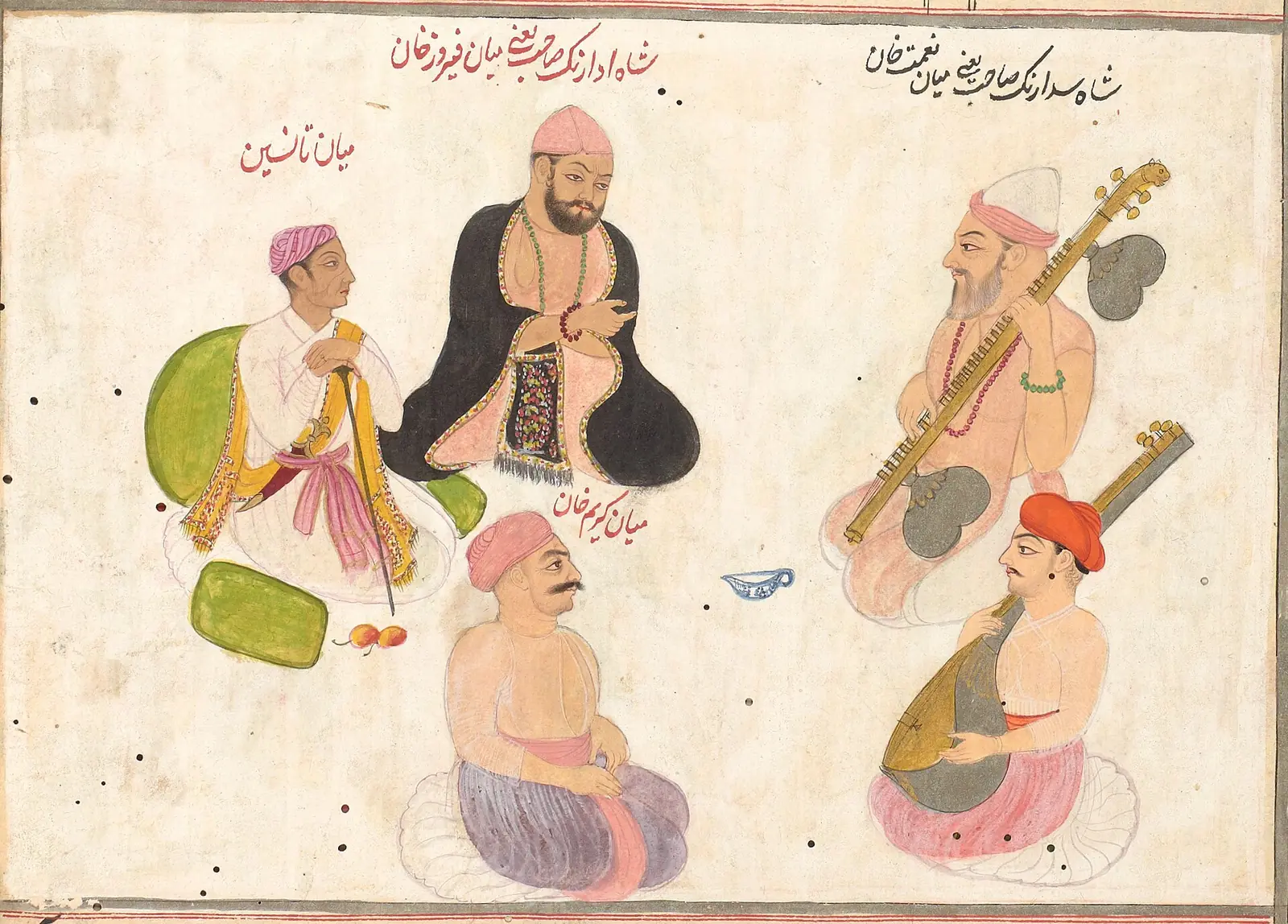
Gwalior is counted the oldest khayal gharana. The brothers Haddu Khan and Hassu Khan, singers at the Scindia court in the 19th century, taught a broad, open-voiced khayal with clear words. Their line passed through Balakrishnabuwa Ichalkaranjikar to Vishnu Digambar Paluskar, and through him to Omkarnath Thakur, D. V. Paluskar and many more. Almost every later gharana took something from Gwalior.
02Agra, Jaipur, Kirana, Patiala
Agra mixed dhrupad weight with khayal, and Faiyaz Khan made it famous. Alladiya Khan built the Jaipur-Atrauli style of intricate, rare ragas, carried by Kesarbai Kerkar, Mogubai Kurdikar and Kishori Amonkar. Kirana, from Abdul Karim Khan, is slow and note-centred; Sawai Gandharva taught it to Gangubai Hangal and Bhimsen Joshi. Patiala gave Bade Ghulam Ali Khan. Among instrumentalists, Allauddin Khan of Maihar trained Ravi Shankar, Ali Akbar Khan, Annapurna Devi and Nikhil Banerjee.
03Ganda bandhan and the guru
A disciple enters a gharana through the ganda bandhan, the tying of a thread on the wrist by the guru, and often lives in the guru’s house for years. The Hindu word guru-shishya parampara and the Muslim ustad-shagird tradition describe the same bond. Today the lines cross freely, and many singers learn from two or three gharanas, but the names still tell a listener what to expect within a few minutes of an alap.