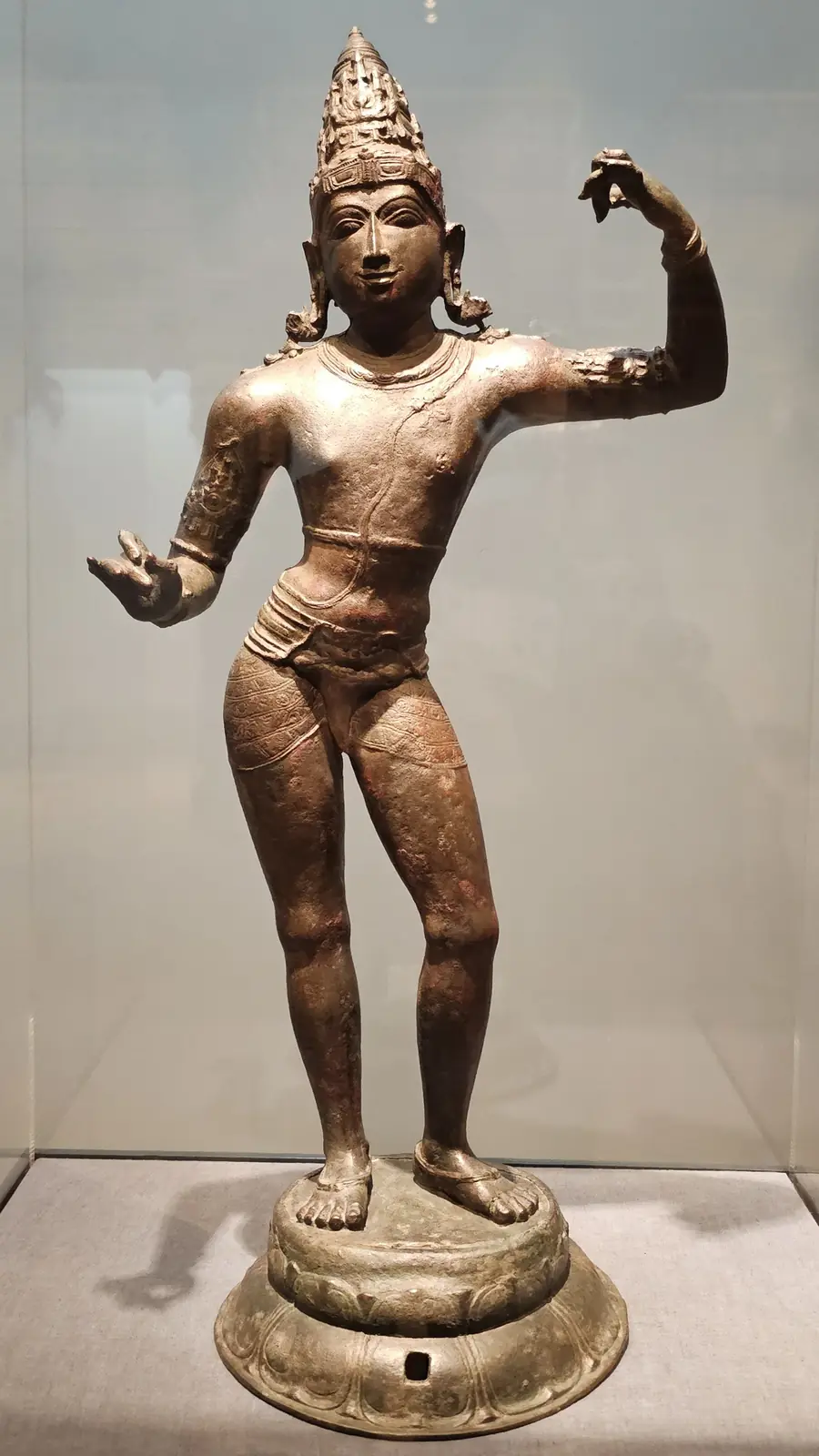
01Born in Ayodhya
The Bala Kanda tells that Dasharatha, king of Kosala, had no son until the putrakameshti yajna performed by Rishi Rishyashringa. The payasa from the sacrificial fire was shared among his three queens, and Kausalya bore Rama on the ninth day of the bright half of Chaitra, under Punarvasu nakshatra. That day is kept as Ram Navami. Kaikeyi bore Bharata, and Sumitra bore Lakshmana and Shatrughna. The four brothers learnt from Guru Vasishtha. Still a boy, Rama went with Maharshi Vishvamitra to guard his yajna, slew Tataka, and at Mithila lifted and broke the great bow of Shiva that no other prince could string. Raja Janaka gave him Sita in marriage.
02Fourteen years in the forest
On the eve of his coronation, Kaikeyi claimed two boons Dasharatha had once granted her: Bharata on the throne and Rama in the forest for fourteen years. Rama went without a word of complaint, with Sita and Lakshmana beside him. At Chitrakoot Bharata found him and begged him to return. Rama would not break his father’s word, so Bharata carried his padukas back and ruled from Nandigram in his name. From Panchavati on the Godavari, Ravana carried Sita away to Lanka. The search brought Rama to Kishkindha, to Sugriva and to Hanuman, who leapt the sea, found Sita in the Ashoka grove and burnt Lanka.
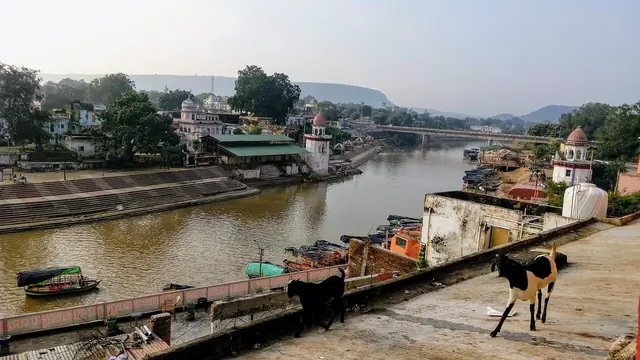
03The Setu and Lanka
The Yuddha Kanda tells how the vanara Nala built a bridge of stones and trees across the sea, and the army crossed to Lanka. Vibhishana, Ravana’s own brother, came over to Rama and was given refuge. In the war that followed, Kumbhakarna and Indrajit fell, and at last Rama killed Ravana with the Brahmastra. At Rameswaram the temple of Ramanathaswamy keeps the tradition, told in the Skanda Purana, that Shri Rama worshipped Mahadev there on his return. He came back to Ayodhya in the Pushpaka vimana, and in much of north India Diwali is kept as the night the city lit lamps to welcome him.
04Ram Rajya and Ayodhya today
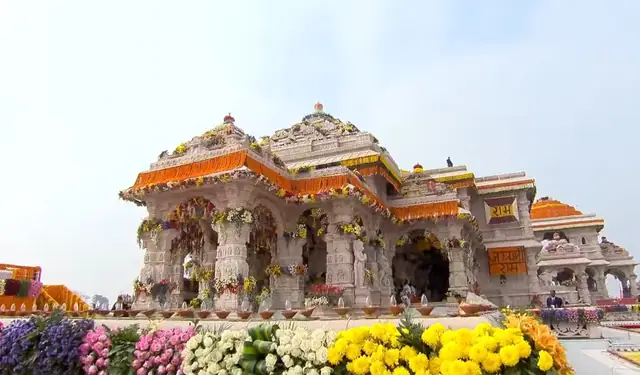
Crowned at last, Rama ruled for eleven thousand years by Valmiki’s count. The Uttara Kanda tells of Sita’s life in Valmiki’s ashram, the birth of Lava and Kusha, and Rama’s departure into the Sarayu, remembered at Guptar Ghat. Tulsidas retold the whole in Awadhi as the Ramcharitmanas in 1574–76, and Kamban in Tamil before him. Ayodhya’s Ram Janmabhoomi is the place devotees have honoured for centuries as his birthplace; after the Supreme Court’s judgment of 2019, the new temple saw the pran pratishtha of Ram Lalla on 22 January 2024.
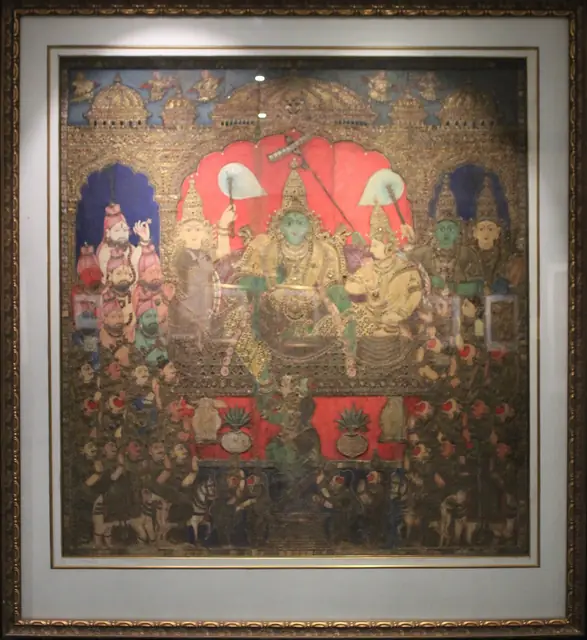
“Rama is dharma in bodily form, good, and true in his valour; he is king of the whole world, as Indra is of the devas.”
Valmiki Ramayana, Aranya Kanda 37.13, Gita Press edition (3.35.13 in the Baroda Critical Edition); Maricha to Ravana