Cite
MLA
“The Muziris papyrus.” Hindu History, 2026, https://www.hinduhistory.in/samudra/muziris-papyrus/. Accessed .
APA
Hindu History. (2026). The Muziris papyrus. Retrieved , from https://www.hinduhistory.in/samudra/muziris-papyrus/
What defines it
- 01
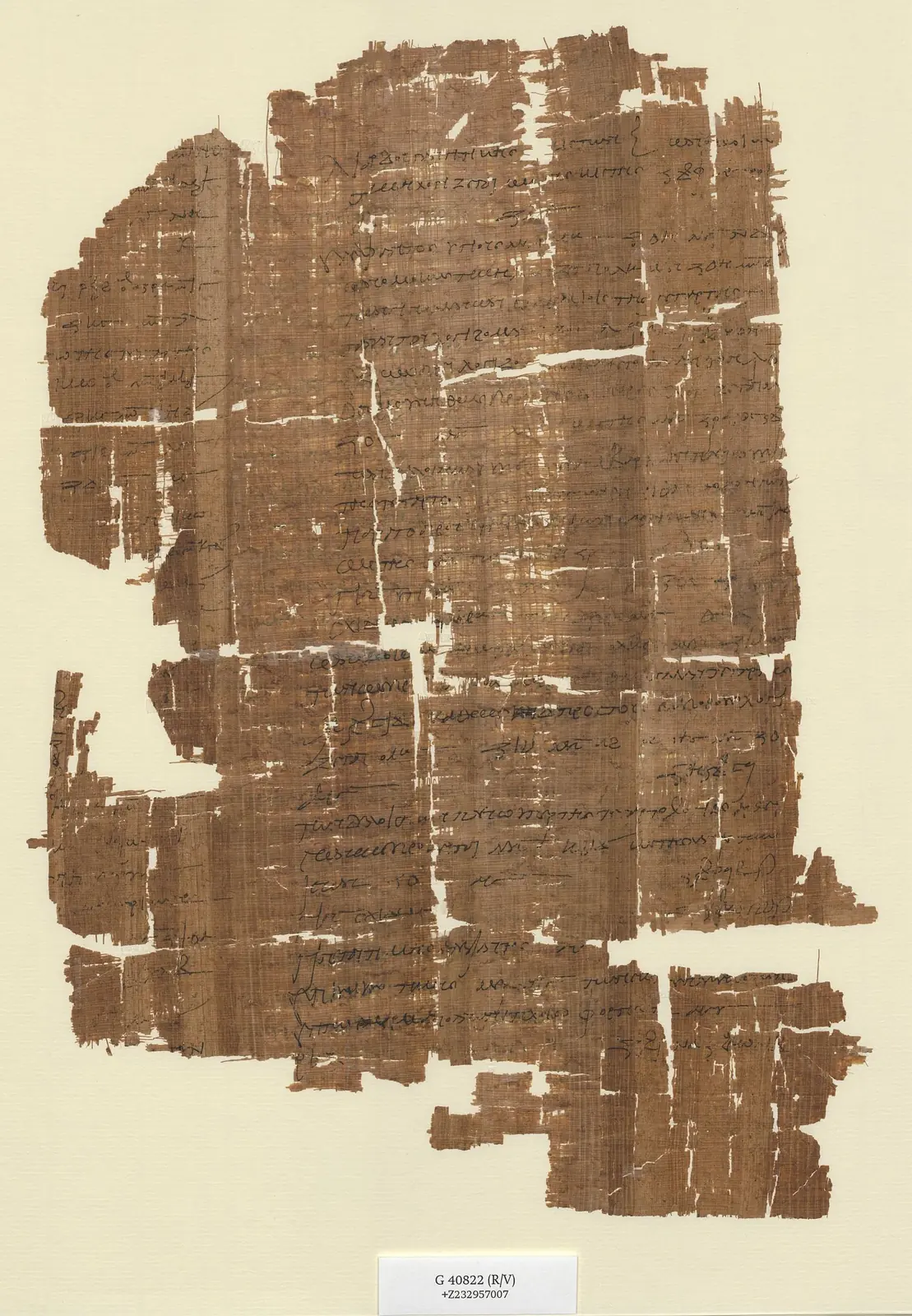
P. Vindob. G 40822, Austrian National Library, Vienna
- 02
Front: loan contract for a voyage to Muziris
- 03
Back: cargo of the ship Hermapollon
- 04
Cargo includes Gangetic nard and ivory
01Two sides of one deal
The front of the sheet is part of a contract between a lender and a merchant. It covers how goods brought from Muziris will be carried from the Red Sea coast across the desert to Coptos and down the Nile to Alexandria, and what happens if the loan is not repaid. The back lists a cargo, item by item, with weights and values, for the payment of the quarter-tax charged on Indian imports. Most scholars read the two texts as one transaction.
02The Hermapollon’s hold
The legible part of the cargo list names Gangetic nard, an aromatic from the Himalaya traded down to the Kerala coast, sound ivory, and ivory pieces. The historian Federico De Romanis, working through the figures, argued that the ship also carried more than 540 tonnes of pepper. That one ship’s load was worth a fortune in Egypt, which explains why Roman writers worried about the gold flowing east.
03Why it matters
Poems and geographers tell us the trade existed. This papyrus shows its paperwork: credit, insurance against loss, customs at the frontier, and the sheer bulk of Kerala pepper in a single hold. It was published in 1985 and has been studied closely ever since. It is kept in the papyrus collection of the Austrian National Library.
In the texts
- P. Vindob. G 40822 (Greek)