Cite
MLA
“Tamil script (Tamil-Brahmi, Vatteluttu, Tamil).” Hindu History, 2026, https://www.hinduhistory.in/lipi/tamil-script/. Accessed .
APA
Hindu History. (2026). Tamil script (Tamil-Brahmi, Vatteluttu, Tamil). Retrieved , from https://www.hinduhistory.in/lipi/tamil-script/
01Letters on rock beds
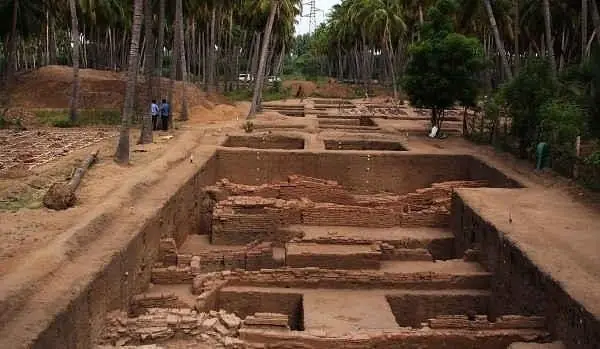
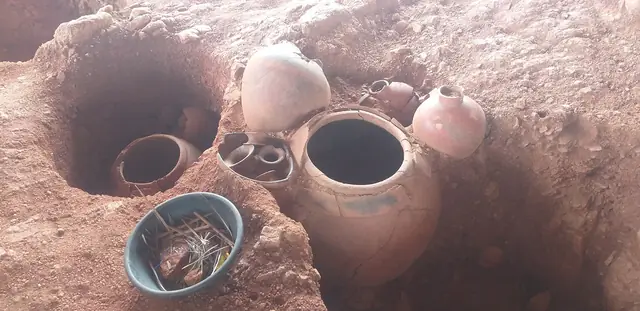
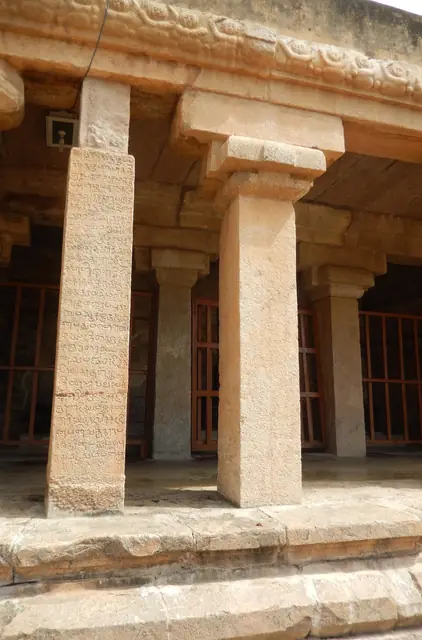
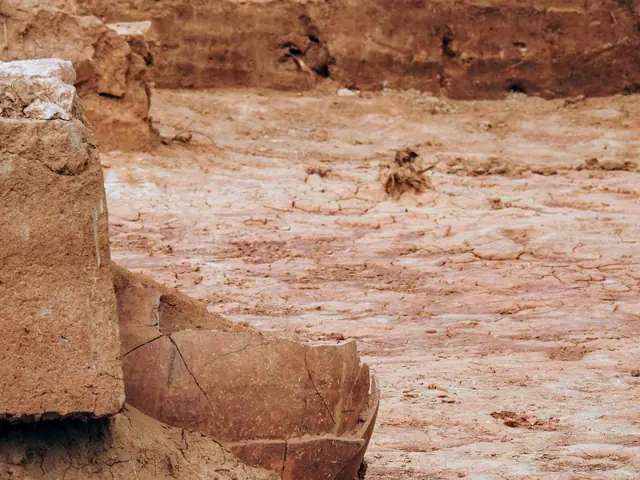
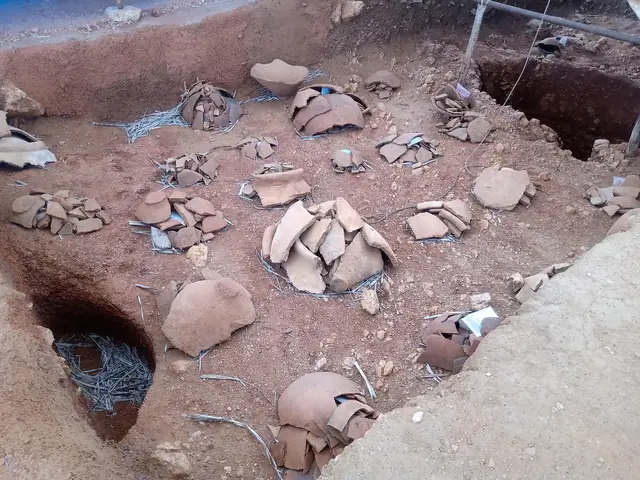
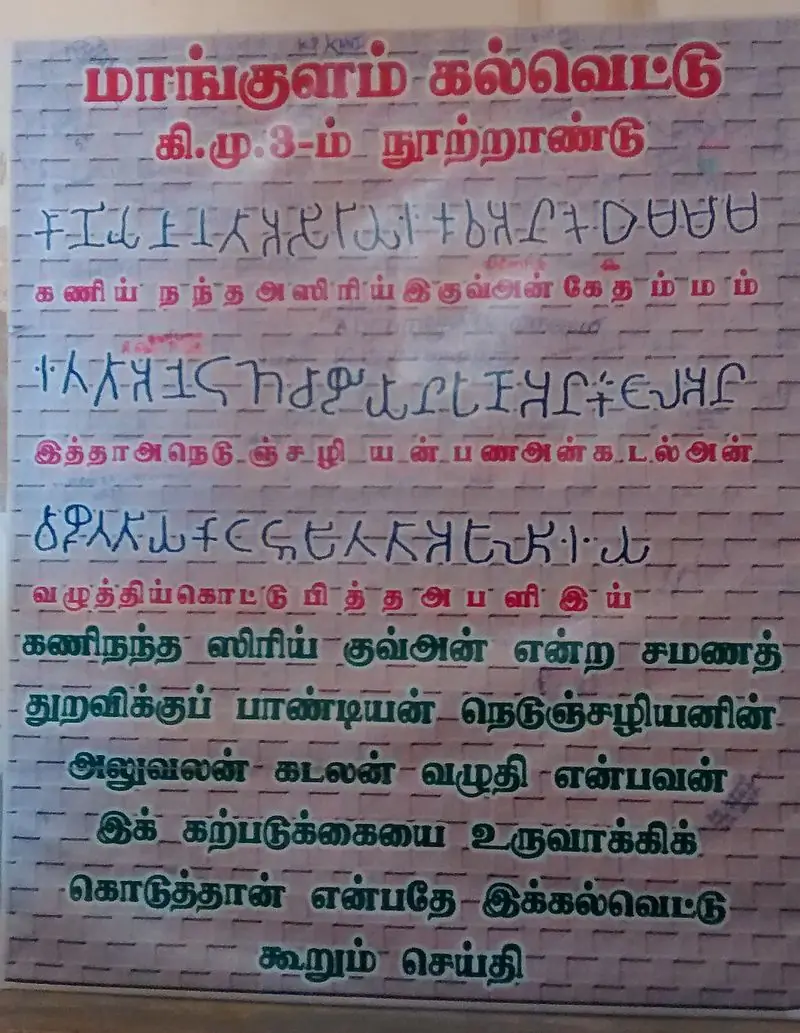
In the hills around Madurai, Jain monks slept on beds cut into the rock, and the donors who made them had their names carved above. The Mangulam inscriptions, of about the 2nd century BCE, name a Pandya king Nedunjeliyan. This Tamil-Brahmi adapted Brahmi to Tamil sounds, adding letters such as ḻa and ṟa. Potsherds with the same letters have turned up at Keezhadi, Arikamedu and Adichanallur, at Red Sea ports in Egypt and in Thailand. The Tamil Nadu Archaeology Department dates the Keezhadi layers to around the 6th century BCE, a dating still under discussion.
02Vatteluttu and the Chola hand
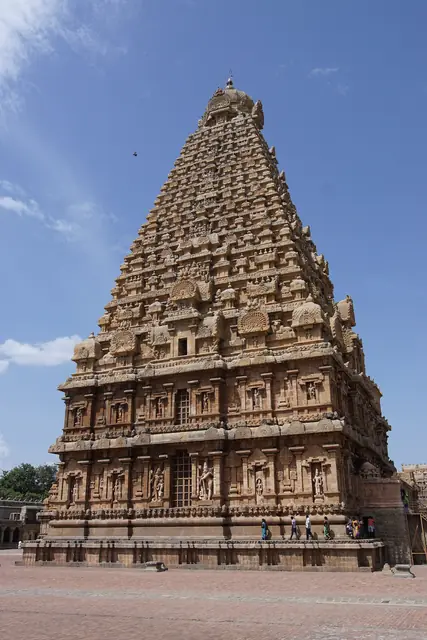
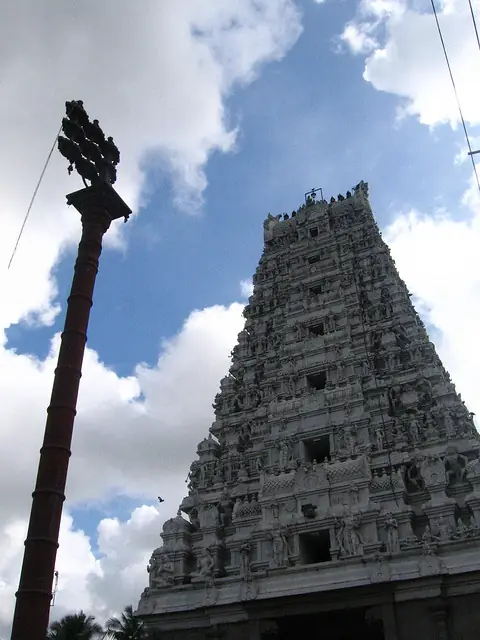
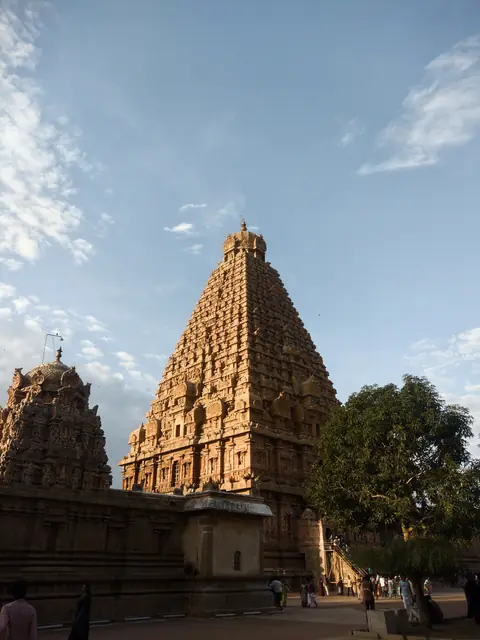
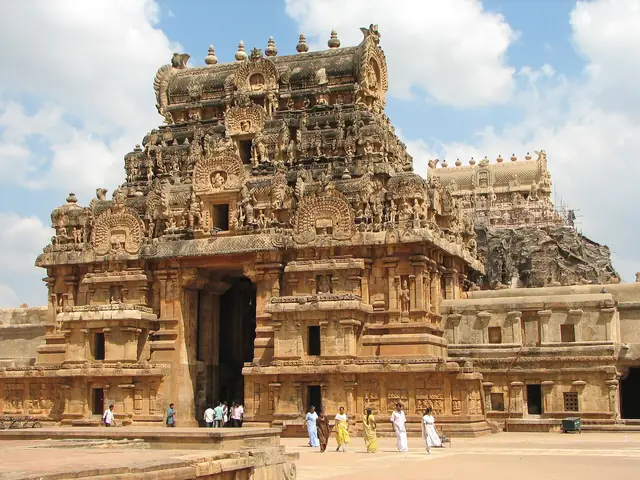
From about the 5th century a rounded running hand, Vatteluttu, ‘round letters’, took over in the Pandya country and in Kerala; the 8th-century Velvikudi grant uses it for Tamil and Grantha for Sanskrit. In the Pallava and Chola lands another form grew under Grantha’s influence, and by Rajaraja Chola’s time it was very close to the Tamil letters of today. The long inscriptions on the walls of the Brihadeeswara temple at Thanjavur and the village-assembly rules at Uttaramerur are in it.
03Read, printed, reformed
In 1924 K. V. Subrahmanya Aiyar showed that the cave inscriptions were in Tamil, and Iravatham Mahadevan’s Early Tamil Epigraphy (2003) gathered them all. Tamil was among the first Indian scripts set in movable type: Thambiran Vanakkam, a catechism printed in 1578, is the earliest known book in an Indian script. Today the script is official in Tamil Nadu, Sri Lanka and Singapore.