Cite
MLA
“Arikamedu and the Roman trade.” Hindu History, 2026, https://www.hinduhistory.in/samudra/arikamedu-roman-trade/. Accessed .
APA
Hindu History. (2026). Arikamedu and the Roman trade. Retrieved , from https://www.hinduhistory.in/samudra/arikamedu-roman-trade/
What defines it
- 01
Excavated by Mortimer Wheeler, 1945
- 02
Italian Arretine ware and wine amphorae found
- 03
Vimala Begley’s digs, 1989–92, showed an older Tamil port
- 04
Usually identified with Poduke of the Periplus
01Wheeler’s dig of 1945
French scholars had picked up beads and coins here in the 1930s. In 1945 Mortimer Wheeler, then Director-General of the ASI, dug the site and found sherds of Arretine ware, red-glazed tableware made in Italy around the turn of the era. Because Arretine could be dated closely, it gave Indian archaeology one of its first firm dates for the early historic period.
02Older than the Romans
Wheeler thought of Arikamedu as a Roman trading station. Later excavations led by Vimala Begley between 1989 and 1992 showed the town was older, trading with Southeast Asia and making beads before Mediterranean goods arrived. Its glass and stone beads travelled far into Southeast Asia. The Roman wares joined a busy Tamil port; they did not create it.
03Visiting the site
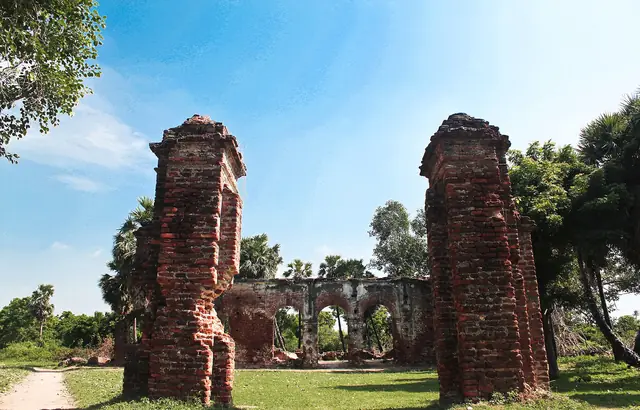
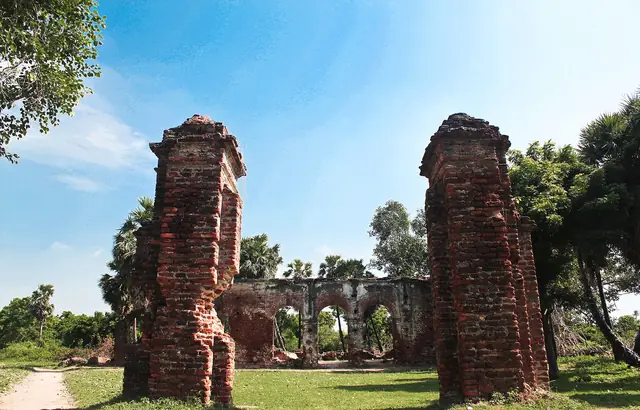
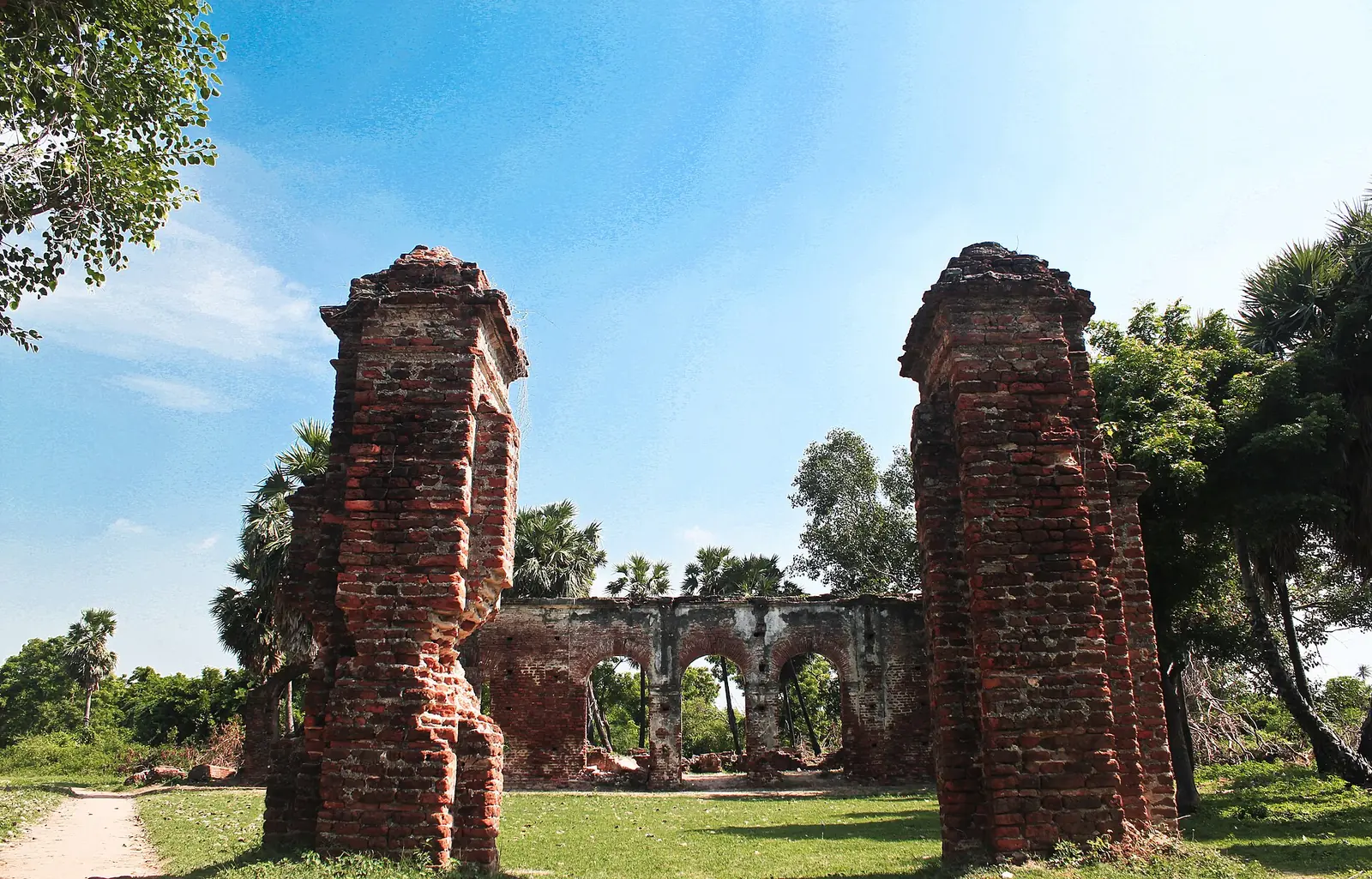
The mound lies on the bank of the Ariyankuppam river about 4 km south of Puducherry town, under ASI protection. Little stands above ground except a later colonial building, and most of what was dug up has gone back under earth and coconut groves. The finds are another matter: amphora sherds, Arretine fragments and beads from the site are shown in the Puducherry Museum in the town.