Cite
MLA
“Kaveri.” Hindu History, 2026, https://www.hinduhistory.in/yatra/kaveri-sacred-river/. Accessed .
APA
Hindu History. (2026). Kaveri. Retrieved , from https://www.hinduhistory.in/yatra/kaveri-sacred-river/
The route
- 1Talakaveri
- 2Bhagamandala
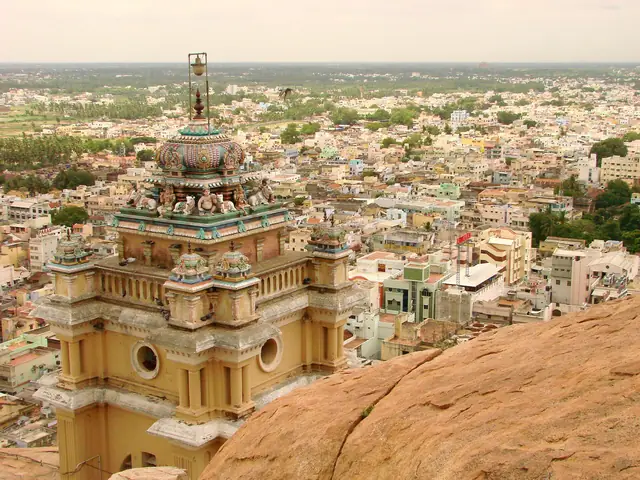
- 3Srirangapatna
- 4Shivanasamudra
- 5Hogenakkal
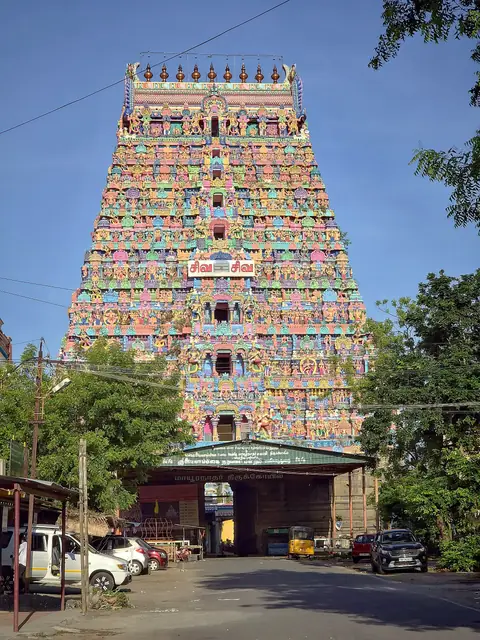
- 6Srirangam
- 7Kallanai (Grand Anicut)
- 8Tiruvaiyaru
- 9Kumbakonam
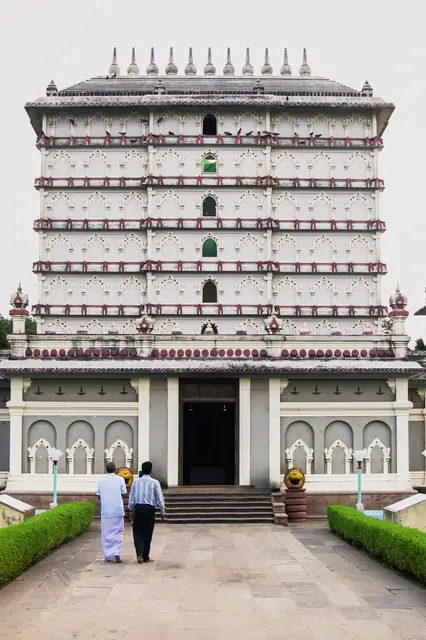
- 10Mayiladuthurai
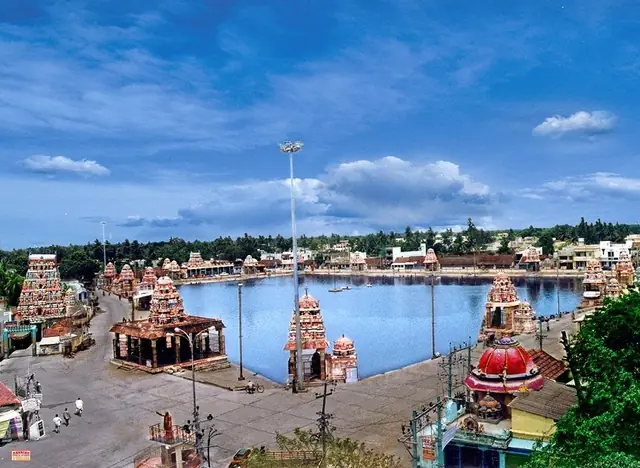
- 11Poompuhar
What defines it
- 01
About 800 km from Talakaveri to Poompuhar
- 02
Teerthodbhava at Talakaveri on Tula Sankramana
- 03
Three Ranganatha islands: Srirangapatna, Shivanasamudra, Srirangam
- 04
Kallanai (Grand Anicut), credited to Karikala Chola
- 05
Tula snanam at Mayiladuthurai; Kaveri Pushkaram every 12 years
01Agastya’s pot
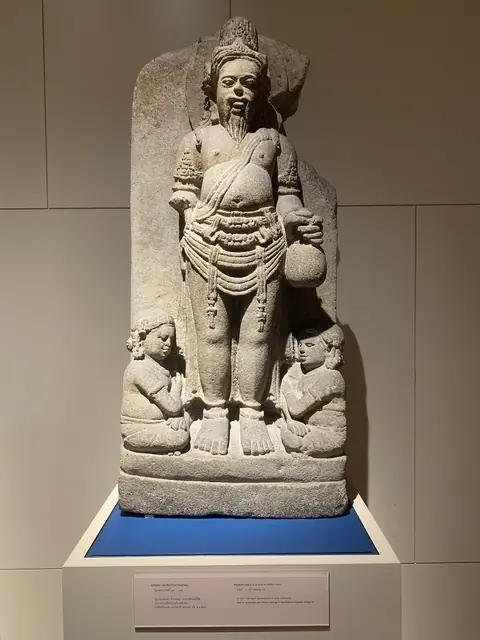
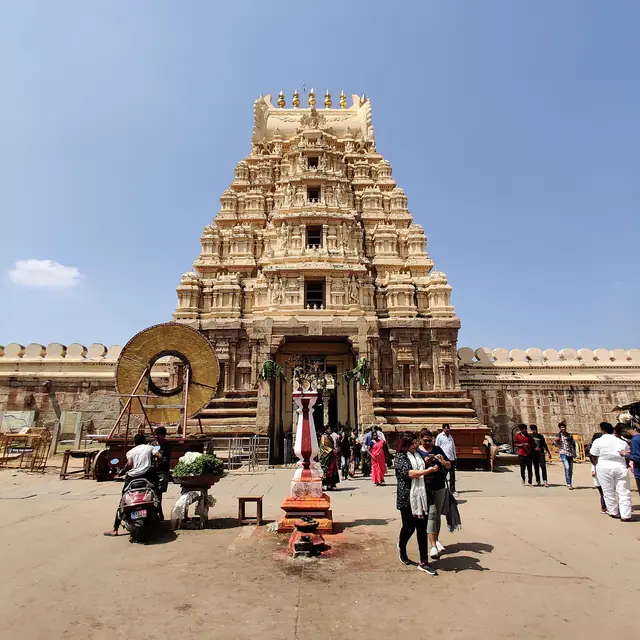
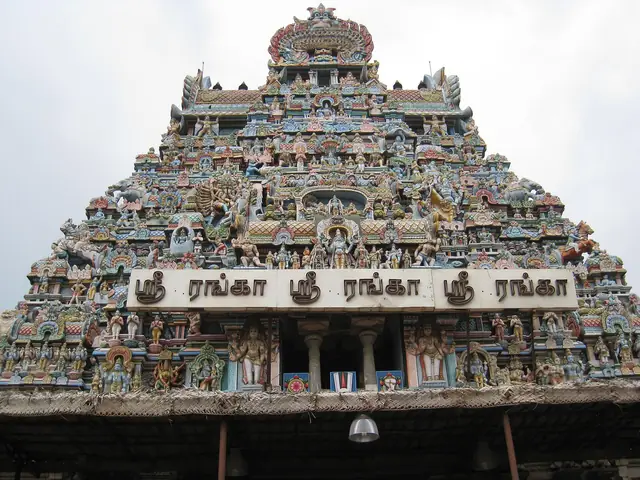
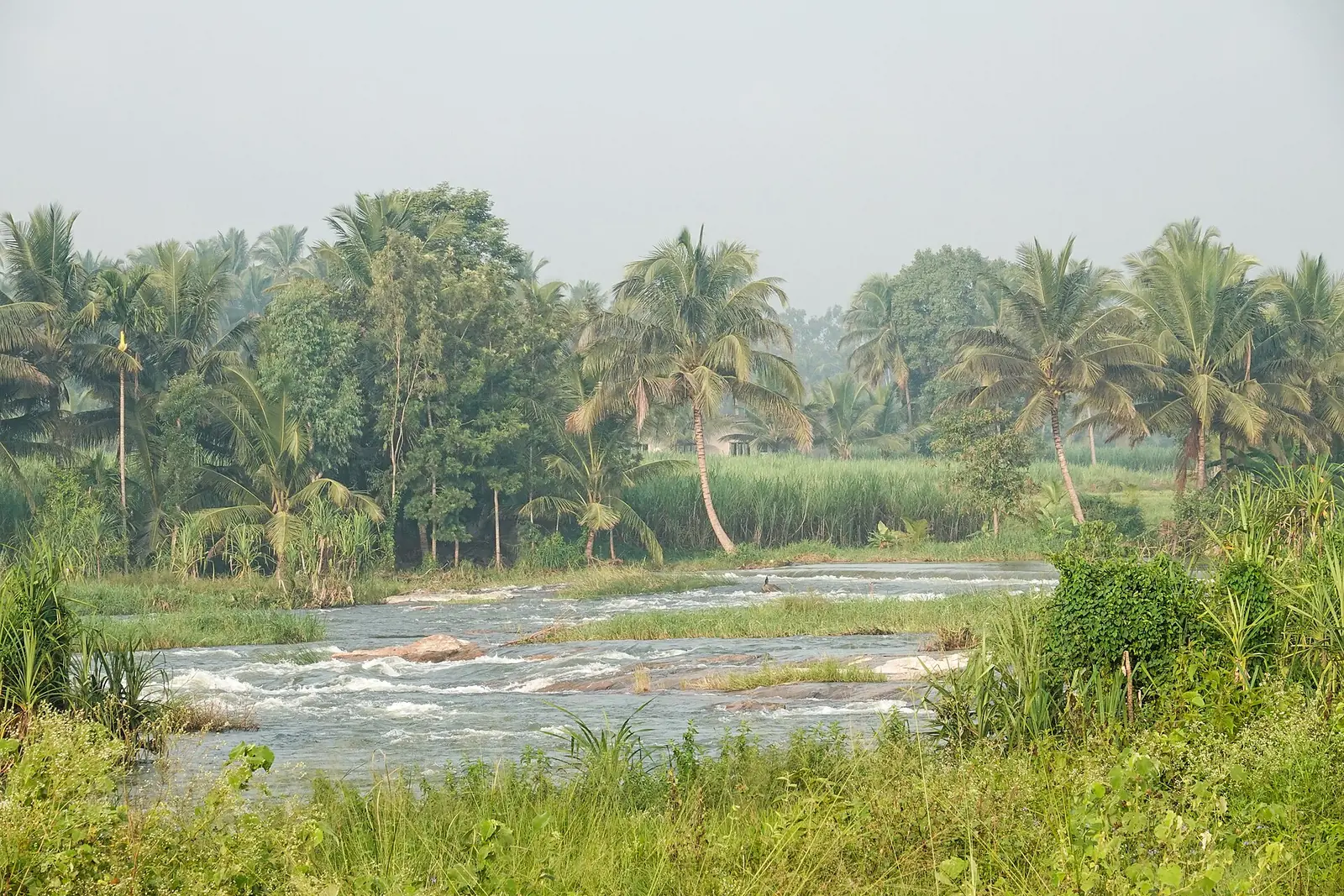
The katha told in the Kaveri country is that Maharshi Agastya carried the river south in his kamandalu, and Shri Ganesha, taking the form of a crow, tipped the pot over on the Brahmagiri hill so that she spread out to water the land. Her source at Talakaveri in Kodagu is a small kund. Each year at the moment of Tula Sankramana, when the Sun enters Libra in mid-October, the water wells up in the kund, the teerthodbhava, watched by thousands of Kodavas and pilgrims who carry the water home. Just below, at Bhagamandala, she meets the Kannike and the hidden Sujyoti. Lower down, at Srirangapatna, Shivanasamudra and Srirangam, she makes three islands, each with a temple of Bhagwan Ranganatha.
02The Chola river
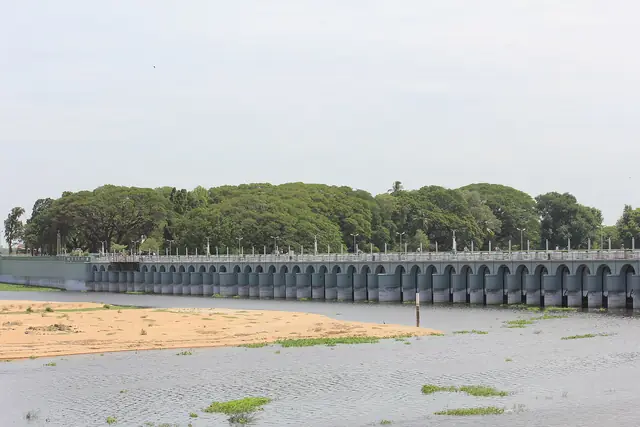
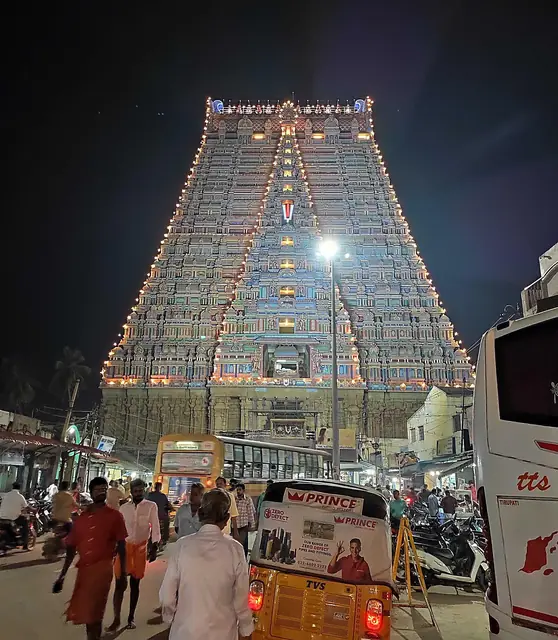
Sangam poetry calls her Ponni, the golden, and the Silappatikaram opens at Puhar, the Chola port at her mouth, with a hymn to the river. The Chola king Karikala, remembered in Sangam poems, is credited with building the Kallanai, the Grand Anicut, across her near Thanjavur, a long weir of unshaped stone that still diverts her water into the delta and is counted among the oldest working water structures in the world. The British engineer Arthur Cotton studied and strengthened it in the nineteenth century. Along her lower course stand Srirangam, Tiruvaiyaru, where Saint Thyagaraja lived and where his aradhana is sung each January, Kumbakonam and Mayiladuthurai.
03Bathing in Tula, and the sea
The Kaveri’s holy month is Tula, Aippasi in Tamil, when the tradition holds that Ganga herself comes to bathe in the Kaveri to wash away the sins left in her by others. The last day of the month brings the great bath at Mayiladuthurai, the Kadai Mukha snanam. In Aadi, July–August, farmers and families mark Aadi Perukku with offerings at her rising flood. Every twelve years the Kaveri Pushkaram is held when Brihaspati enters Tula. She reaches the sea at Poompuhar, old Puhar, where marine surveys have looked for the drowned port. Her water has also been the subject of a long dispute between Karnataka and Tamil Nadu, settled for now by the Supreme Court’s judgment of February 2018.
Great masters
In the texts
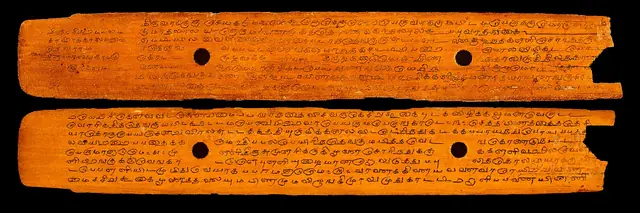
- Silappatikaram
- Pattinappalai (Sangam poem on Puhar)