01The burnt leg and the battle of Venni
Karikalan means ‘the one with the charred leg’. The Pattinappalai likens the young prince to a tiger cub that grew strong in a cage, and later tradition says the name comes from a fire set to his prison, from which he escaped. He won his throne back and then fought the decisive battle of his life at Venni, near Thanjavur, against the Chera and Pandya kings and eleven lesser chiefs. The Chera king was struck in the back. Thinking that a wound in the back shamed him, he sat facing north and starved himself to death. Puranaanuru 65 mourns him; Puranaanuru 66, by the poetess Venni Kuyathiyar, praises Karikalan’s victory and yet says the dead king won the greater glory.
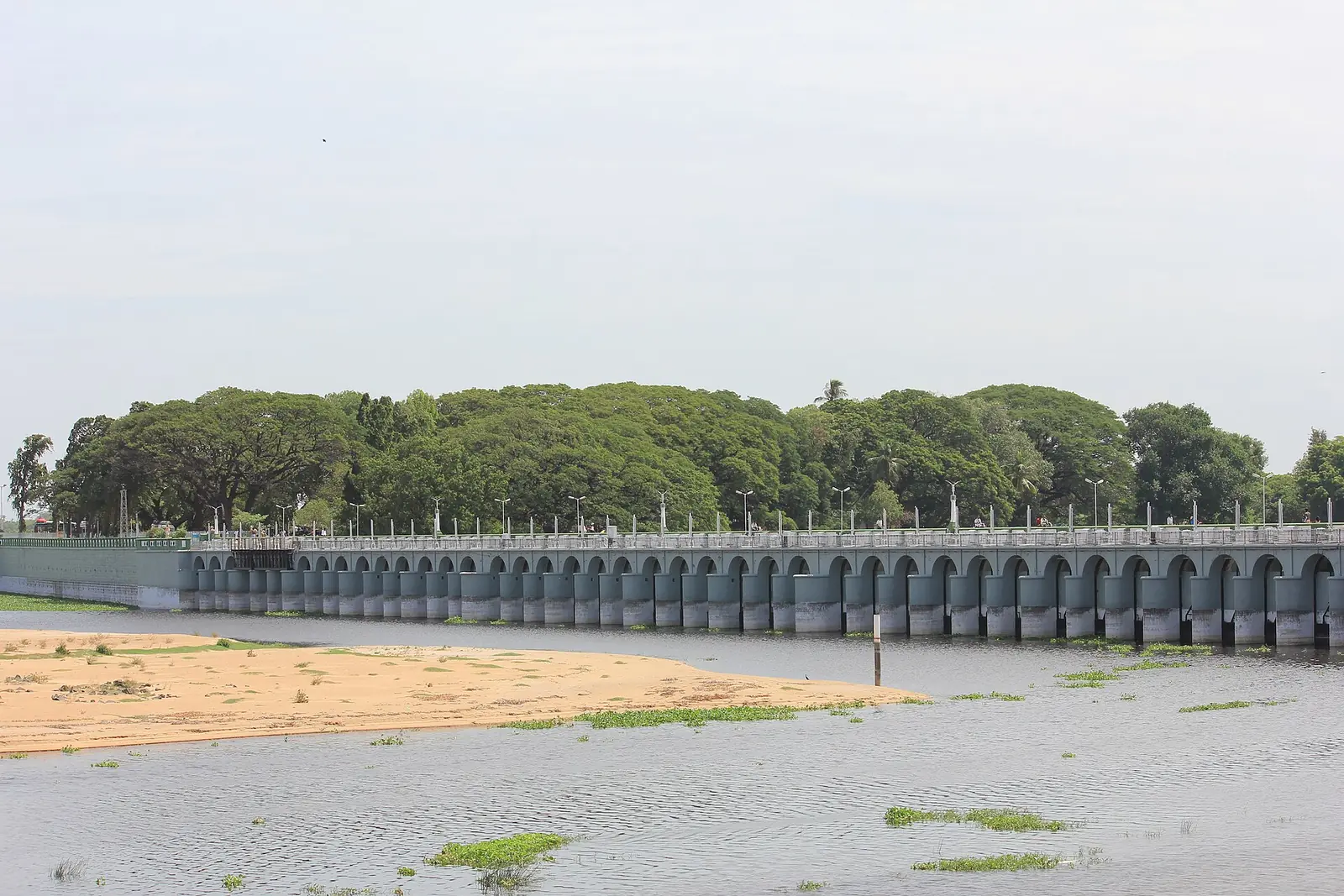
02Puhar and the Kaveri
The Pattinappalai of Kadiyalur Uruttirangannanar describes his port of Puhar, Kaveripattinam, at the river’s mouth: ships unloading horses from overseas, pepper from the hills, goods stamped with the tiger seal of the Cholas before they passed the customs house. Karikalan is remembered above all as the king who tamed the Kaveri. Inscriptions of the Telugu Chodas, who claimed descent from him, credit him with raising its banks, and the Kallanai at the head of the delta, a weir of unhewn stone laid in the riverbed, is held by Tamil tradition to be his work. It has been strengthened and rebuilt since, and still feeds the fields of Thanjavur.