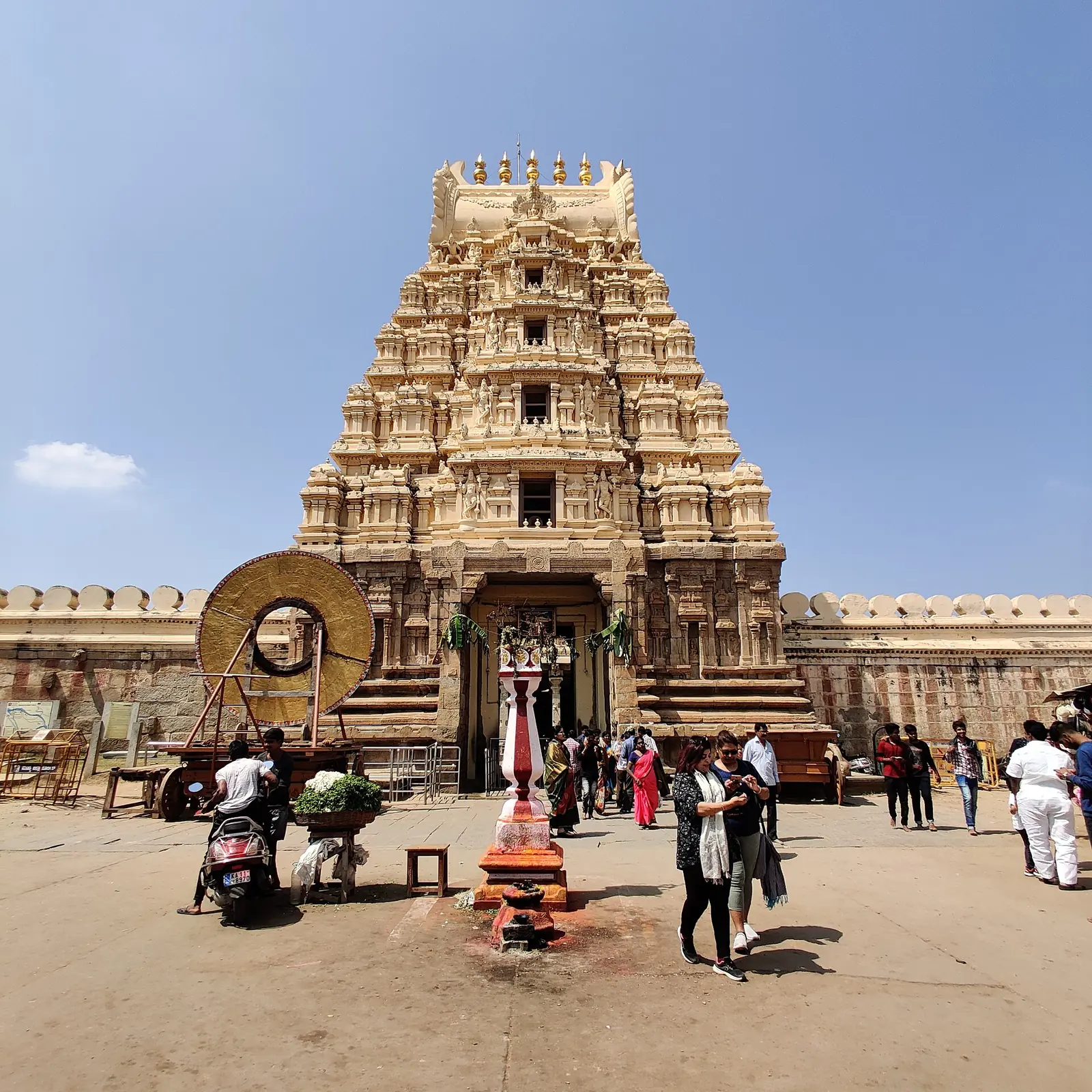
01Adi Ranga
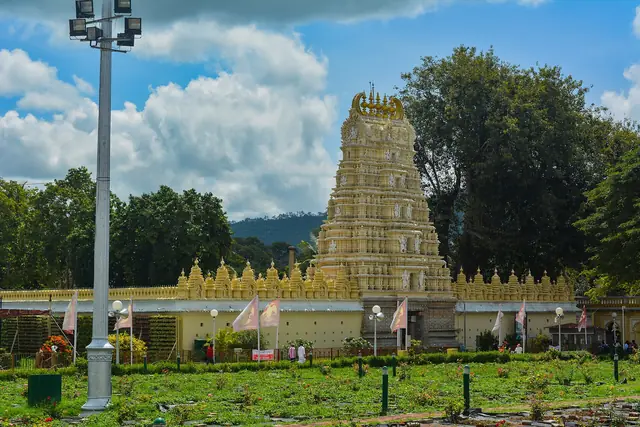
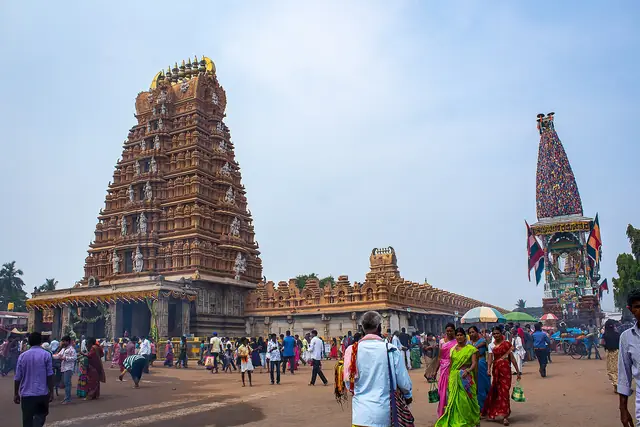
Down the Kaveri lie five shrines of Vishnu reclining on Ananta: Adi Ranga here, Madhya Ranga at Shivanasamudra, and Antya Ranga at Srirangam in Tamil Nadu, with two more in some lists. The Ranganathaswamy temple here grew from a shrine of the Ganga period, with Hoysala and Vijayanagara additions; the reclining Lord lies with Kaveri at his feet. At the eastern tip of the island the two arms of the river meet again at the Sangama, where families perform last rites. Close by is the Nimishamba temple, where prayers are believed to be answered in a nimisha, an instant.
02Capital and siege
Srirangapatna was the seat of the Vijayanagara viceroy for the south until 1610, when Raja Wodeyar I of Mysore took it and made it his capital; he began the Mysore Dasara here that year. From the 1760s Hyder Ali held real power, and his son Tipu Sultan ruled from the island fort. In the Fourth Anglo-Mysore War a British and Hyderabad army besieged it, and on 4 May 1799 the breach was stormed and Tipu was killed near the water gate. The British restored the Wodeyars under the child Krishnaraja Wodeyar III, and the capital returned to Mysuru. The ramparts, the dungeon and Tipu’s summer palace still stand.
The life of this place
- 9th centuryThe Ranganatha shrine is founded under the Western Gangas.
- 1610Raja Wodeyar I takes Srirangapatna and makes it his capital.
- 4 May 1799The fort is stormed; Tipu Sultan is killed.
About 15 km from Mysuru on the Bengaluru road. See the temple in the morning and the Sangama at sunset.