Cite
MLA
“Kathakali.” Hindu History, 2026, https://www.hinduhistory.in/kala/kathakali/. Accessed .
APA
Hindu History. (2026). Kathakali. Retrieved , from https://www.hinduhistory.in/kala/kathakali/
What defines it
- 01
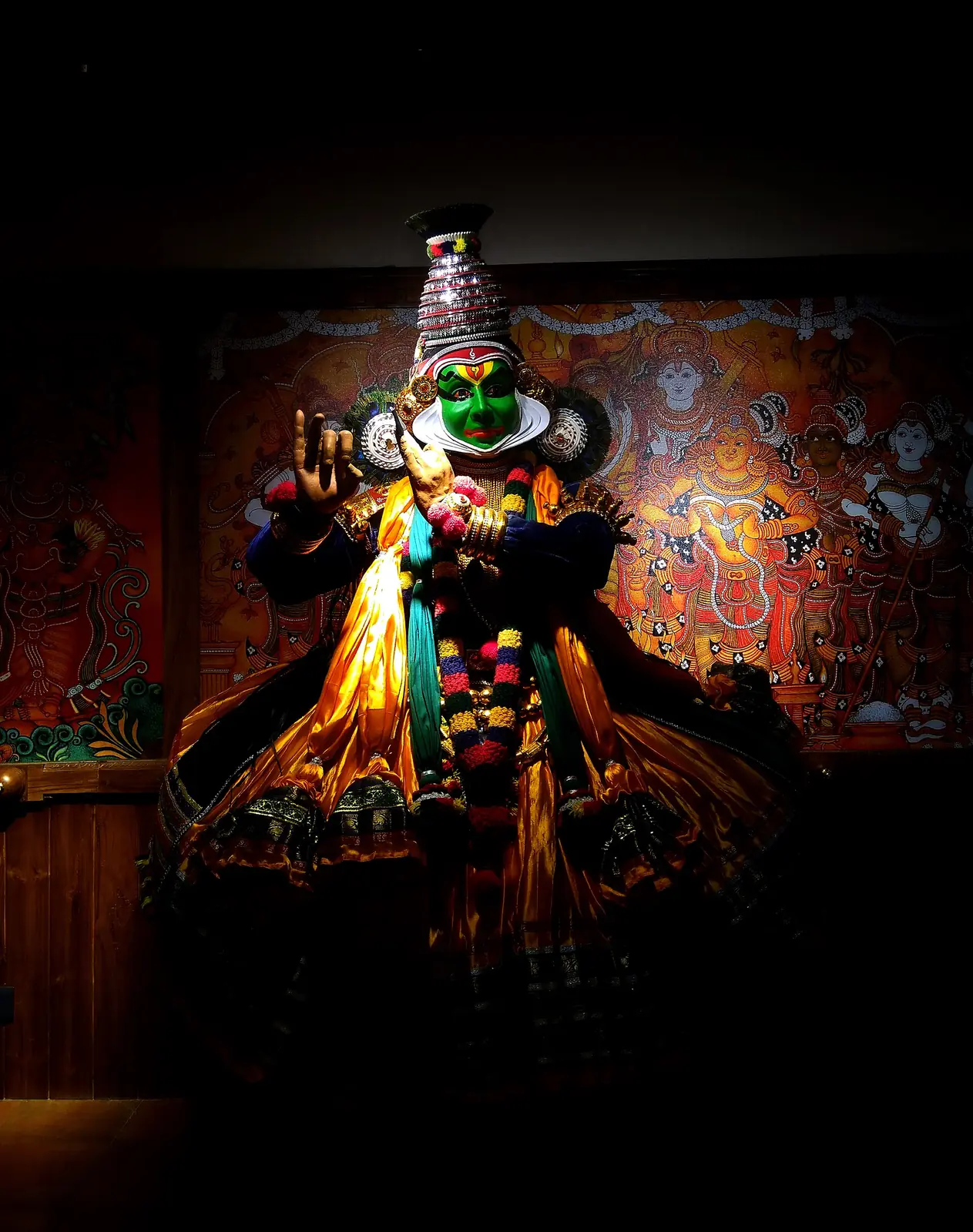
Pacha, kathi, thadi, kari, minukku make-up
- 02
24 mudras of the Hastalakshana Deepika
- 03
Silent actors, two singers
- 04
Chenda and maddalam drums
- 05
Kalivilakku, the stage lamp
01Two royal plays
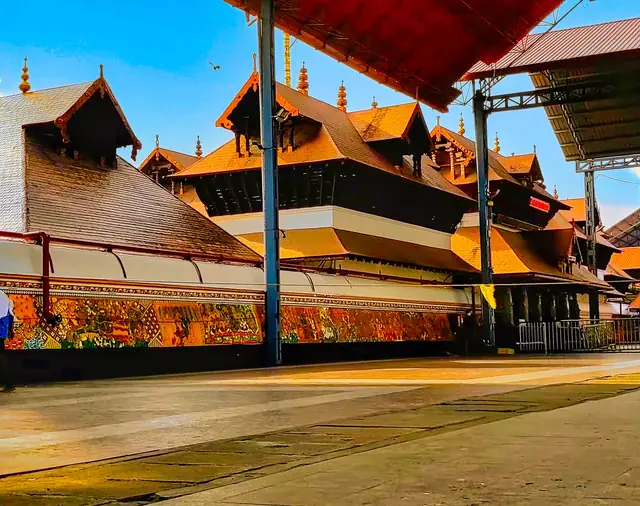
Manavedan, the Zamorin of Calicut, wrote the Krishnageeti in Sanskrit in the mid-17th century and had it staged as Krishnanattam, eight nights of Krishna’s life, still performed at Guruvayur. The Raja of Kottarakkara answered with the Ramanattam in Malayalam. Over the next century the Ramanattam took in the martial training of Kalaripayattu, the ritual make-up of Theyyam and the gestures of Koodiyattam, and became Kathakali. Kottayam Thampuran and Unnayi Variar wrote its classic attakathas, such as Nalacharitam.
02Pacha, kathi, thadi, kari
Make-up takes hours and tells the audience who a character is before he moves. Pacha, green, is for noble heroes like Rama and Arjuna. Kathi, green with a red knife-mark and white knobs, is for proud villains like Ravana. Red beards, chuvanna thadi, are for the fierce, black kari for forest dwellers, and minukku, the soft yellow, for women and sages. The actors never speak; two singers carry the text while the actor speaks with 24 basic mudras of the Hastalakshana Deepika and eyes trained for years, to the chenda and maddalam.
03Kalamandalam and the masters
In 1930 the poet Vallathol Narayana Menon, with Manakkulam Mukunda Raja, founded the Kerala Kalamandalam, now at Cheruthuruthy, when the art was losing its patrons. Kalamandalam Krishnan Nair, Kalamandalam Ramankutty Nair, Kalamandalam Gopi and Kottakkal Sivaraman became its great actors. To see it as it should be seen, find an all-night temple performance in Kerala, lit by the single bronze lamp, the kalivilakku, in front of the stage.