01The night of Diwali
The Kalpa Sutra tells that Mahavira spent his last rainy season at Pava, Madhyama Pava, in the scribes’ hall of King Hastipala. Through the last night of the month of Kartik he preached, and before dawn, on the new-moon night, he attained nirvana. The eighteen kings of the Malla and Licchavi confederacies who were present said that since the light of knowledge had gone, they would light lamps, and that, by Jain tradition, is the beginning of Diwali. Jains reckon the Vira Nirvana era from 527 BCE. His chief disciple Gautama Indrabhuti attained kevala jnana the same night.
02Jal Mandir and Gaon Mandir
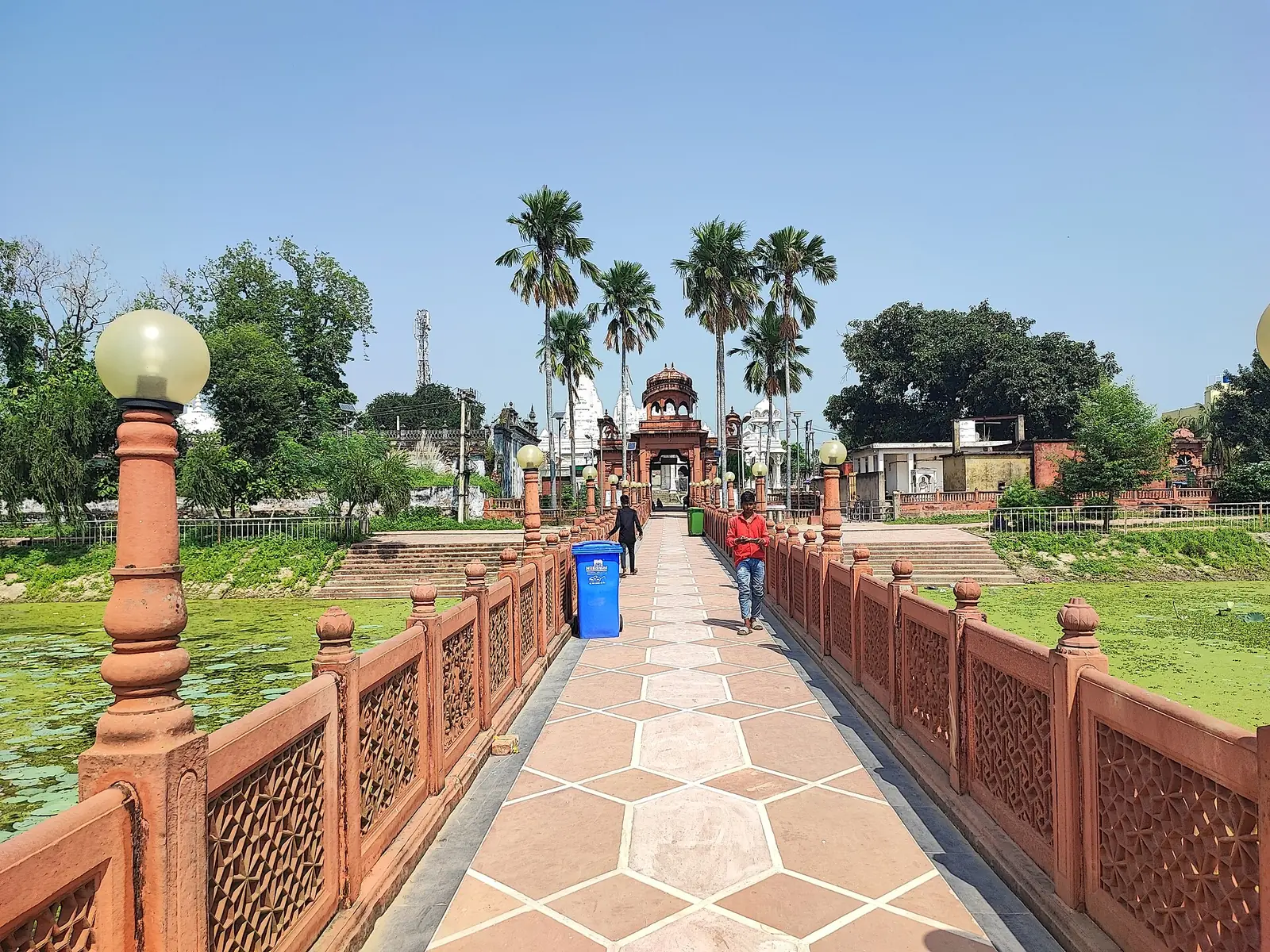
Tradition holds that so many people took a pinch of earth from the cremation ground that a pit formed, which filled with water and became the lotus tank. In its centre stands the Jal Mandir, a white marble temple holding the charan paduka, the footprints, of Mahavira, joined to the bank by a causeway some 180 metres long. In the village the Gaon Mandir marks the place of the last sermon, and the newer Samosharan temple is built in the form of the divine assembly hall. At Diwali Jains from across India come here for the nirvana festival. Some scholars have placed Pava elsewhere, near Kushinagar in Uttar Pradesh; the Bihar Pawapuri is the place Jain tradition has worshipped for centuries.
The life of this place
- 527 BCE (Jain reckoning)Bhagwan Mahavira attains nirvana at Pava on the new-moon night of Kartik.
About 15 km south-east of Bihar Sharif and 38 km from Rajgir; dharamshalas run by the Jain trusts.