01Chandragiri
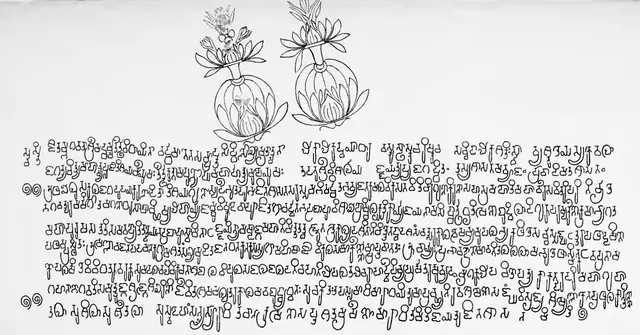
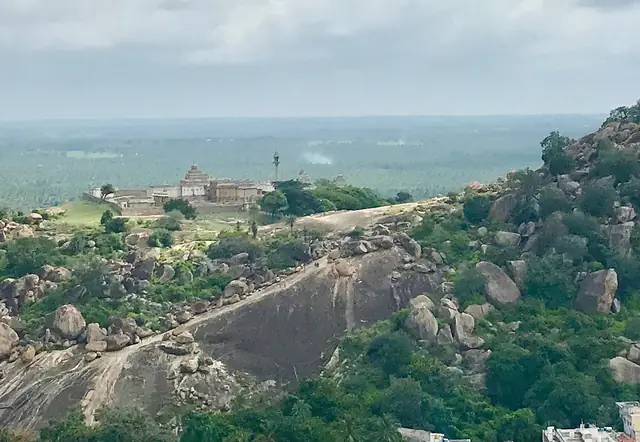
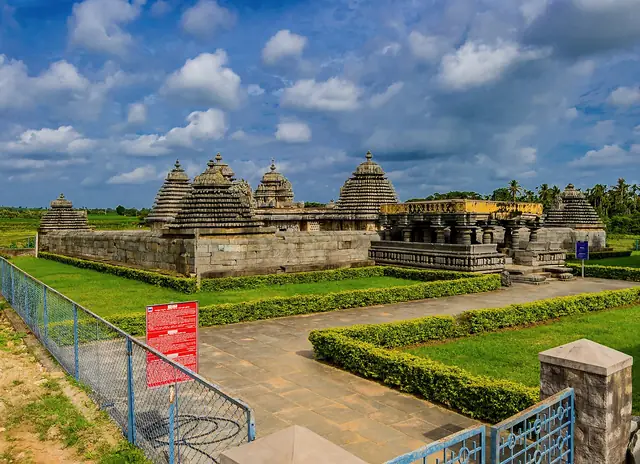
On the smaller hill, Chandragiri, stand the basadis and the oldest inscriptions. Jain tradition, recorded in the inscriptions on this hill, tells that Bhadrabahu, foreseeing a twelve-year famine in the north, led a great sangha south, and that Chandragupta Maurya, having given up his throne, came with him as his disciple and fasted to death in sallekhana on this hill. A cave is shown as Bhadrabahu’s and a basadi bears Chandragupta’s name. Over a hundred inscriptions in Kannada, Sanskrit and other scripts, many of them memorials of monks and nuns who took sallekhana, make the hill a library in stone.
02Gommateshwara
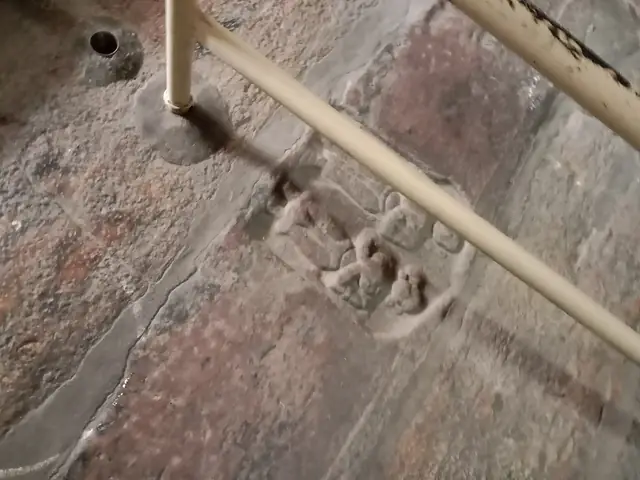
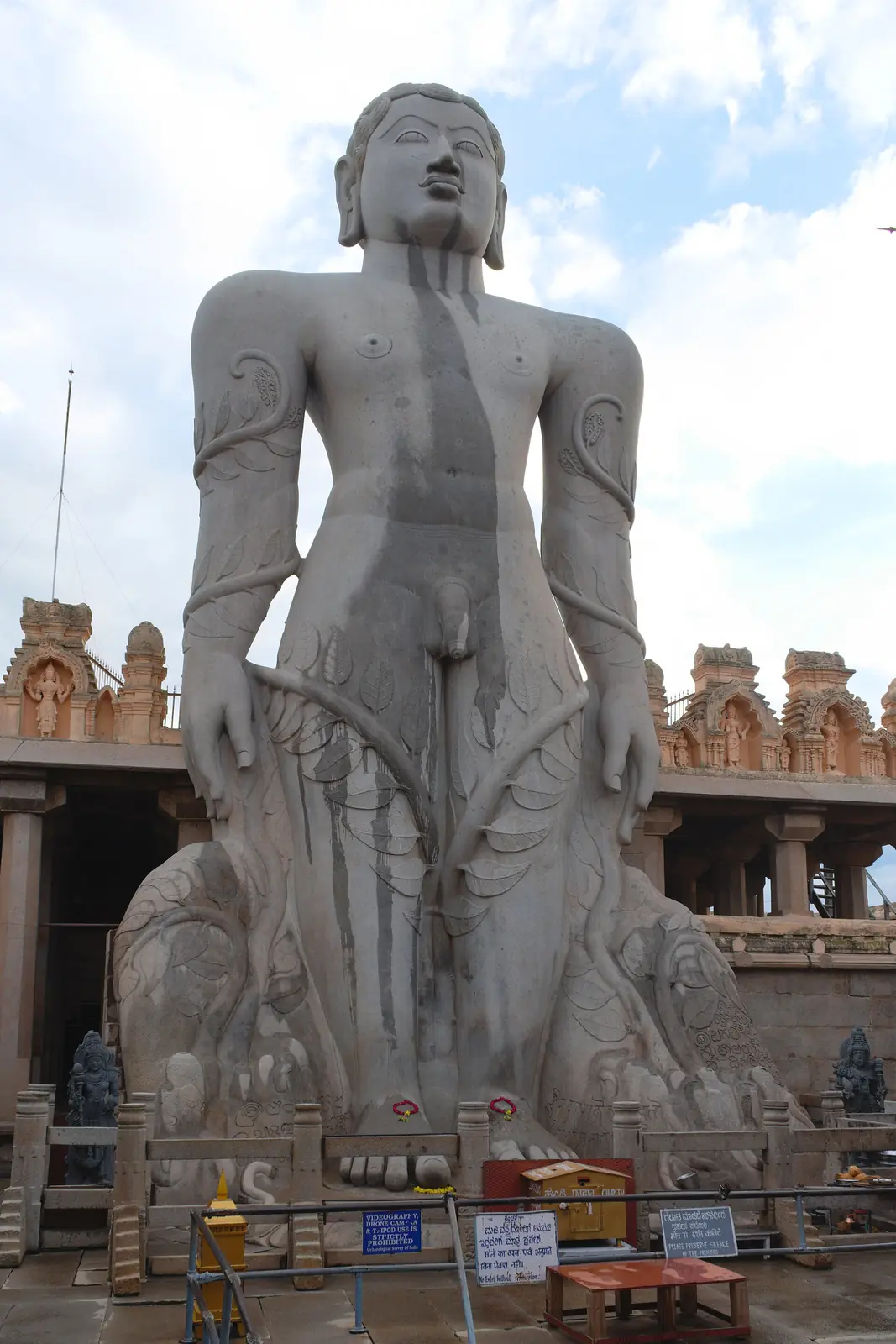
On the larger hill, Vindhyagiri, about 620 steps cut in the rock lead to Bahubali, son of the first tirthankara Rishabhanatha, who won a duel with his brother Bharata, then gave up the kingdom and stood so long in meditation that creepers grew up his limbs. Chavundaraya, general and minister of the Ganga king Rachamalla IV, had the figure carved from the hilltop rock around 981–983. A line at its foot, ‘shri chavundaraje karaviyale’, Chavundaraya had it made, is among the oldest known writing in Marathi. Every twelve years or so the Mahamastakabhisheka is held, when the colossus is bathed from scaffolding with milk, sugarcane juice, turmeric and sandal; the most recent was in 2018.
The life of this place
- c. 3rd century BCE (Jain tradition)Bhadrabahu and Chandragupta Maurya come to Chandragiri.
- c. 981–983Chavundaraya has the Gommateshwara colossus carved.
- 2018The latest Mahamastakabhisheka.
Climb barefoot; the rock steps get hot by noon, so go early. About 50 km from Hassan.