Cite
MLA
“Pakistan: Katas Raj, Hinglaj and the Salt Range temples.” Hindu History, 2026, https://www.hinduhistory.in/world/pakistan-hindu-heritage/. Accessed .
APA
Hindu History. (2026). Pakistan: Katas Raj, Hinglaj and the Salt Range temples. Retrieved , from https://www.hinduhistory.in/world/pakistan-hindu-heritage/
01Katas Raj: the pool of Shiva’s tears
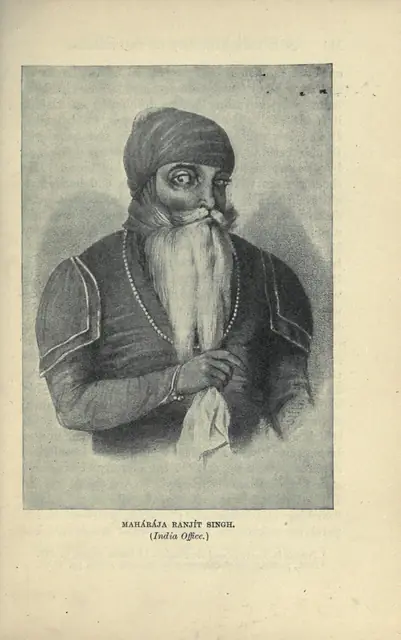
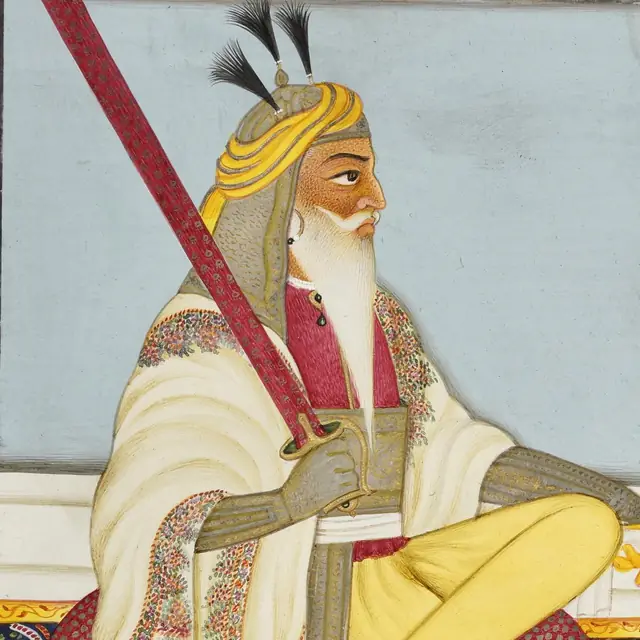
In the Salt Range of Punjab, in Chakwal district, a clear green pool lies among temples. Hindus hold that when Sati gave up her body, Shiva wandered the earth in grief, and his tears fell in two places, here and at Pushkar; the pool is called Katakshkund, the spring of the weeping eyes, and the tradition also places the Pandavas here in their exile. The oldest of the shrines, in the Satghara group to the south-west, Michael Meister dates to the late 6th century, and the main temple there to the 10th, built under the Hindu Shahis in the Nagara style of Gandhara. Guru Nanak is believed to have come here, and Maharaja Ranjit Singh made pilgrimages in 1806, 1818 and 1824; Hari Singh Nalwa built a small fort-haveli on the hill above. Before 1947 crowds came for Mahashivaratri. Restoration of the site began in 2006, though the pool has since run low more than once, blamed on nearby cement factories.
02The Shahi temples of the Salt Range and the Indus
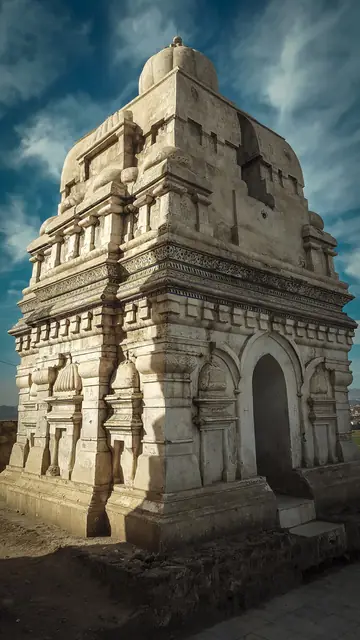
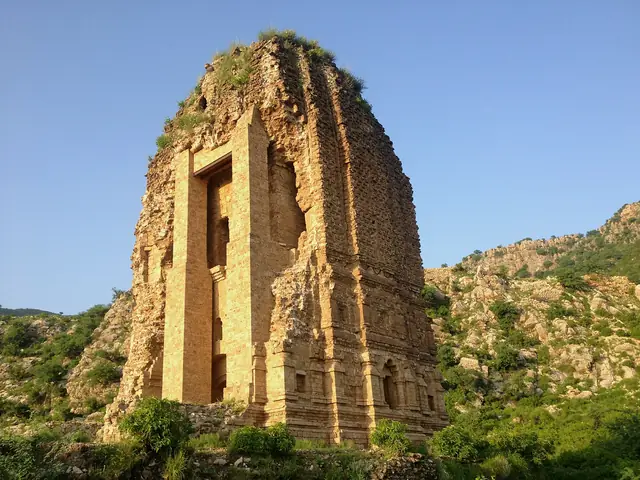
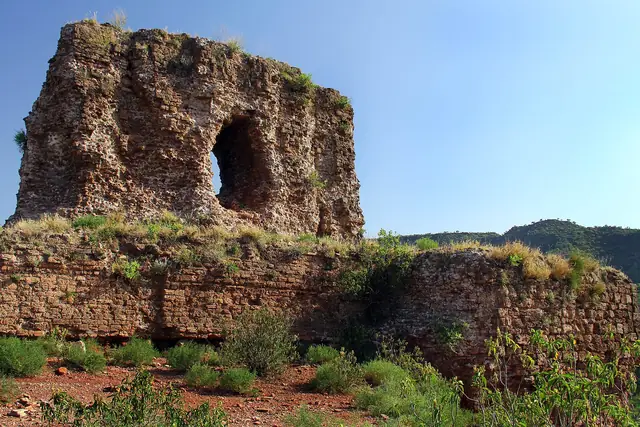
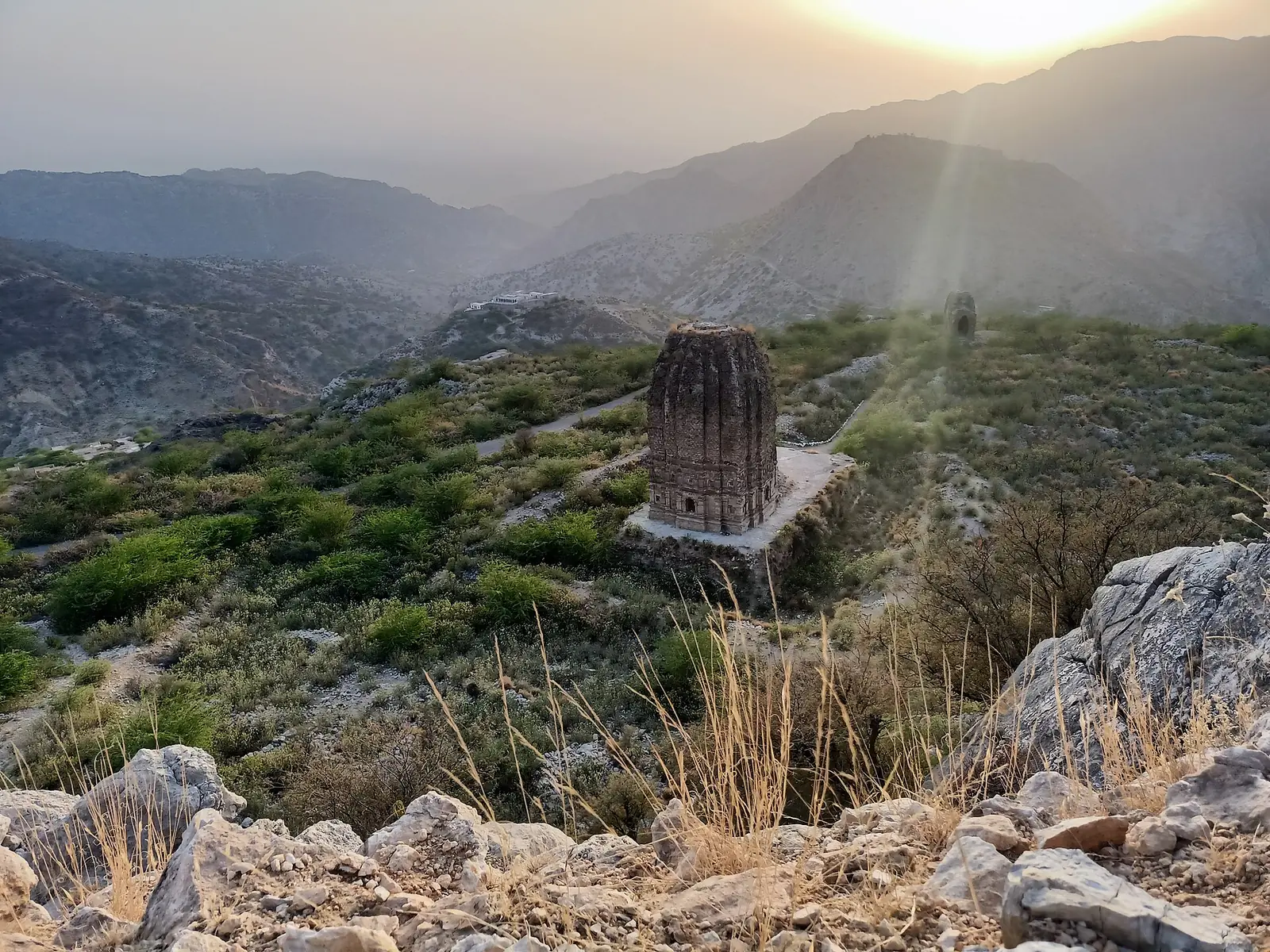
Katas is one of a chain. Across the Salt Range and along the Indus stand the ruins of tall brick and stone temples raised from about the 7th to the 10th century, many of them under the Hindu Shahi kings of Udabhandapura, whose last stand against Mahmud of Ghazni was fought in these same hills. At Amb, in the Soon Sakesar valley of Khushab, a temple of several storeys still rises on a hilltop site; at Malot, near Chakwal, a 10th-century temple shows the pyramidal roof of the Punjab builders; at Nandana a temple stands inside the hill fort that Mahmud took from Trilochanapala in 1014, where Al-Biruni later measured the radius of the earth. Kafirkot and Bilot, on the Indus near Dera Ismail Khan, hold more. Meister, who surveyed them from the 1990s, called them the Temples of the Indus.
03Hinglaj, the Nani Mandir
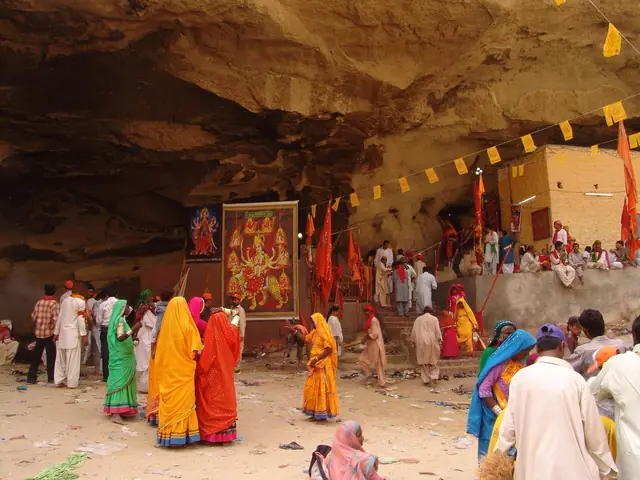
Hinglaj Mata is one of the Shakti Peethas; the 16th-century Bengali Chandimangal of Mukundaram names it as the place where the forehead of Sati fell. Her shrine is a cave in a narrow gorge on the west bank of the Hingol, about 19 kilometres from the Arabian Sea, at the end of the Kirthar hills, now inside the Hingol National Park in Lasbela district. The local Muslims, Zikris among them, revere her too, call the shrine Nani Mandir and the pilgrimage Nani ki Haj, and help to guard it. The great yatra is in April and lasts four days. Pilgrims climb the Chandragup and Khandewari mud volcanoes, throw coconuts into the craters, bathe in the Hingol and then enter the cave, offering three coconuts each; on the third day the priests invoke the Devi to accept what has been brought.
04Sharada Peeth by the Neelum
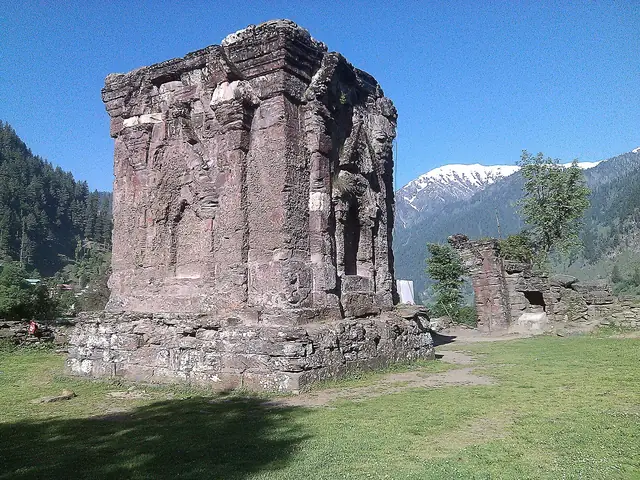
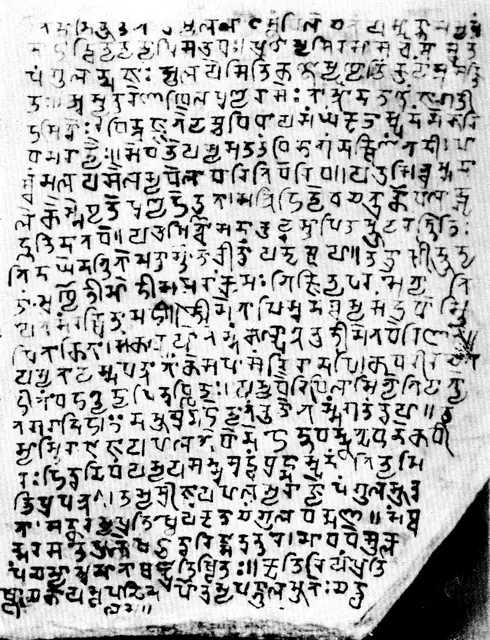
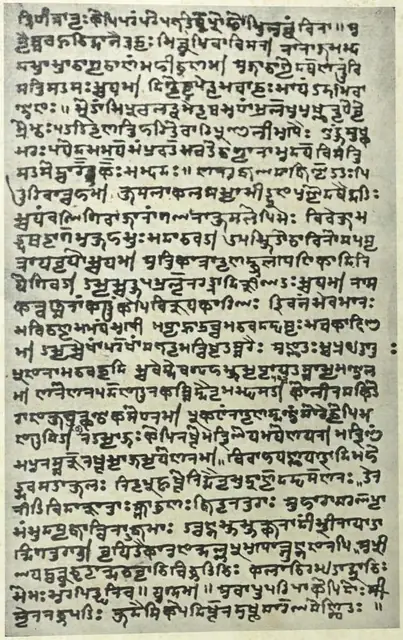
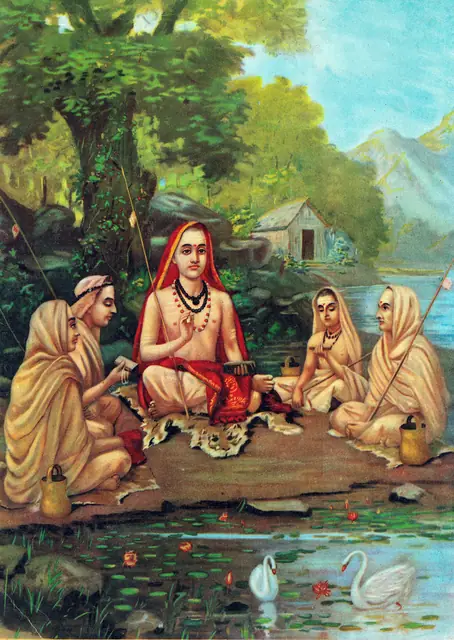
In the Neelum valley of Pakistan-administered Kashmir, at the village of Sharda, about 10 kilometres from the Line of Control, stand the red sandstone walls of Sharada Peeth. From about the 6th to the 12th century it was one of the great temple-universities of the subcontinent, and the Sharada script of Kashmir is named for the goddess. Al-Biruni, in the 11th century, put it in his list of the most famous Hindu temples, beside Multan and Somnath. The Madhaviya Shankara Vijaya tells how Adi Shankaracharya came from the south and opened the southern door to ascend the Sarvajna Peetha, the throne of all-knowing. Sultan Zain-ul-Abidin visited in 1422, and Maharaja Gulab Singh repaired the temple. Since 1947 it has stood empty and roofless. On the Indian side, at Teetwal in Kupwara, a new Sharada temple was opened on 23 March 2023, and in October that year Navratri puja was held there for the first time since 1947.
05Sindh: Sadh Belo and the Thar
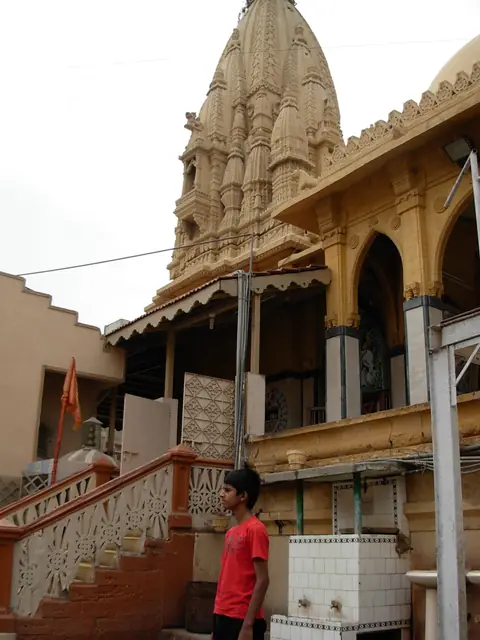
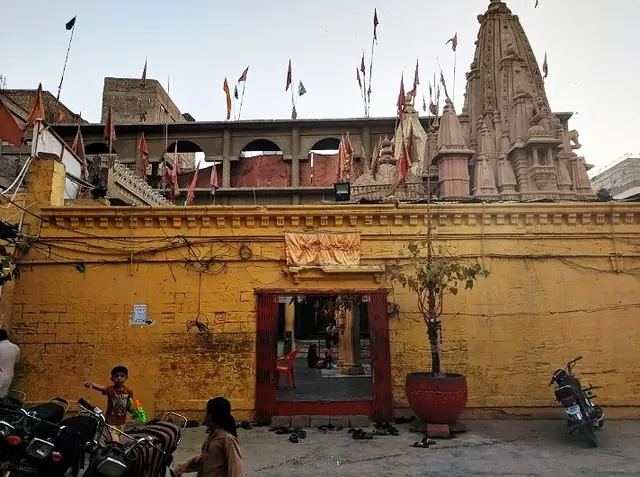
Most of Pakistan’s Hindus live in Sindh, and there the old life goes on. At Sukkur, on an island in the Indus once called Menak Parbat, an Udasi sadhu named Baba Bankhandi settled in 1823, and the island became Sadh Belo, the sadhu’s wood; its temples spread over two linked islands and are reached only by boat, and his anniversary is kept each June. The 2010 floods stood four to five feet deep in its courtyards for more than two weeks. In the Thar, Umerkot is the only district of Pakistan with a Hindu majority, and Tharparkar has the largest Hindu population of any district, about 8,11,000; in the tehsils of Mithi and Nagarparkar two of every three people are Hindu. Karachi keeps the Swaminarayan mandir and the Panchmukhi Hanuman temple.
061947, and what came after
In the census of 1941 Hindus were 14.6 per cent of the people of the lands that became Pakistan, nearly forty lakh. At Partition between 47 and 50 lakh Hindus and Sikhs left West Pakistan for India amid the killings of 1947, and by 1951 Hindus were 1.58 per cent. Temples left behind passed to the Evacuee Trust Property Board, and many fell to ruin or other use. On 30 December 2020 a mob burned the samadhi of Shri Paramhans Ji Maharaj at Teri in Karak district; on 5 January 2021 the Supreme Court of Pakistan ordered the Board to rebuild it and to recover the cost from the cleric accused of inciting the mob. Hindu groups in Sindh have long protested the abduction and forced conversion of young Hindu girls, and bills against forced conversion have been brought and blocked.
The 2023 census counted 52,17,216 Hindus in Pakistan, 2.17 per cent of the people, most of them in Sindh, in Umerkot, Tharparkar, Mirpurkhas and Sanghar. Hinglaj draws thousands each spring, Sadh Belo and the temples of Karachi are in daily worship, and Katas Raj receives pilgrim groups from India for Mahashivaratri.