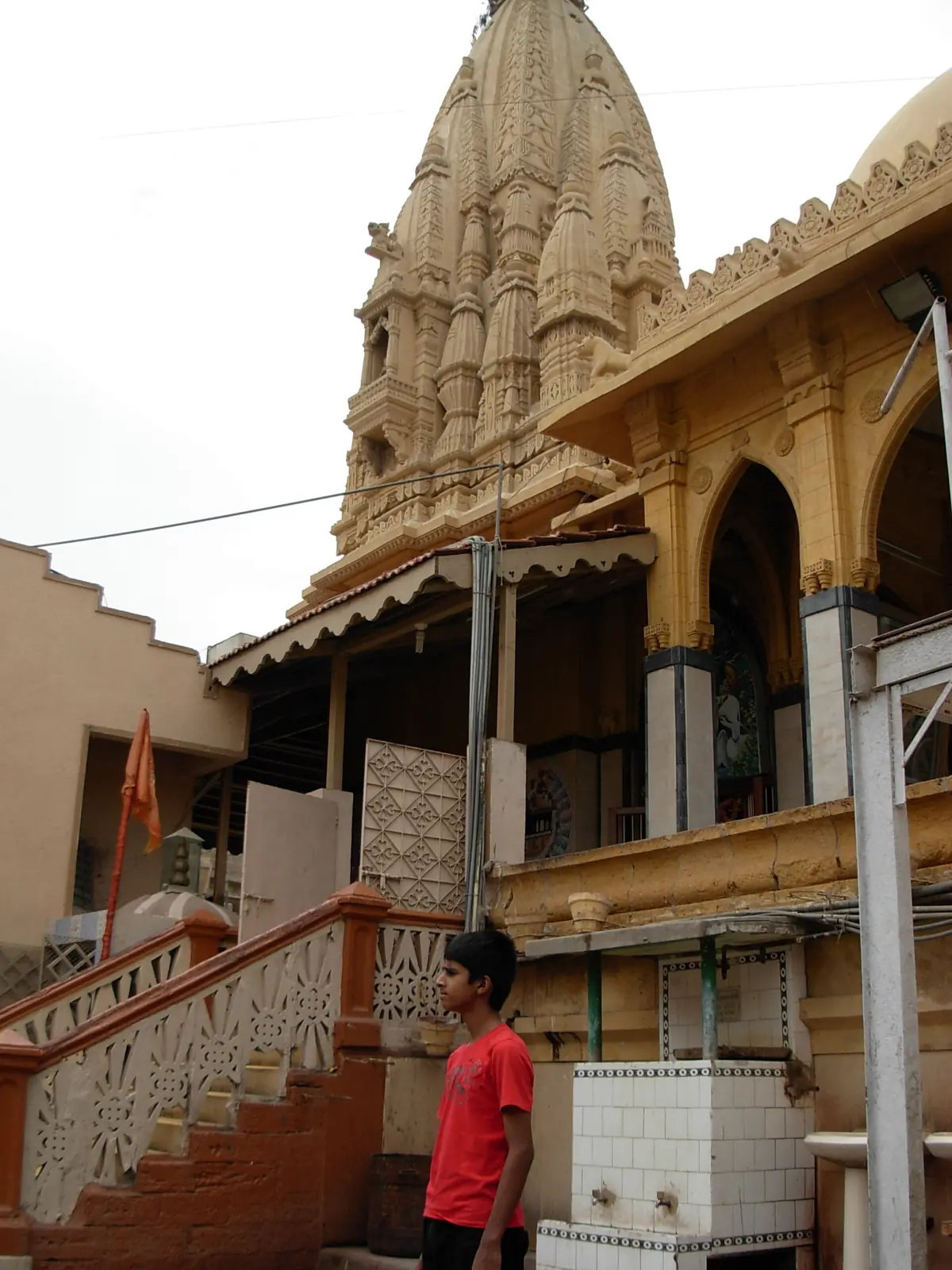
01A Gujarati temple in Sindh
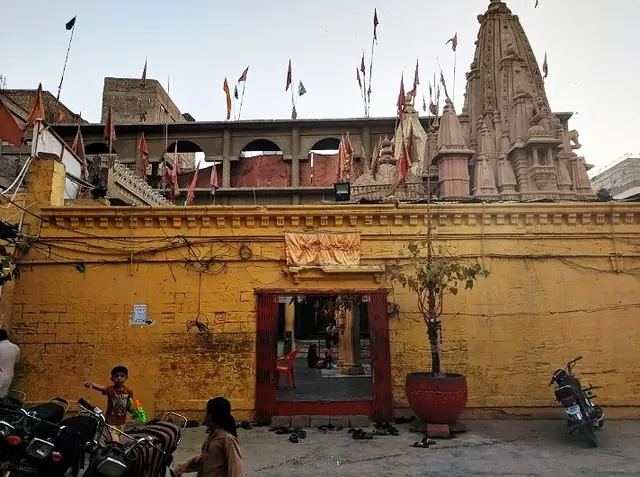
Gujarati traders, Kutchi and Kathiawari, were among the merchants who made Karachi a port city in the 19th century, and the Swaminarayan sampradaya came with them. They built this temple in the heart of the old town, with a wide courtyard, a dharmashala for travelling devotees and a gaushala. The frontage on what was then Bunder Road is one of the longest of any building in the old city. Hindus of Karachi still gather here for Ram Navami, Janmashtami, Diwali and Holi, and the temple is a centre of the city’s Hindu community, much of which lives in the lanes around it.
02Waiting for the ships
In 1947 the temple became a refugee camp. Hindus from all over Sindh came here with what they could carry and waited, sometimes for weeks, for berths on the ships to Bombay and Okha. The original murtis of Swaminarayan were taken to India in those months; one of them is now worshipped at Khan village in Rajasthan. The dharmashala later became offices of the city government. In 1989, for the first time since Partition, a group of sadhus from the Swaminarayan temple at Kalupur, Ahmedabad, came on pilgrimage, and small groups have come every few years since.
The life of this place
- 19th centuryGujarati merchants build the temple.
- 1947The temple becomes a camp for Hindus leaving Sindh for India.
- 1989Sadhus from the Ahmedabad temple visit for the first time since Partition.
On M. A. Jinnah Road near the old town, Karachi. Visitors usually come with members of the local Hindu community.