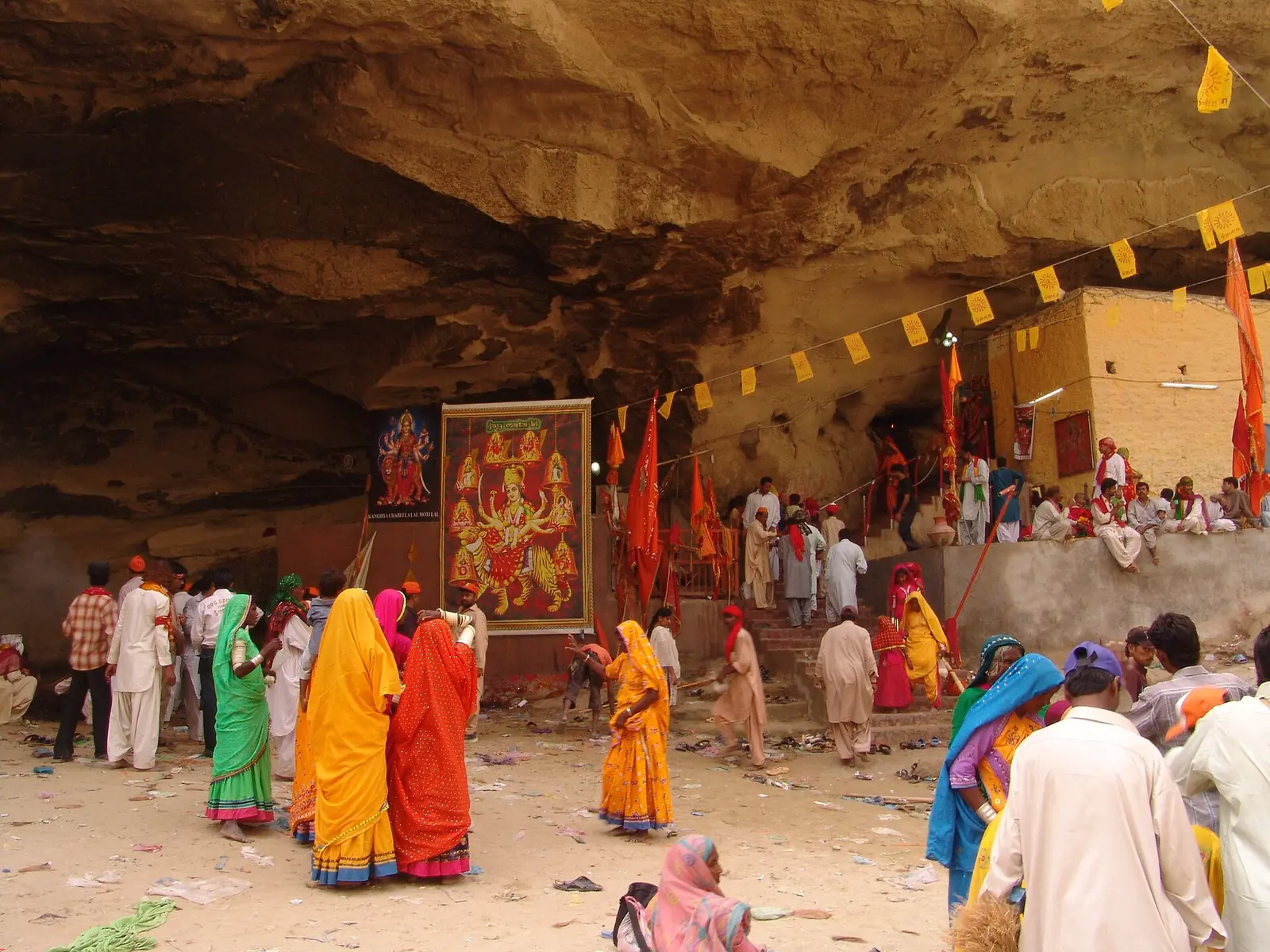
01Where Sati’s head fell
When Shiva wandered the worlds carrying Sati’s body, Bhagwan Vishnu’s Sudarshana divided it, and every place where a part fell became a Peetha. The Peetha lists name Hinglaj as the place of the brahmarandhra, the crown of the head, with Devi as Kottari and Bhairava as Bhimalochana. There is no idol in human form. Devi is a stone in a narrow cave, smeared with sindoor, and pilgrims crawl through on hands and knees to touch it.
02The road through the desert
For centuries the yatra meant weeks on foot or camel from Karachi across the Makran desert, with water carried in skins. Pilgrims climbed the mud volcano called Chandrakup on the way, offering coconuts and confessing their sins aloud before going on. The Makran Coastal Highway, opened in 2004, cut the trip to a few hours. Local Muslims call the shrine Nani Mandir and many of them also come with offerings.
03The spring yatra today
The main yatra falls in April, around the Chaitra Navaratri, when tens of thousands of Hindus from Sindh and Balochistan camp in the dry riverbed for three or four days. It is the largest Hindu gathering in Pakistan. In Bharat, Hinglaj Mata is the kuldevi of many Charan, Khatri, Bhavsar and Kshatriya families of Rajasthan, Gujarat and Sindh, and her shrines in those regions keep her name alive for those who cannot cross the border.
The life of this place
- 2004The Makran Coastal Highway opened, shortening the yatra from weeks to hours.
About 250 km west of Karachi by the coastal highway. The April yatra is the time to go; carry water and expect heat.