01Temples of the Salt Range
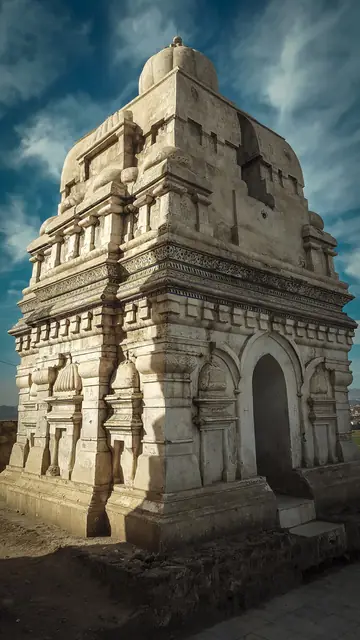
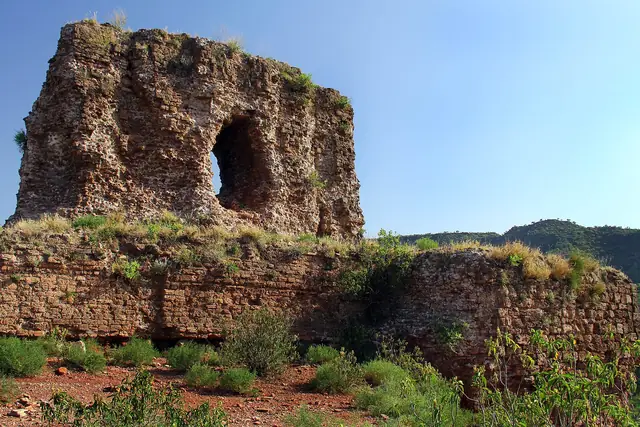
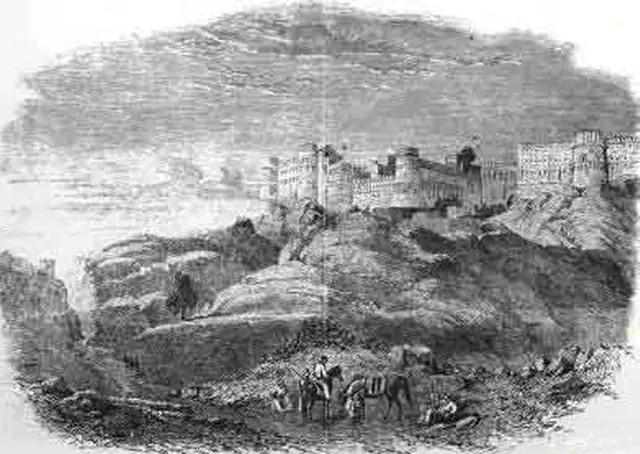
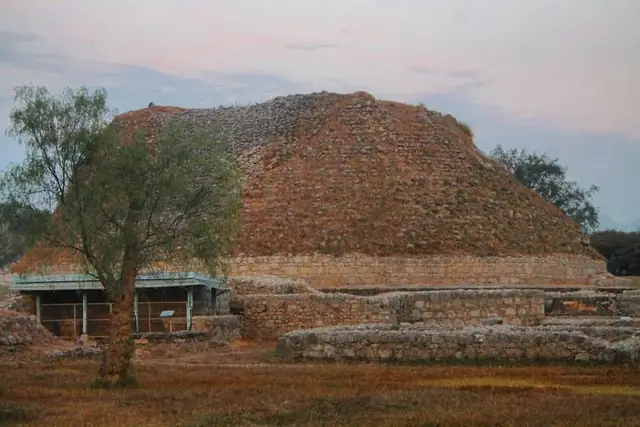
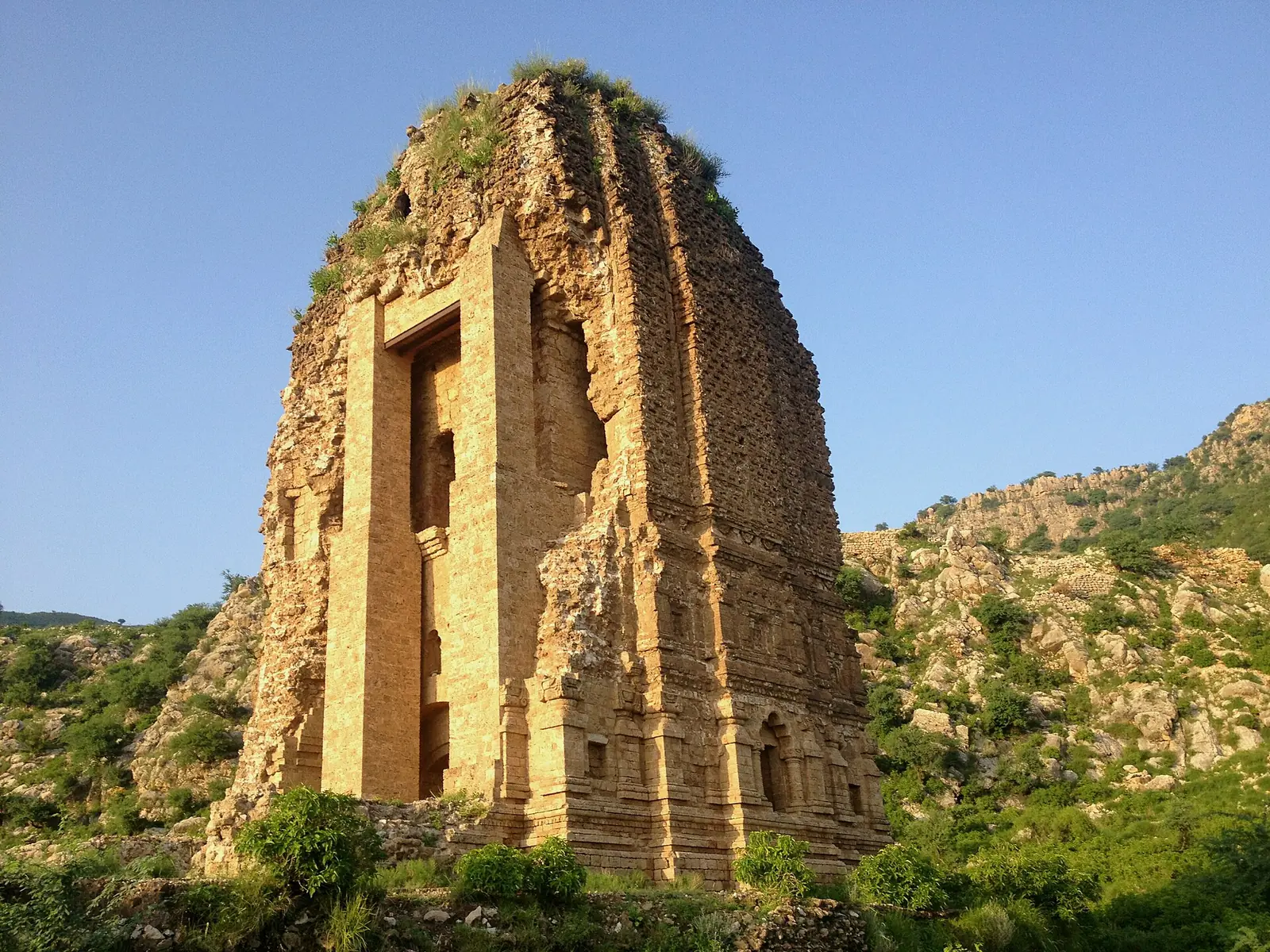
The Salt Range runs between the Jhelum and the Indus, and in the centuries when the Hindu Shahis ruled from Udabhandapura it was dotted with temples: Katas, Malot, Kafirkot, Nandana, and Amb. At Amb the builders set a tall temple on a high plinth inside a walled hilltop settlement, with a smaller shrine beside it. The tower climbs in receding storeys with trefoil arches and pilasters, a style that shares much with the temples of Kashmir. Archaeologists date the group to roughly the 9th and 10th centuries, from its form; no inscription giving the builder has been found.
02After the Shahis
The Hindu Shahi kings Jayapala and Anandapala fought Mahmud of Ghazni across this country between 1001 and 1015, and after their fall the Salt Range temples lost their patrons and worshippers. Amb stood empty through the centuries that followed. The site is protected by the Punjab archaeology department of Pakistan, and the main temple has been shored up in recent decades; the smaller shrine is in worse condition. Unlike Katas Raj, it is no longer a place of pilgrimage.
The life of this place
- c. 9th–10th centuryThe temples are built in the Salt Range under Hindu Shahi rule.
- 1001–1015Mahmud of Ghazni defeats Jayapala and Anandapala; the Salt Range passes out of Hindu rule.