01Yavadvipa in the Ramayana
In the Kishkindha Kanda of the Valmiki Ramayana, Sugriva sends his vanaras east in search of Sita and names Yavadvipa, the island of barley, with its seven kingdoms and its mines of gold and silver. Java kept the name. Traders from the Coromandel and Kalinga coasts were sailing the straits by the early centuries CE, and with them came Brahmins who could consecrate a king, read the stars and lay out a temple. Indian beads and pottery have been dug up across Sumatra, Java and the Malay Peninsula, and by the 5th century kings on several islands were writing in Sanskrit.
02Kutai and Tarumanagara
The seven yupa of Kutai, found on the Mahakam river in Borneo, are dated by their script to about 400 CE. They name Kundunga, his son Ashvavarman and grandson Mulavarman, who performed a great yajna and gave cattle and gold to the Brahmins. In West Java, King Purnavarman of Tarumanagara left five or more inscriptions in the 5th century. The Ciaruteun stone carries his footprints and compares them to the feet of Vishnu. The Tugu inscription records that he had a canal of 6,122 dhanu dug, named Gomati, finished in twenty-one days, with a thousand cows given to the Brahmins at its opening.
03Srivijaya and the straits
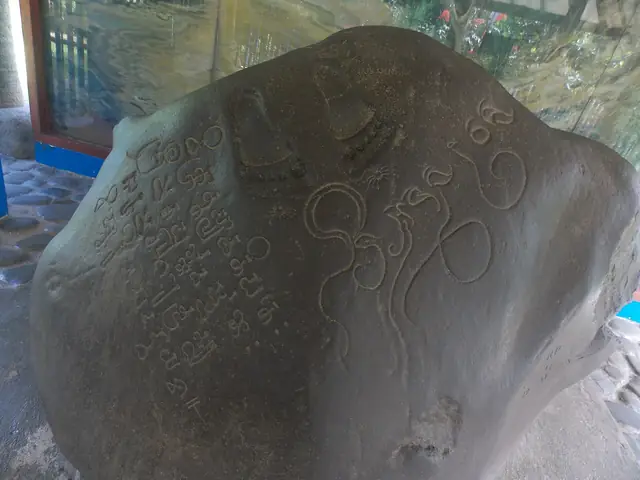
From Palembang in Sumatra, Srivijaya ruled the straits of Malacca and Sunda from the late 7th century. The Kedukan Bukit inscription, dated Shaka 604 or 682 CE, records the siddhayatra of its king with an army of twenty thousand. Srivijaya was a great centre of Buddhist learning, where the Chinese pilgrim Yijing studied Sanskrit before going on to Nalanda, and Hindu and Buddhist traditions lived side by side under its rule. On the Malay Peninsula, the Bujang Valley in Kedah holds the ruins of dozens of brick candi and a riverside iron-working port, among the oldest sites of Indian contact in Malaysia.
04Sanjaya’s linga and the Dieng temples
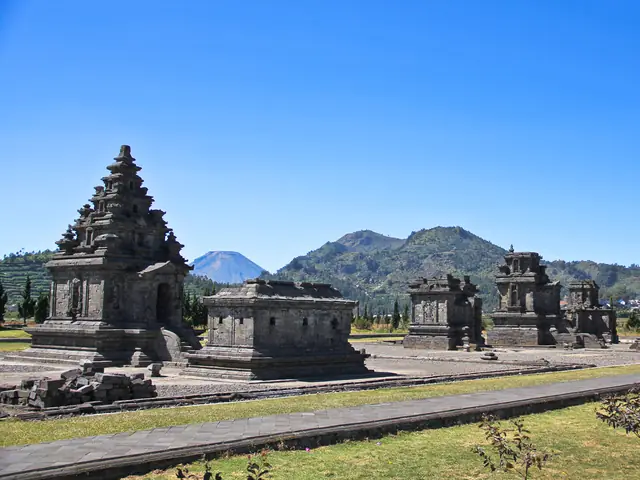
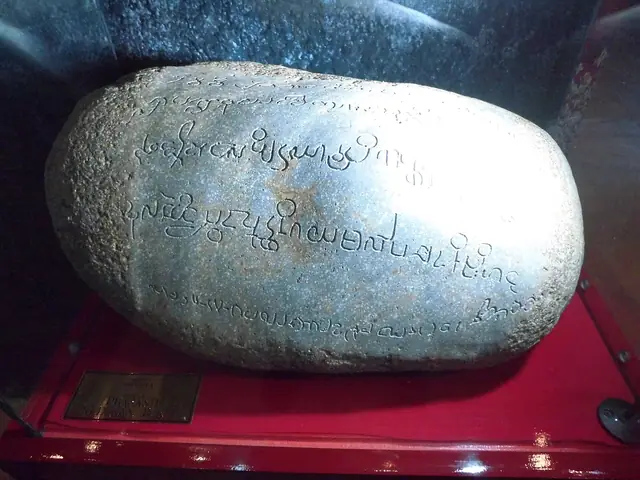
On a hill called Wukir in Central Java, the Canggal inscription of 732 CE records that King Sanjaya set up a linga there, and praises Shiva, Brahma and Vishnu in Sanskrit verse. Sanjaya’s line, the Mataram kings, built in stone. High on the Dieng Plateau, at about 2,000 metres in a caldera full of sulphur vents, stand the Arjuna group and other small Shiva temples of the late 7th and 8th centuries, the oldest standing temples in Java. The Javanese later named them after the Pandavas and Draupadi, Candi Arjuna, Candi Bima, Candi Puntadewa, though they were built for Shiva.
05Prambanan, the house of Shiva
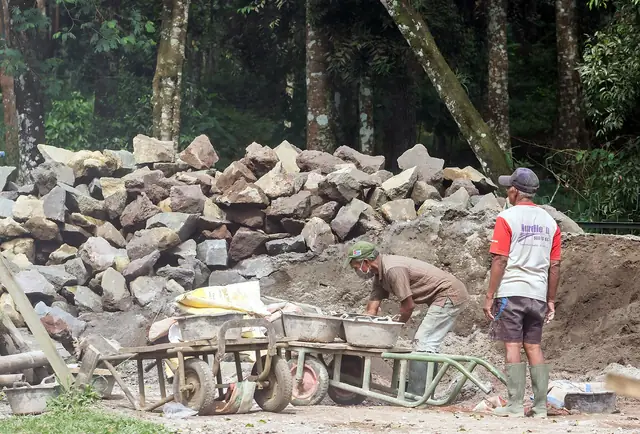
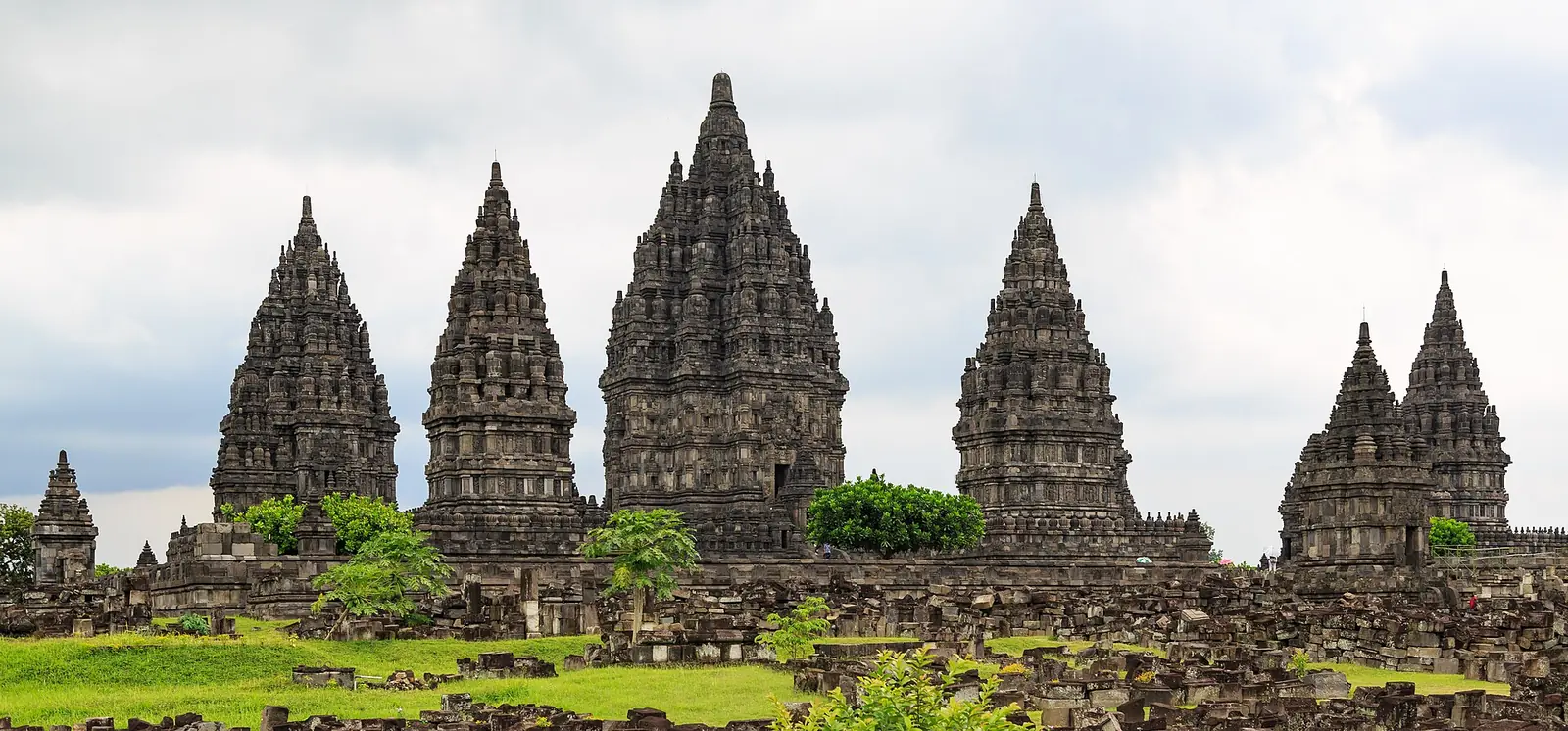
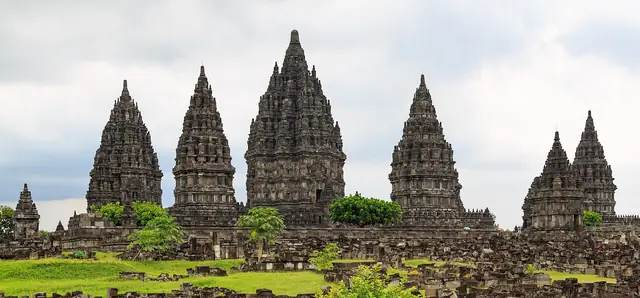
The Shivagrha inscription of 856 CE describes the consecration of a great house of Shiva near the Opak river, and the temple it describes is Prambanan. The central shrine to Shiva rises about 47 metres, with Brahma and Vishnu on either side and shrines to their vahanas, Nandi, Hamsa and Garuda, facing them. The galleries of the Shiva and Brahma temples carry the Ramayana in stone, and the Vishnu temple tells the Krishnayana. The complex once held 240 temples. Earthquakes toppled most of them; reconstruction of the Shiva temple was completed in 1953, and UNESCO listed it in 1991. The earthquake of 2006 damaged it again.
06Kediri, Singhasari and the kakawin
In the 10th century the court moved to East Java, and there the Mahabharata became Javanese. Under King Jayabaya of Kediri, the poets Mpu Sedah and Mpu Panuluh finished the Kakawin Bharatayuddha in 1157, the war of Kurukshetra retold in Old Javanese verse in Sanskrit metres. The wayang kulit, the shadow puppet play, took its stories from these kakawin and still does. Ken Arok founded Singhasari in 1222. Its last king, Kertanegara, a Shiva-Buddha devotee, defied Kublai Khan’s envoys in 1289 and was killed in a rebellion in 1292, just before the Mongol fleet arrived.

07Majapahit, the last great kingdom
Raden Wijaya, Kertanegara’s son-in-law, used the Mongol army against his rival and then drove it out, founding Majapahit in 1293. Under King Hayam Wuruk and his minister Gajah Mada its writ ran across much of the archipelago. Mpu Prapanca’s Nagarakretagama of 1365 describes the king’s progress through his lands, the temples, the Shaiva and Buddhist officials. Mpu Tantular’s Sutasoma gave the line Bhinneka tunggal ika, “they are many, yet they are one”, which is now Indonesia’s national motto. On the slopes of Mount Lawu, Candi Sukuh and Candi Cetho, built in the 15th century as Majapahit waned, are stepped like the pyramids of no other Javanese temple.
08Decline and the flight to Bali
From the 14th century Muslim sultanates grew on the trading coasts, Pasai in Sumatra, then Malacca, then Demak in Java. Majapahit split into quarrelling princes and faded in the early 16th century. Javanese tradition, recorded in Bali, says that the priests, nobles and artists of Majapahit crossed the narrow strait to Bali with their palm-leaf books rather than give up their dharma. Hindu worship survived on the mainland of Java too, among the Tengger people around Mount Bromo, who climb to the crater each year at Yadnya Kasada with offerings, and in the Javanese wayang and court dance, which never lost the Pandavas.
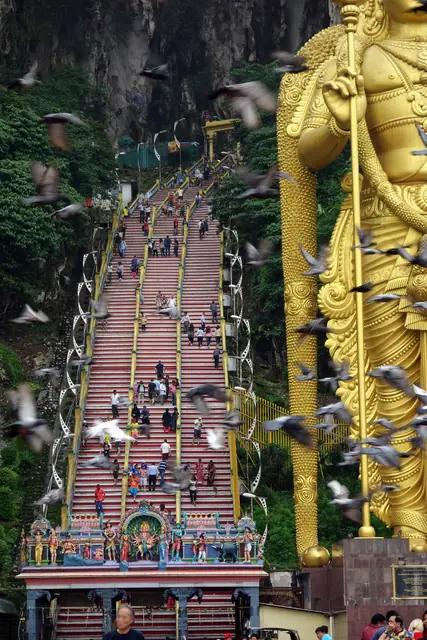
Hindu Dharma is one of Indonesia’s six recognised religions; the 2010 census counted 40,12,116 Hindus, most in Bali, with growing communities in Java, Sulawesi and Kalimantan, and the Parisada Hindu Dharma Indonesia as their council. In Malaysia about 6.3 per cent of people are Hindu (2010 census), mostly Tamil; at Thaipusam over a million gather at Batu Caves below the 42.7-metre golden Murugan.