Cite
MLA
“Vedic Sanskrit.” Hindu History, 2026, https://www.hinduhistory.in/lipi/vedic-sanskrit/. Accessed .
APA
Hindu History. (2026). Vedic Sanskrit. Retrieved , from https://www.hinduhistory.in/lipi/vedic-sanskrit/
अग्निमीळे पुरोहितं यज्ञस्य देवमृत्विजम् । होतारं रत्नधातमम् ॥
agním īḷe puróhitaṃ yajñásya devám ṛtvíjam, hótāraṃ ratnadhā́tamam
01Kept by the voice
The Vedas were heard, shruti, by the rishis and passed on by voice long before anyone wrote them down. To keep every sound exact, the shakhas taught each mantra in several forms: the continuous samhita, the pada text word by word, and the krama, jata and ghana patterns that repeat words forward and backward in set orders. A single wrong syllable shows up at once. The pitch accents, udatta, anudatta and svarita, are marked by hand movements as the student recites. UNESCO recognised this tradition of Vedic chanting as part of humanity’s intangible heritage in 2003.
02A treaty on clay
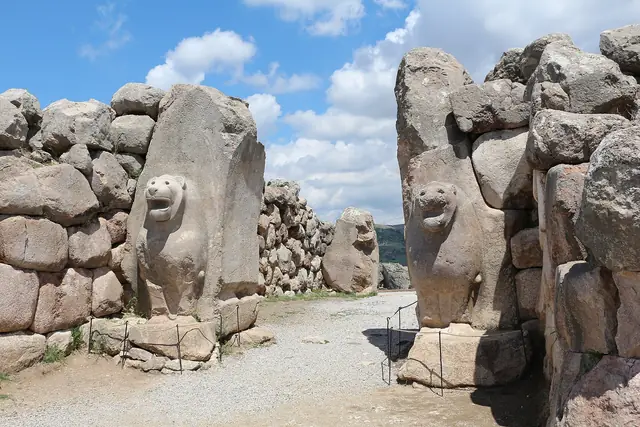
The oldest written trace of this language lies far from Bharat. At Bogazkoy in Anatolia, the Hittite capital, a clay tablet records a treaty of about 1380 BCE between the Hittite king Suppiluliuma and Shattiwaza of Mitanni in north Syria. Among the gods called to witness are Mitra, Varuna, Indra and the Nasatya twins, in that order. A horse-training manual by Kikkuli of Mitanni uses Indo-Aryan number words such as aika, tera, panza and satta for one, three, five and seven laps.
03Nirukta to Sayana
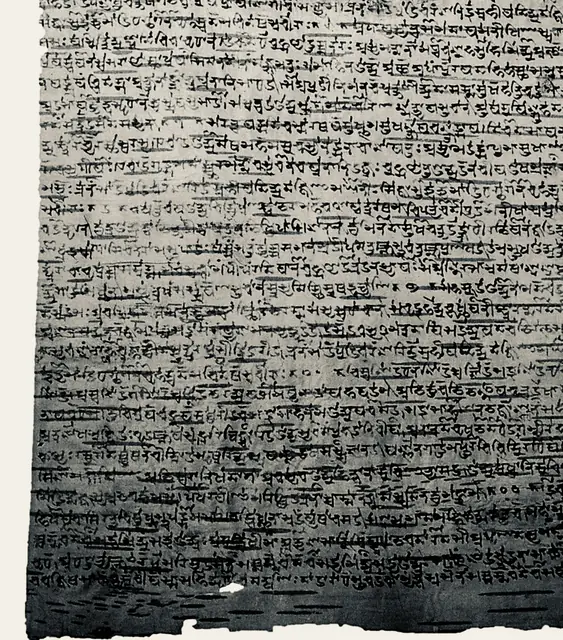
The Vedangas grew up to guard the language: shiksha for sound, vyakarana for grammar, nirukta for meaning. Yaska’s Nirukta explains difficult Vedic words, and the Pratishakhyas record exactly how each shakha joined sounds. In 14th-century Vijayanagara, Sayanacharya wrote a commentary on all four Vedas; Max Müller printed the Rigveda with it in London between 1849 and 1874. The Bhandarkar Oriental Research Institute’s Rigveda manuscripts, the oldest dated to the 15th century, are on UNESCO’s Memory of the World register.
04Heard today
Vedic Sanskrit is not spoken in the street, but it is heard every morning. Ghanapathis in Kerala, Tamil Nadu, Karnataka, Maharashtra and Varanasi still teach the Rigveda, the Krishna and Shukla Yajurveda, the Samaveda in its Kauthuma and Jaiminiya styles, and the Atharvaveda. A boy who finishes the full ghana recitation of one Veda has spent twelve years or more learning it, much as his teacher did.