Cite
MLA
“Manipuri.” Hindu History, 2026, https://www.hinduhistory.in/kala/manipuri/. Accessed .
APA
Hindu History. (2026). Manipuri. Retrieved , from https://www.hinduhistory.in/kala/manipuri/
What defines it
- 01
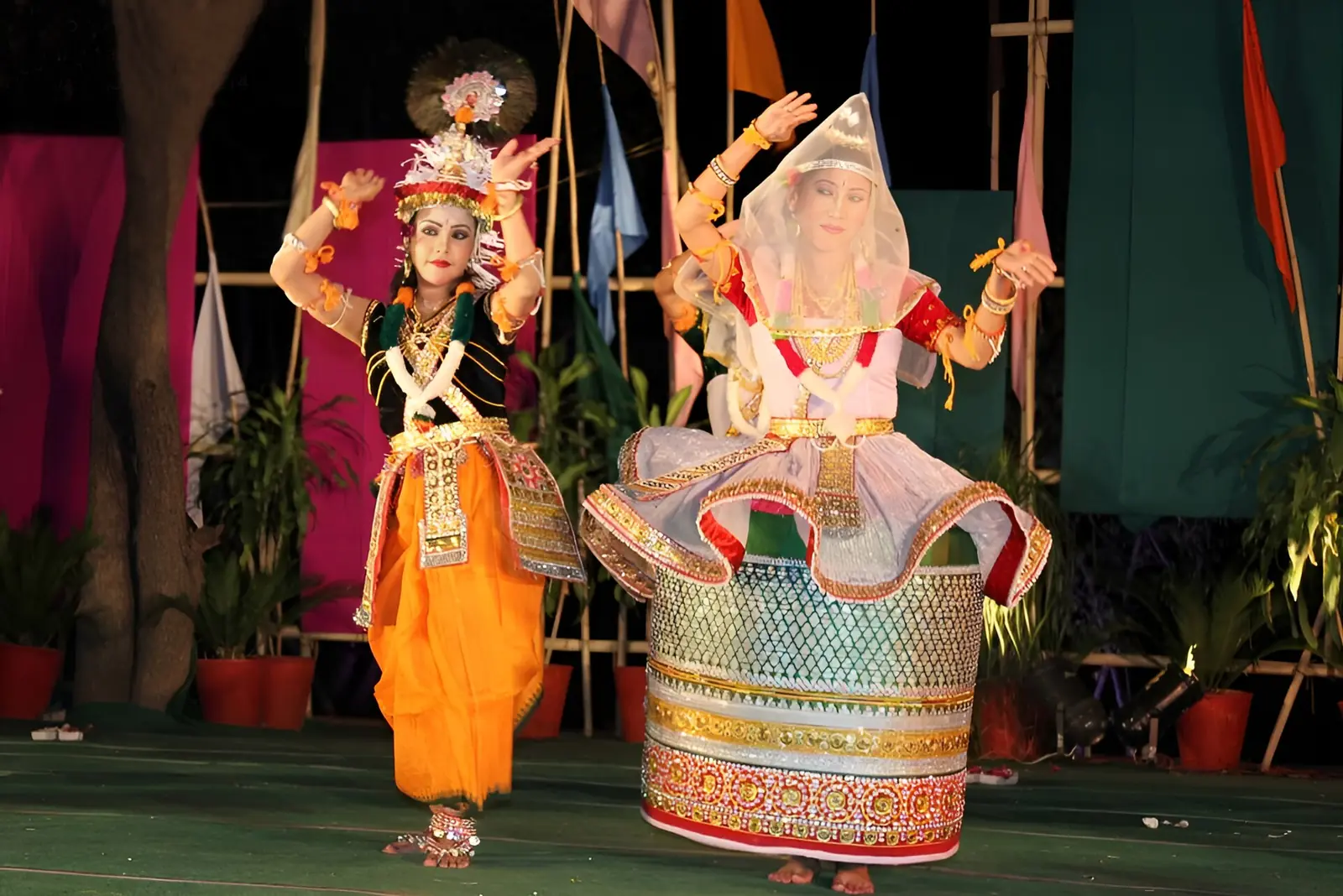
Ras Lila of Radha, Krishna and the gopis
- 02
Potloi skirt and peacock crown
- 03
Unbroken, soft movement; no stamping
- 04
Pung cholom drum dance
- 05
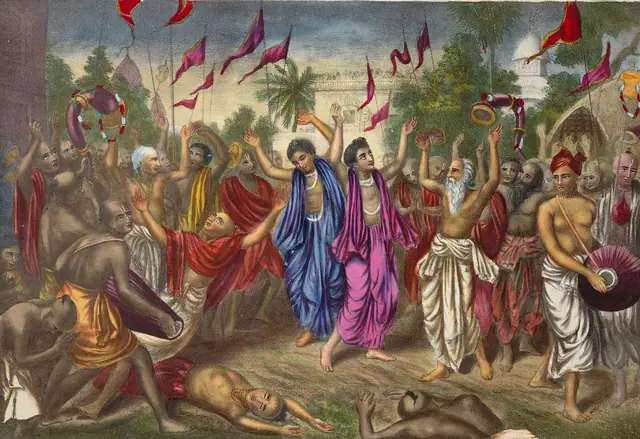
Nata sankirtan
01Bhagyachandra’s vision
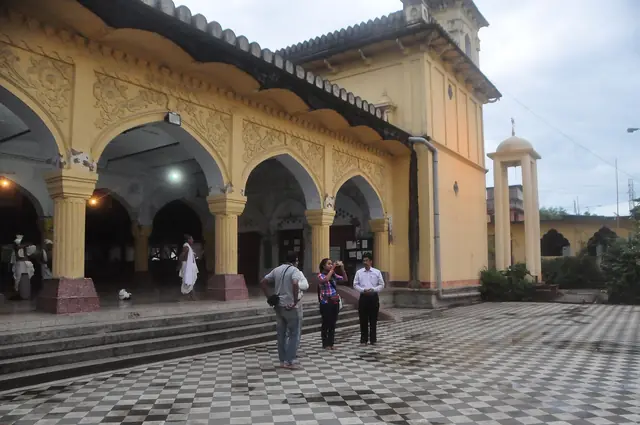
Manipur already had the Lai Haraoba, the ancient festival dances for its deities. Gaudiya Vaishnavism came in the 18th century, and Maharaja Bhagyachandra, Ching-Thang Khomba (r. 1759–1798), devotee of Shri Govindaji, is said to have seen the Ras Lila in a dream and designed its dances, music and costume. Tradition dates the first Maha Ras to 1779, when he installed the image of Govindaji. His daughter Bimbavati is remembered as the first to dance Radha.
02Potloi and pung
The gopis wear the potloi, a stiff, barrel-shaped skirt embroidered with mirrors, and a fine veil; Krishna wears a peacock-feather crown. Their movements flow without a break, eyes lowered, the body turning in soft curves; the knees are never thrown out and the feet do not strike. In contrast the men’s pung cholom is all leaps and spins while playing the pung drum, and the kartal cholom does the same with cymbals. Sankirtan, sung and danced, is part of every rite of life in Manipur.
03Santiniketan and the gurus
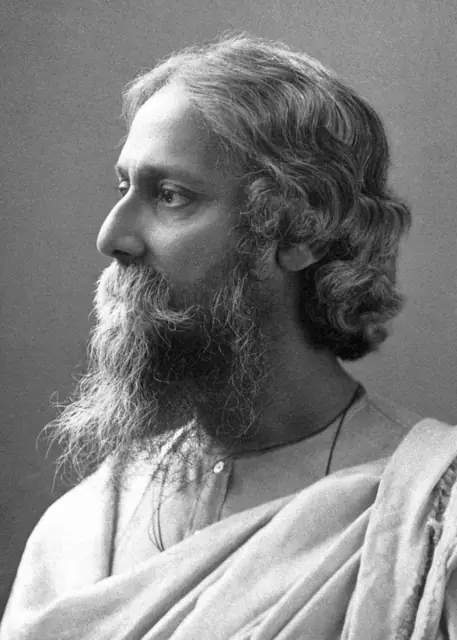
Rabindranath Tagore saw Manipuri dance in Sylhet in 1919 and brought teachers to Santiniketan, which made it known beyond the hills. Guru Amubi Singh, Guru Bipin Singh and the Jhaveri sisters of Mumbai trained a new generation; the Jawaharlal Nehru Manipur Dance Academy in Imphal has taught it since 1954. To see the Ras in its own place, go to the Shri Govindaji temple in Imphal on the full moon of Kartik, Basanta Purnima or Kunja Purnima.