01The Hathigumpha record
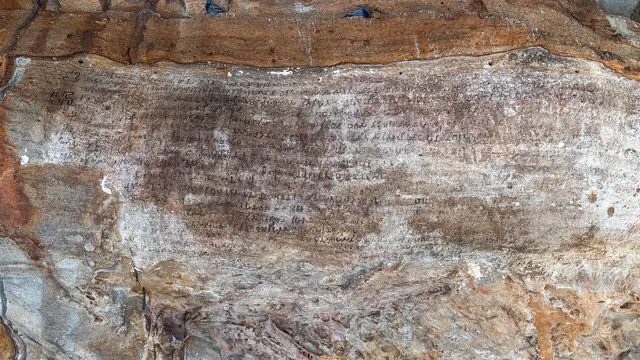
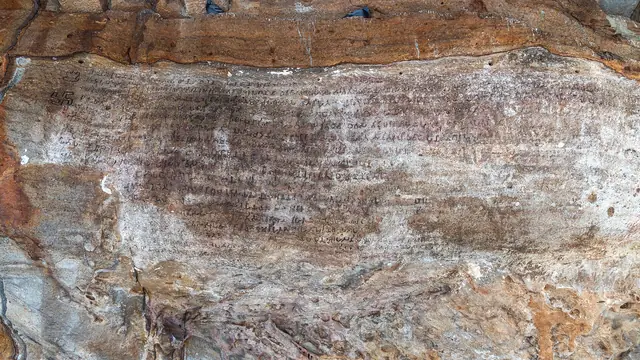
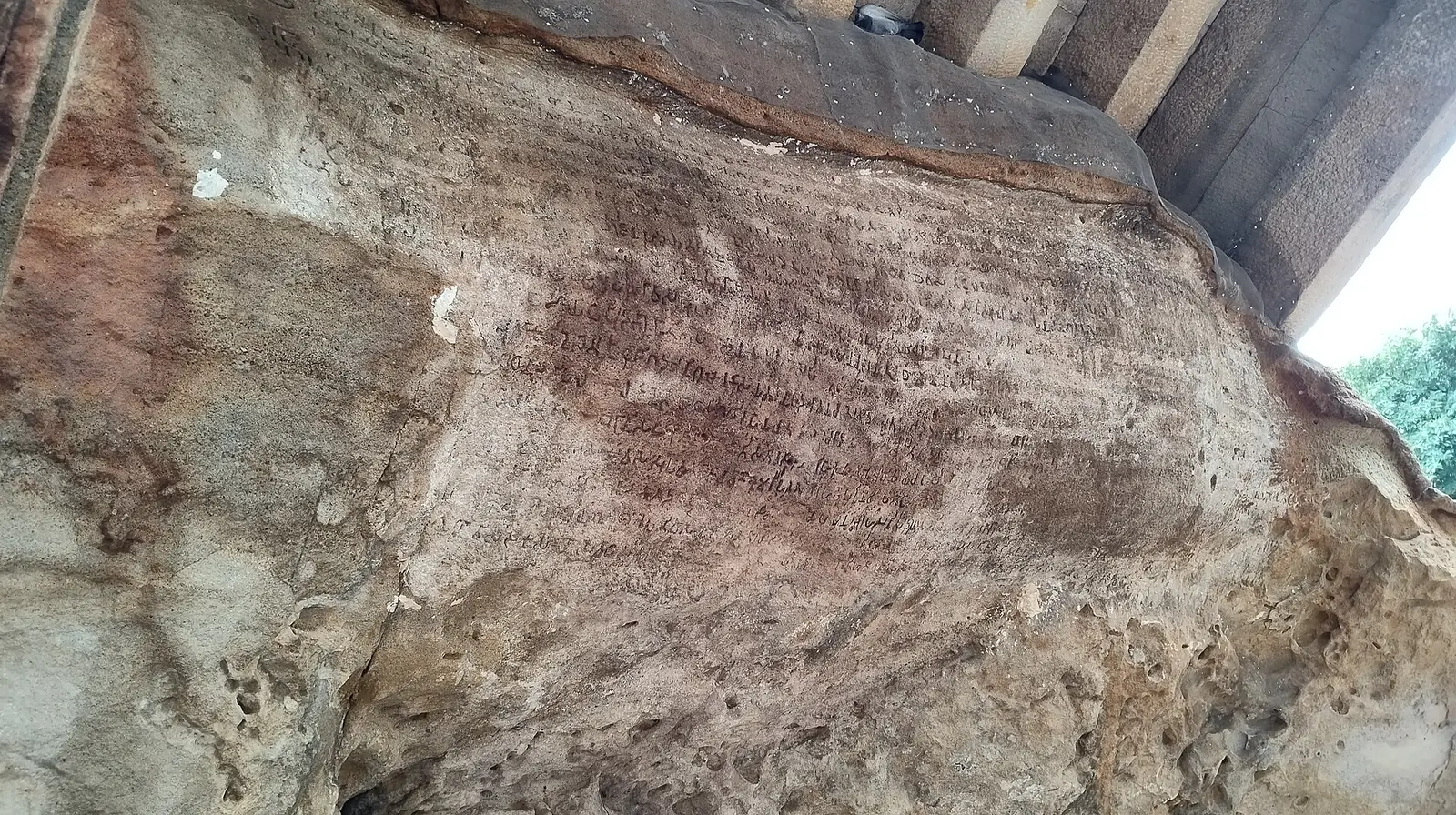
Over the overhang of the Elephant Cave on Udayagiri, seventeen lines of Prakrit in Brahmi begin with a salutation to the Arhats and the Siddhas. They name Kharavela as a king of the Chedi line, descended from Mahameghavahana, and walk through his life: fifteen years of boyhood spent learning writing, arithmetic, law and statecraft, nine as yuvaraja, and then his coronation at twenty-four. In his first year he repaired the gates and walls of Kalinganagari after a storm, and the record says he pleased thirty-five lakh subjects.
02Kharavela’s campaigns
In his second year Kharavela sent an army west without regard for Satakarni, the Satavahana king. In his fifth he brought into the capital the canal a Nandaraja had dug three hundred years before. In his eighth he struck Rajagriha, and the inscription says a Yavana king fell back to Mathura at the news. In his eleventh he ploughed Pithunda with asses and broke a confederacy of Tamil states that had threatened Kalinga, and in his twelfth he made the king of Magadha bow at his feet and brought home the Kalinga Jina that the Nandas had carried off.
03Caves for the monks
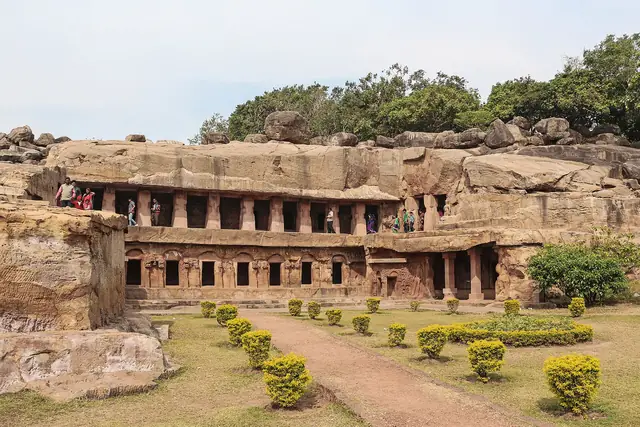
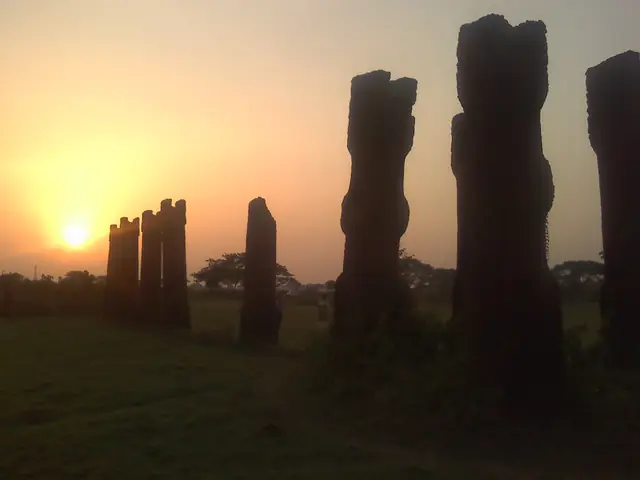
The twin hills of Udayagiri and Khandagiri, the ancient Kumari Parvata, are honeycombed with cells cut for Jain monks, some with carved friezes of processions, dancers and hunting scenes. Kharavela’s queen had the upper storey of the Manchapuri cave cut, and its inscriptions name the next king, Kudepasiri, and a prince, Vadukha. Kharavela’s date is disputed: most scholars now place him in the 1st century BCE, some earlier. Excavations at Shishupalgarh found a fortified city with gateways and a plan close to the one the inscription implies.
The rulers
- 1MahameghavahanaFounder whose name the line carriesc. 2nd–1st century BCE
- 2KharavelaHathigumpha inscription; brought back the Kalinga Jinac. 1st century BCE (debated)
- 3Kudepasiri (Vakradeva)Named as Kalinga’s king in the Manchapuri caveafter Kharavela
- 4VadukhaA prince named in the Manchapuri caveafter Kharavela
What they left
- The Hathigumpha inscription, a year-by-year royal record
- The Udayagiri and Khandagiri caves
- The excavated city of Shishupalgarh
- Kalinga’s revival after the Maurya conquest