Cite
MLA
“Kathak.” Hindu History, 2026, https://www.hinduhistory.in/kala/kathak/. Accessed .
APA
Hindu History. (2026). Kathak. Retrieved , from https://www.hinduhistory.in/kala/kathak/
What defines it
- 01
Tatkar footwork with ghungroo
- 02
Chakkars ending on the sam
- 03
Spoken bols recited before being danced
- 04
Gat-bhava and abhinaya on Krishna themes
- 05
Lucknow, Jaipur and Banaras gharanas
01Katha kahe so kathak
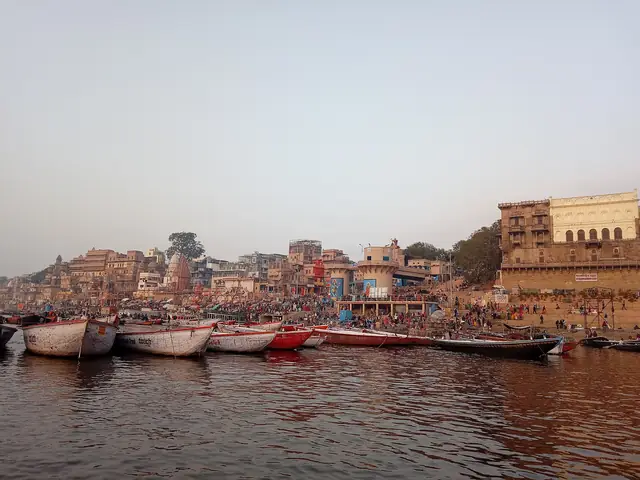
The kathakars were families of reciters attached to temples of Braj, Kashi and Ayodhya, who sang and acted the kathas with gesture. In the 16th century the Raslila of Braj gave the form its Krishna repertoire. Later it entered the courts: Hindu rajas of Jaipur and Raigarh and the Nawabs of Awadh kept dancers, and under Wajid Ali Shah in Lucknow the family of Durga Prasad and Thakur Prasad, and Durga Prasad’s sons Bindadin Maharaj and Kalka Prasad, raised the Lucknow style. Bindadin wrote hundreds of thumris on Krishna.
02Tatkar, chakkar and bhava
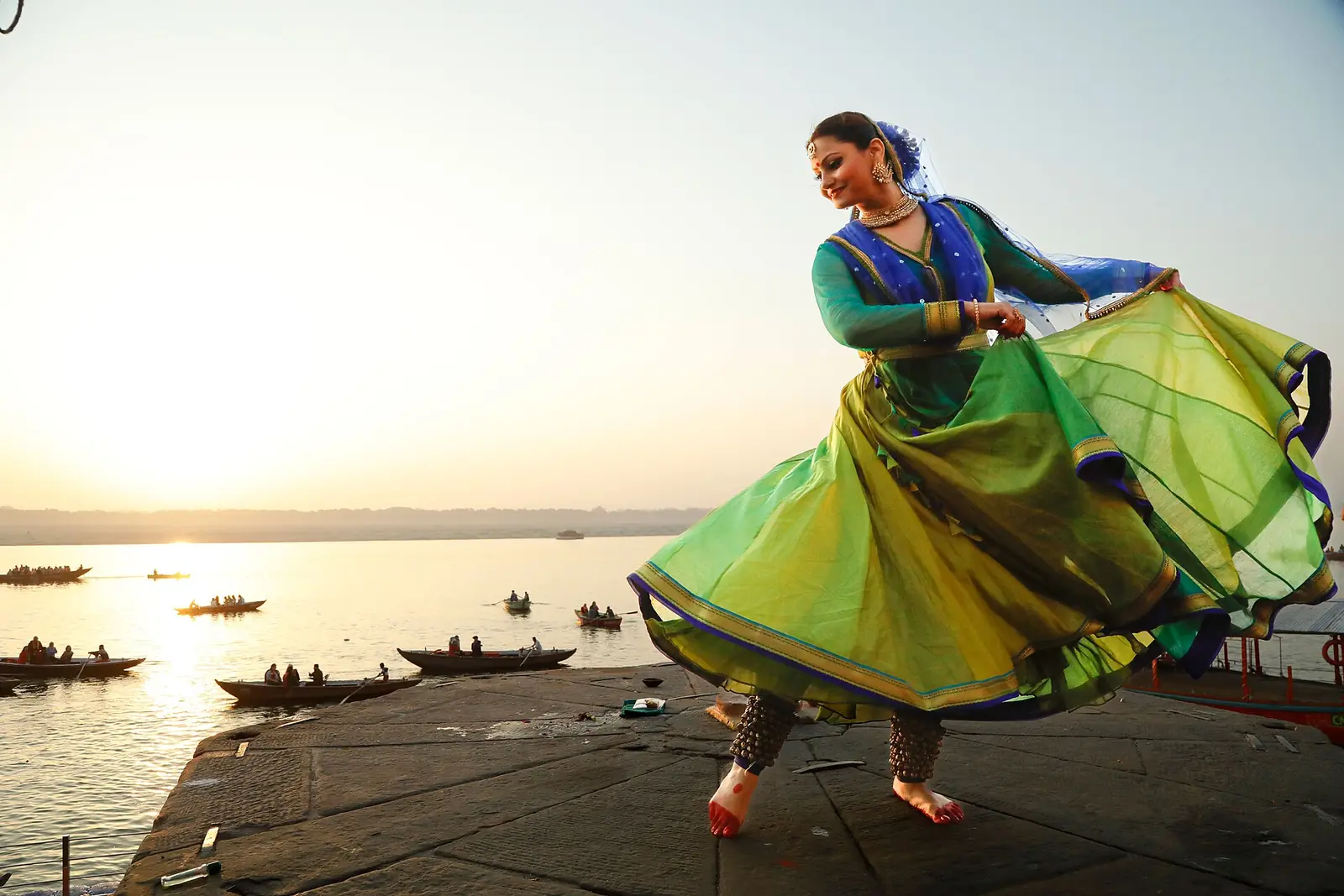
The dancer stands upright, wears up to a hundred or more ghungroos on each ankle and beats out the tala with the flat foot in tatkar, matching the tabla stroke for stroke. Spins, chakkars, come in sets that end exactly on the sam. A recital opens with a vandana, moves through thaat, amad, tukdas and parans, and ends in gat-bhava and abhinaya on a thumri or bhajan. The Jaipur gharana favours power and rhythm, Lucknow grace and bhava, and the Banaras style its own clean footwork.
03Masters and where to see
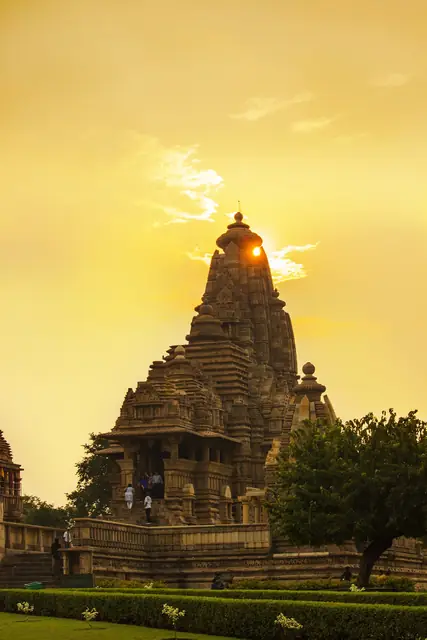
Achchan Maharaj, Shambhu Maharaj and Lachhu Maharaj carried the Lucknow line into the 20th century, and Achchan’s son Birju Maharaj (1938–2022) became its best-known face. Jaipur gave Jailal and Sunder Prasad; Banaras gave Sitara Devi; Kumudini Lakhia in Ahmedabad and Rohini Bhate in Pune made new work. The Kathak Kendra in Delhi trains dancers, and the Khajuraho Dance Festival each February puts Kathak on a stage before the temples.