Cite
MLA
“Mohiniyattam.” Hindu History, 2026, https://www.hinduhistory.in/kala/mohiniyattam/. Accessed .
APA
Hindu History. (2026). Mohiniyattam. Retrieved , from https://www.hinduhistory.in/kala/mohiniyattam/
What defines it
- 01
Gentle side-to-side sway (andolika)
- 02
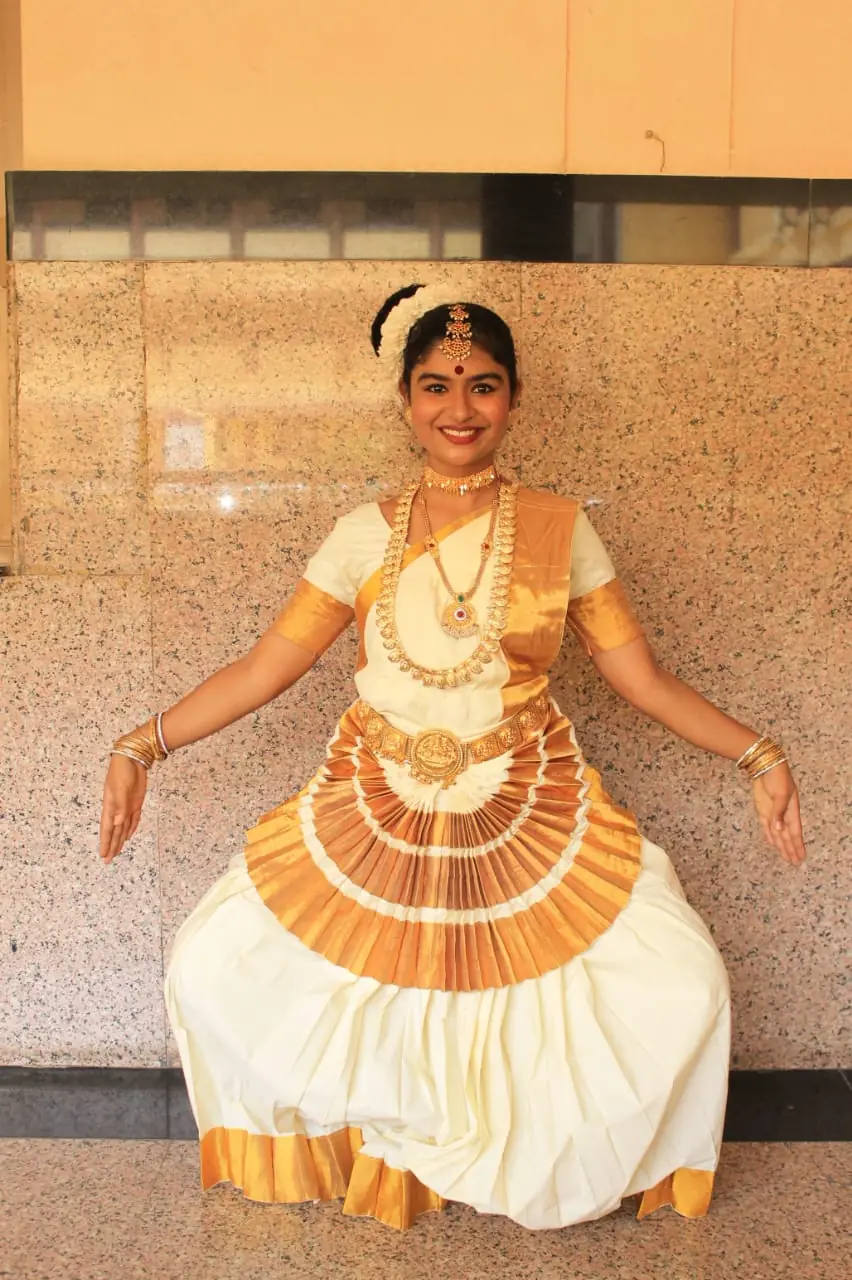
White-and-gold kasavu costume
- 03
Side bun wound with jasmine
- 04
Sopana-style music
01At Swati Tirunal’s court
Maharaja Swati Tirunal of Travancore (r. 1829–1846), a composer of hundreds of kritis and padams, gave Mohiniyattam its repertoire. Vadivelu of the Tanjore Quartet came to his court and helped shape the order of items on the Bharatanatyam model. Irayimman Thampi, the court poet, wrote padams for it. After this flowering, the dance lost respect and nearly vanished by the early 20th century.
02The sway of the palm
The body sways gently from side to side, the feet glide, and the movements are rounded, like palm fronds in the wind or the backwaters at rest. The dancer wears the white-and-gold kasavu sari of Kerala, with a bun worn to the left of the head and wound with jasmine. The music is in Sopana style, the temple singing of Kerala, with the mridangam, edakka and veena. Cholkettu, jatiswaram, padam and tillana make up a recital.
03Revival
Vallathol brought Mohiniyattam into the Kerala Kalamandalam soon after it opened, and found old teachers such as Kalyanikutty Amma, who researched the form and wrote on it. Kalamandalam Kalyanikutty Amma, Kalamandalam Satyabhama, Bharati Shivaji and Kanak Rele, who founded the Nalanda Dance Research Centre in Mumbai, rebuilt its technique. See it at Kerala Kalamandalam, at the Nishagandhi festival in Thiruvananthapuram each January, or at temple festivals across Kerala.