Cite
MLA
“Sattriya.” Hindu History, 2026, https://www.hinduhistory.in/kala/sattriya/. Accessed .
APA
Hindu History. (2026). Sattriya. Retrieved , from https://www.hinduhistory.in/kala/sattriya/
What defines it
- 01
Paurashik and stri bhangi
- 02
Sutradhara who sings and dances
- 03
Khol drum and borgeet
- 04
White pat silk costume
01Sankardev’s theatre of bhakti
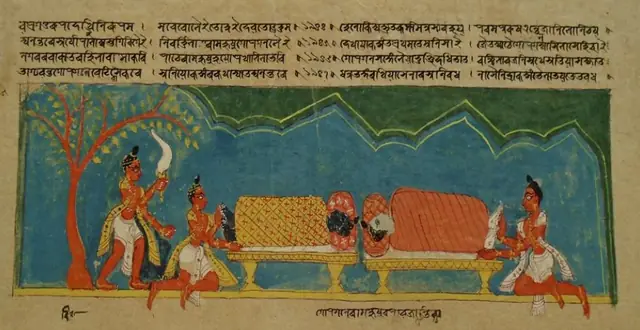
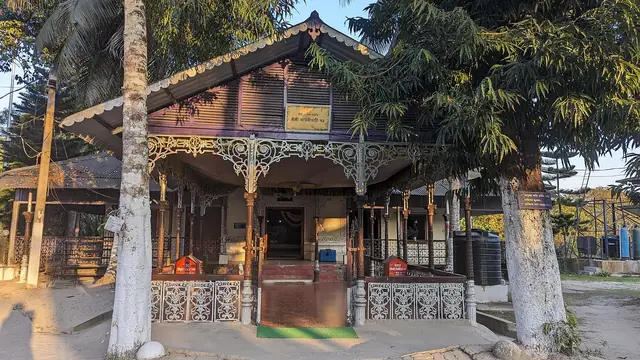
Srimanta Sankardev (1449–1568) is said to have staged his first play, the Chihna Yatra, with painted scenes of the seven Vaikunthas, around 1468. His Ankiya Naats in Brajavali, on Krishna and Rama, used song, dance and a sutradhara who sings, dances and explains the play. His disciple Madhavdev added more. The dances of these plays, done in the namghar of the sattra by the bhakats, the monks, became Sattriya. For five centuries it was danced only by men, as an offering.
02Purush and prakriti
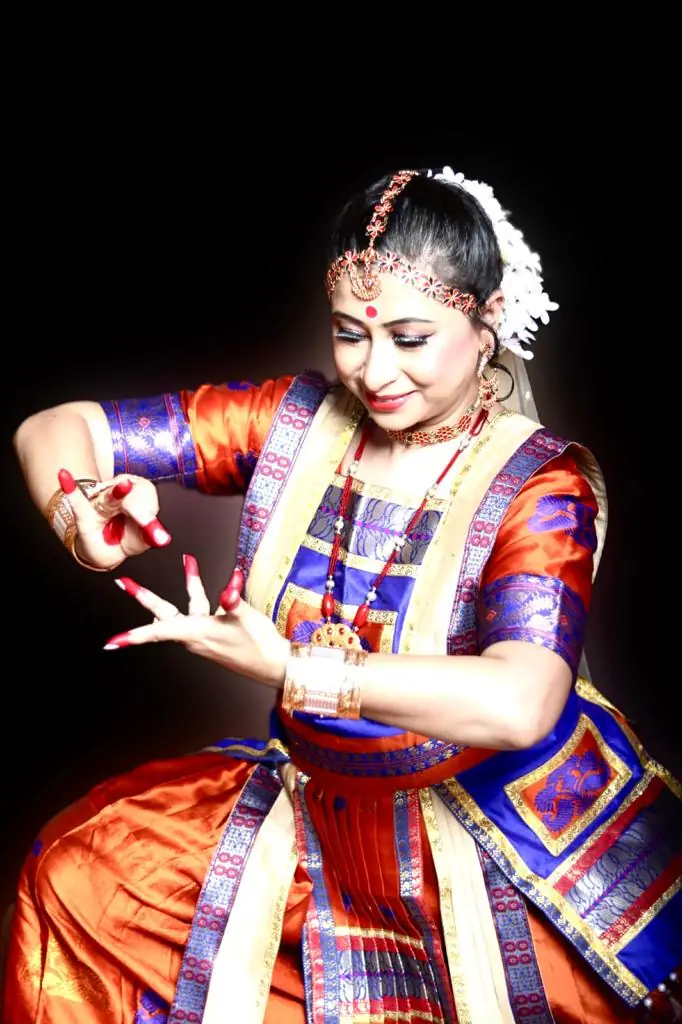
Sattriya has two modes: paurashik bhangi, vigorous, for male roles, and stri bhangi, gentle, for female ones. Its pieces include the Gosai Prabesh, Krishna’s entry, the Chali, a graceful dance, the Jhumura and the Rajagharia Chali. Dancers wear white or cream pat silk, the costly mulberry silk of Assam, with traditional Assamese jewellery. The khol drum, the cymbals called taal and the borgeet, the sacred songs of Sankardev and Madhavdev, carry the music.
03From the sattra to the stage
In the 20th century the dances began to be taught outside the monasteries and to women. Maniram Datta Muktiyar, Bapuram Bayan Atai, Jatin Goswami and Ghanakanta Bora worked to present it on stage, and the Sangeet Natak Akademi recognised it as a classical dance in November 2000. To see it where it lives, go to the sattras of Majuli, the river island in the Brahmaputra, especially during the Raas festival in Kartik.