01Kumari Parvata
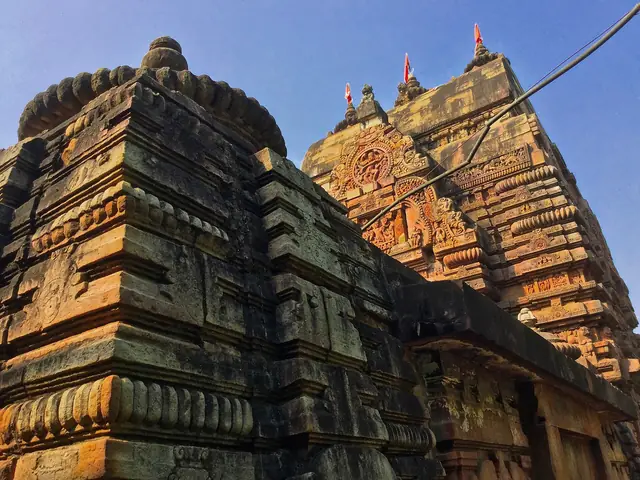
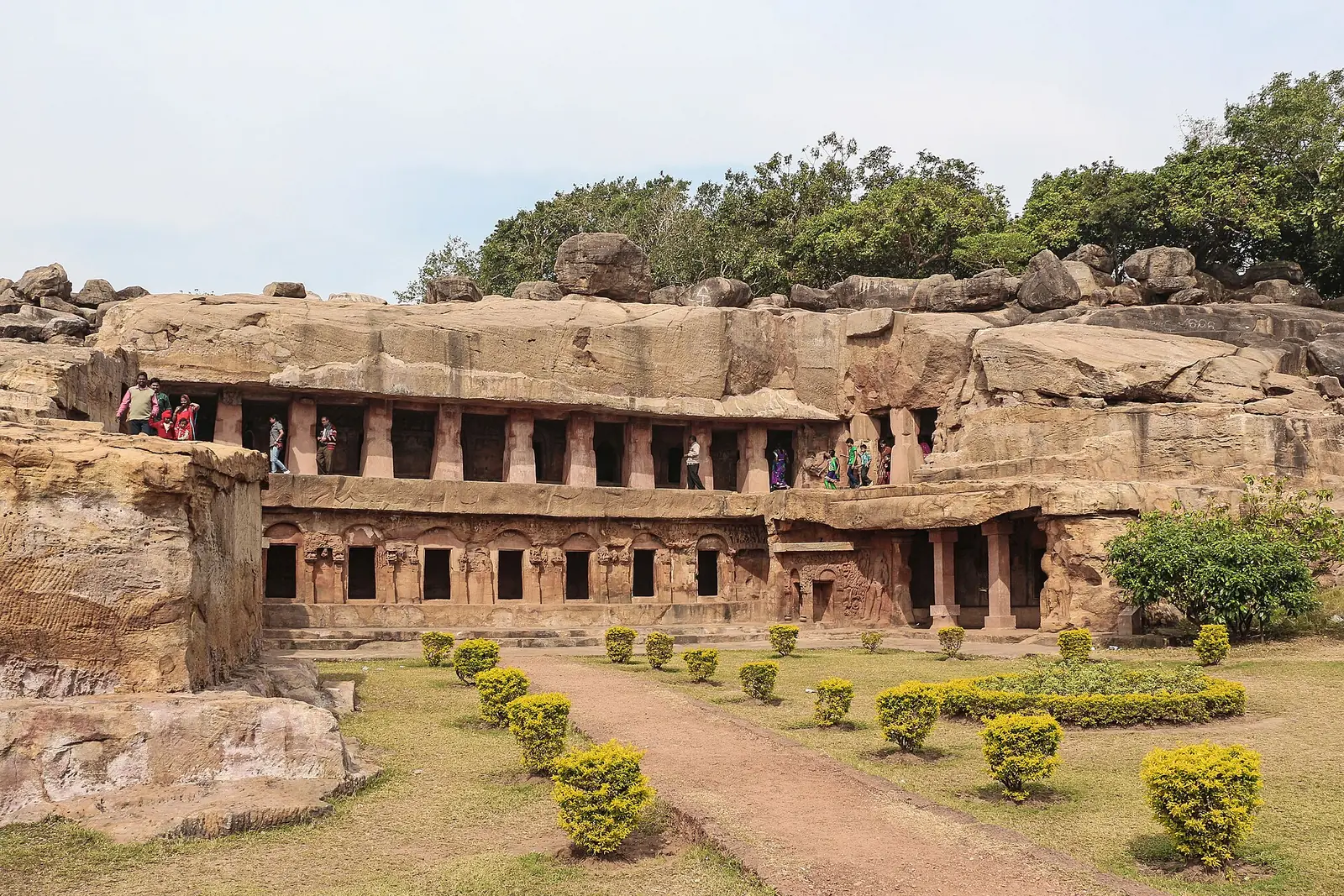
The inscriptions call Udayagiri Kumari Parvata and Khandagiri Kumara Parvata. Udayagiri has eighteen caves, Khandagiri fifteen. They are cells, not temples: low rooms with stone benches where the munis slept through the rains, opening on verandas. The largest, the two-storeyed Rani Gumpha, has friezes of a royal procession, dancers and a hunt. Ganesha Gumpha has elephants guarding its steps. On Khandagiri, later Jain shrines with images of the Tirthankaras are still in worship, and a temple of Parshvanatha stands on the summit.
02The Hathigumpha inscription
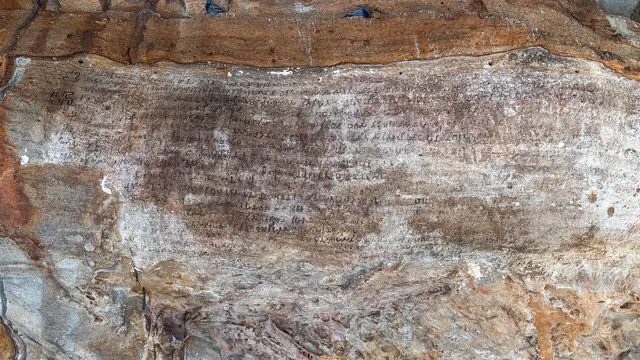
Seventeen lines in Prakrit, cut on the brow of a natural cavern, open with a salutation to the Arhats and the Siddhas and then go through Kharavela’s reign year by year: the repair of Kalinga’s capital after a storm, campaigns west and north, a march on Magadha, and the return of the image of the Kalinga Jina that a Nanda king had carried away. It also mentions a canal first opened by a Nanda king. For the history of Kalinga after Ashoka it is the single most important text.
The life of this place
- 2nd–1st century BCEKharavela has caves cut for Jain munis and records his reign at Hathigumpha.
- 1837James Prinsep publishes the first reading of the Hathigumpha inscription.
About 7 km west of central Bhubaneswar, open sunrise to sunset; the climb is short but steep in places. Go early to avoid the monkeys’ busiest hours.