01The Dasara of Srirangapatna
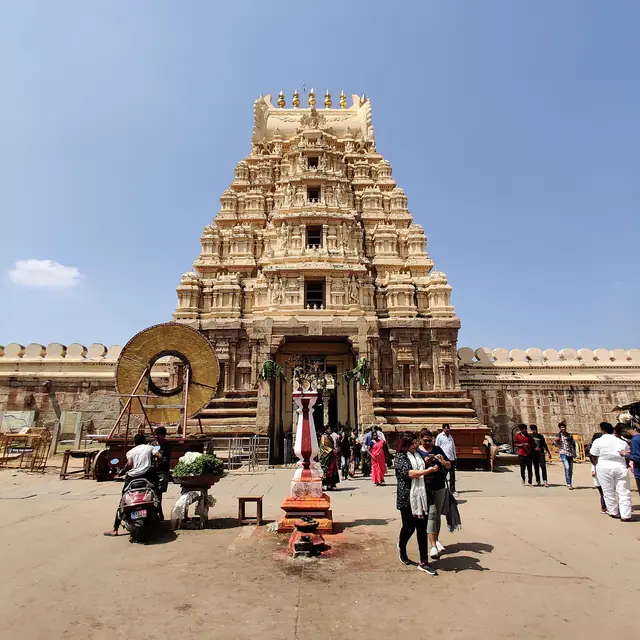
Family tradition counts the house from Yaduraya in 1399. After Vijayanagara’s defeat at Talikota, its viceroy at Srirangapatna grew weak, and in 1610 Raja Wodeyar I took the island fort in the Kaveri. That same year he held the Navaratri festival there in the manner of the Vijayanagara emperors, seated on the throne, and the Mysore Dasara has been kept every year since. On Vijayadashami the procession still carries Devi Chamundeshwari through the streets of Mysuru.
02Chikka Devaraja and the usurpation
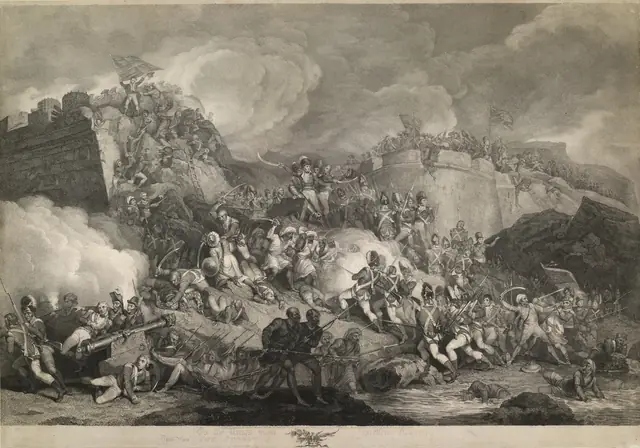
Kanthirava Narasaraja I held Srirangapatna against a Bijapur siege and struck his own coins. Chikka Devaraja Wodeyar, from 1673 to 1704, pushed the frontier out on every side, ran an orderly treasury with eighteen departments, and wrote in Kannada on bhakti. After him the kings weakened. From 1761 Haidar Ali held the real power, and his son Tipu Sultan ruled in his own name until he was killed at Srirangapatna in 1799, when the British restored the five-year-old Krishnaraja Wodeyar III.
03The model state
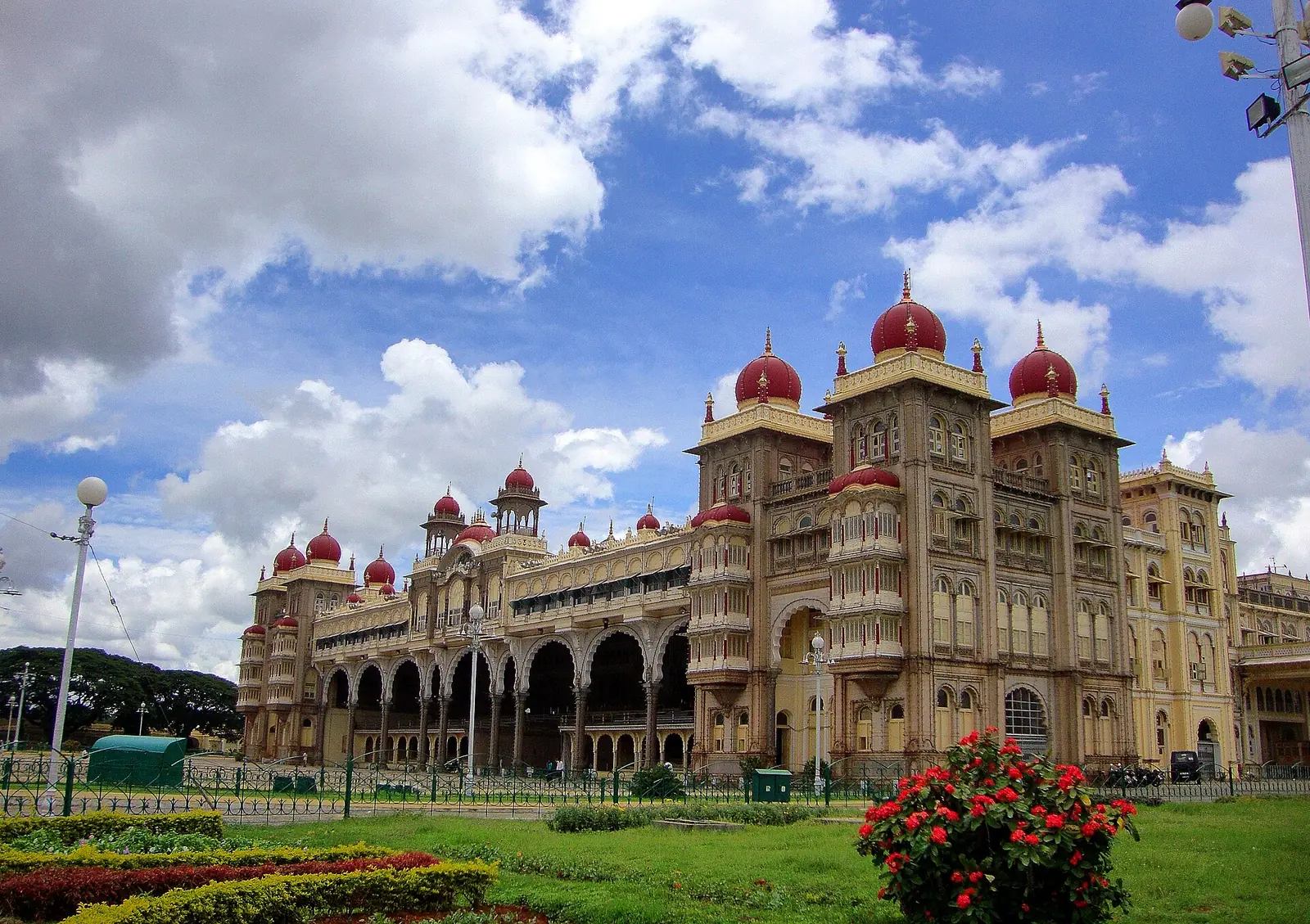
Krishnaraja III was a great patron of music and letters; the British took over the administration in 1831 and returned it in 1881. Krishnaraja Wodeyar IV, from 1902 to 1940, with Dewan M. Visvesvaraya, built the Krishnaraja Sagar dam on the Kaveri, founded the University of Mysore in 1916, and brought electric light to Bangalore early. The present Mysore Palace was finished in 1912 after the old wooden one burned in 1897. Jayachamarajendra Wodeyar acceded to India in 1947 and served as Rajpramukh of Mysore State.
The rulers
- 1YadurayaFounder in family tradition1399–1423 (traditional)
- 2Raja Wodeyar ITook Srirangapatna; first Mysore Dasara, 16101578–1617
- 3Chamaraja Wodeyar VI1617–1637
- 4Kanthirava Narasaraja IBeat off Bijapur; minted coins1638–1659
- 5Dodda Devaraja1659–1673
- 6Chikka DevarajaWidest extent; reformed the treasury1673–1704
- 7Krishnaraja Wodeyar I1714–1732
- 8Krishnaraja Wodeyar IIPower passed to Haidar Ali1734–1766
- 9Krishnaraja Wodeyar IIIRestored after Tipu’s fall1799–1868
- 10Chamarajendra Wodeyar XAdministration returned, 18811868–1894
- 11Krishnaraja Wodeyar IVKRS dam; University of Mysore1902–1940
- 12Jayachamarajendra WodeyarAcceded to India; Rajpramukh1940–1950
What they left
- The Mysore Dasara, held every year since 1610
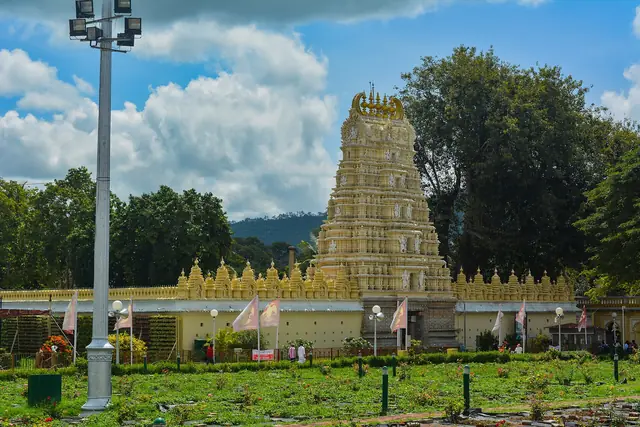
- Mysore Palace (Amba Vilas), finished 1912
- Krishnaraja Sagar dam on the Kaveri
- University of Mysore (1916)
- Patronage of Carnatic music at the Mysore court