Cite
MLA
“Mayamata.” Hindu History, 2026, https://www.hinduhistory.in/sthapatya/mayamata/. Accessed .
APA
Hindu History. (2026). Mayamata. Retrieved , from https://www.hinduhistory.in/sthapatya/mayamata/
What defines it
- 01
About 3,300 verses in 36 chapters
- 02
Three parts: sites; buildings; vehicles, seats and images
- 03
Soil testing, orientation, vastu-purusha-mandala
- 04
Chapter 14: the adhishthana
- 05
Attributed to the sage Maya (Mamuni Mayan)
01Maya the builder
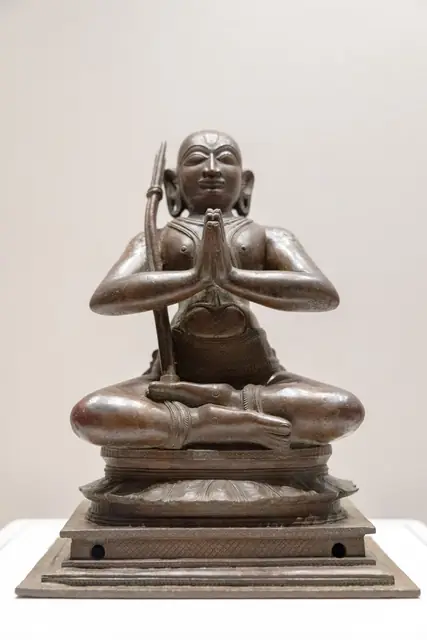
Tamil tradition remembers Mamuni Mayan, the great sage Maya, as the founder of vastu. He appears in the Cilappatikaram and the Manimekalai, and he is identified with the Maya of the Mahabharata, the builder who raised the assembly hall of the Pandavas. Tradition credits him with the Mayamata and with other works. The sthapatis of Tamil Nadu still speak of themselves as heirs of this line; V. Ganapati Sthapati, principal of the college of sculpture at Mamallapuram, wrote on Mayan's Aintiram. For the Mayamata itself the scholarly dates differ widely: some place its circulation by the 5th–7th centuries CE, while others treat the surviving text as a much later, perhaps early Vijayanagara, compilation.
02What it contains
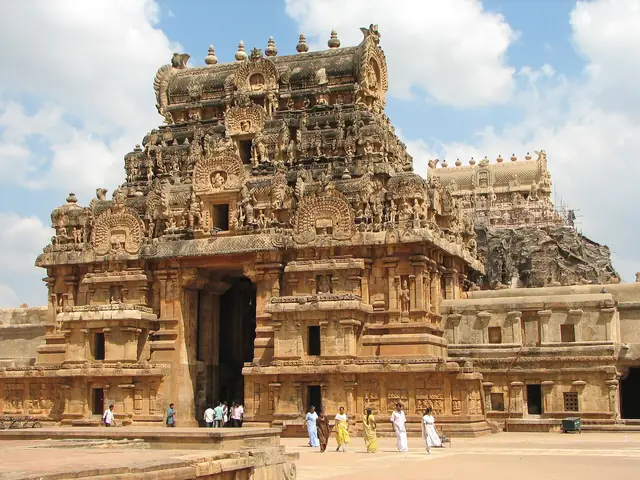
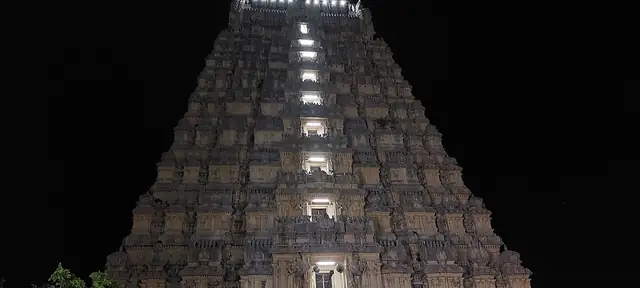
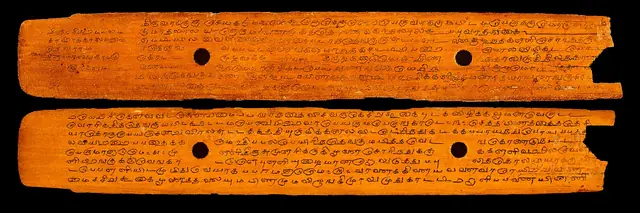
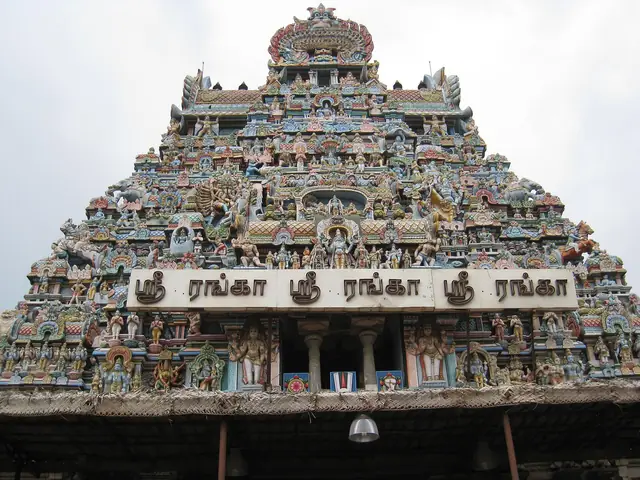
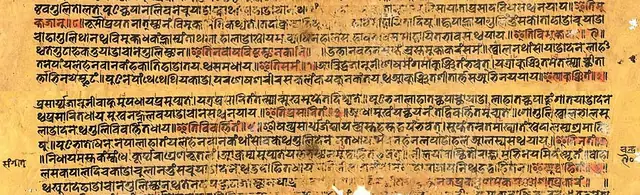
The Mayamata runs to about 3,300 verses in 36 chapters and calls itself a vastu shastra, a treatise on dwelling, where dwelling means anything that is lived in, by gods or by men. It moves in three large parts: sites, then buildings, then vehicles, seats and iconography. It begins on the ground, with testing the soil, fixing directions and laying out the vastu-purusha-mandala, and goes on to villages and towns, houses, palaces and temples of one to many storeys. Its 14th chapter gives the procedure for building the adhishthana, the moulded base. Later chapters deal with gateways, mandapas, carts and thrones, and finally with the proportions of the images that stand in the sanctum.
03Editions
The French scholar Bruno Dagens prepared the critical edition with a French translation, published by the Institut Français d'Indologie at Pondicherry in the 1970s. Motilal Banarsidass printed an English translation in 1985, without the Sanskrit. The Indira Gandhi National Centre for the Arts then published the Sanskrit text with Dagens's English translation in two volumes in its Kalamulashastra series, in 1994 and again later. The Mayamata stands with the Manasara as the main written authority for the southern temple, and both are still consulted by working sthapatis. Working sthapatis read it for its rules of proportion, which fix every part of a shrine from one module.