Cite
MLA
“The Trinity of Carnatic Music.” Hindu History, 2026, https://www.hinduhistory.in/kala/carnatic-trinity/. Accessed .
APA
Hindu History. (2026). The Trinity of Carnatic Music. Retrieved , from https://www.hinduhistory.in/kala/carnatic-trinity/
What defines it
- 01
Tyagaraja: Telugu kritis to Rama, Pancharatnas
- 02
Dikshitar: Sanskrit kritis, Navavarnas, Navagraha kritis
- 03
Syama Sastri: songs to Kamakshi, swarajatis
- 04
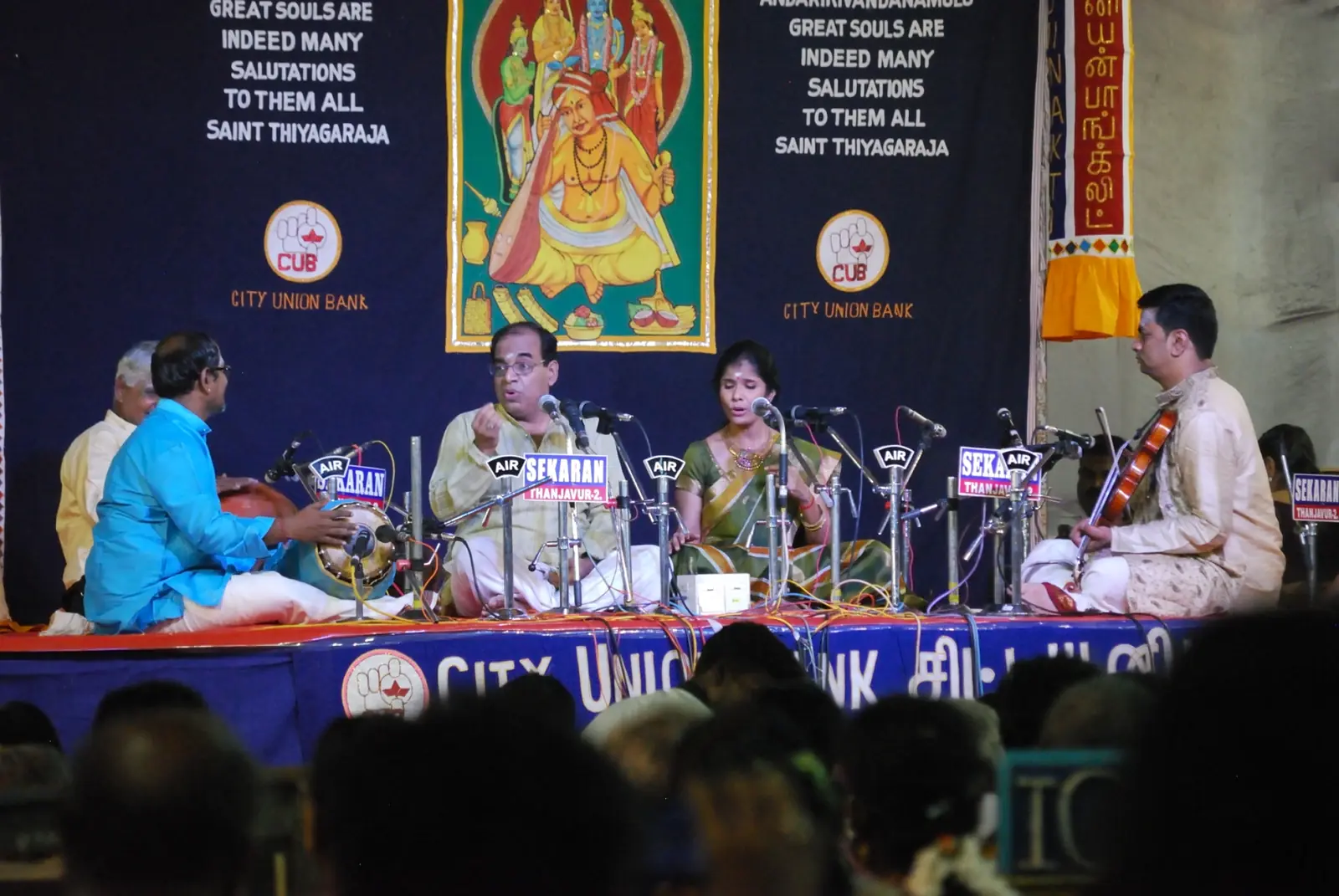
Thyagaraja Aradhana at Thiruvaiyaru
01Tyagaraja, the bhakta of Rama
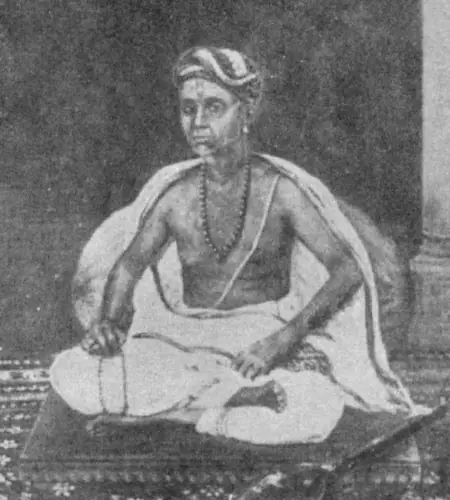
Tyagaraja (1767–1847) lived at Thiruvaiyaru on the Kaveri and sang in Telugu almost only to Shri Rama. He is said to have refused an invitation to the Thanjavur court with the kriti Nidhi chala sukhama, asking whether wealth gives more joy than the presence of Rama. His five Pancharatna kritis in Nata, Gaula, Arabhi, Varali and Sri are sung together each year at his samadhi on Pushya Bahula Panchami, the Thyagaraja Aradhana. The shrine there was raised by the singer Bangalore Nagarathnamma.
02Dikshitar and Syama Sastri
Muthuswami Dikshitar (1775–1835) wrote in Sanskrit, travelled to Kashi in his youth and learned there the veena and the dhrupad manner, which gave his kritis their slow, stately gait. He composed in sets: the Kamalamba Navavarnas for Devi at Tiruvarur, the Navagraha kritis, songs to Tyagaraja Swami of Tiruvarur. Syama Sastri (1762–1827), priest of the Bangaru Kamakshi shrine in Thanjavur, sang to Devi as a child to his mother, in Telugu, and made rare, intricate rhythms his own. His three swarajatis are among the most loved pieces in the repertoire.
03How the songs came down
None of the three wrote notation. Their kritis passed from teacher to pupil: Tyagaraja’s through Walajapet Venkataramana Bhagavatar and the Umayalpuram brothers; Dikshitar’s through his brother’s line, which Subbarama Dikshitar printed with notation in the Sangita Sampradaya Pradarshini in 1904. If you can, be at Thiruvaiyaru in January for the Aradhana, when hundreds of musicians sit on the Kaveri bank and sing the Pancharatnas together.