Cite
MLA
“Veena.” Hindu History, 2026, https://www.hinduhistory.in/kala/veena/. Accessed .
APA
Hindu History. (2026). Veena. Retrieved , from https://www.hinduhistory.in/kala/veena/
What defines it
- 01
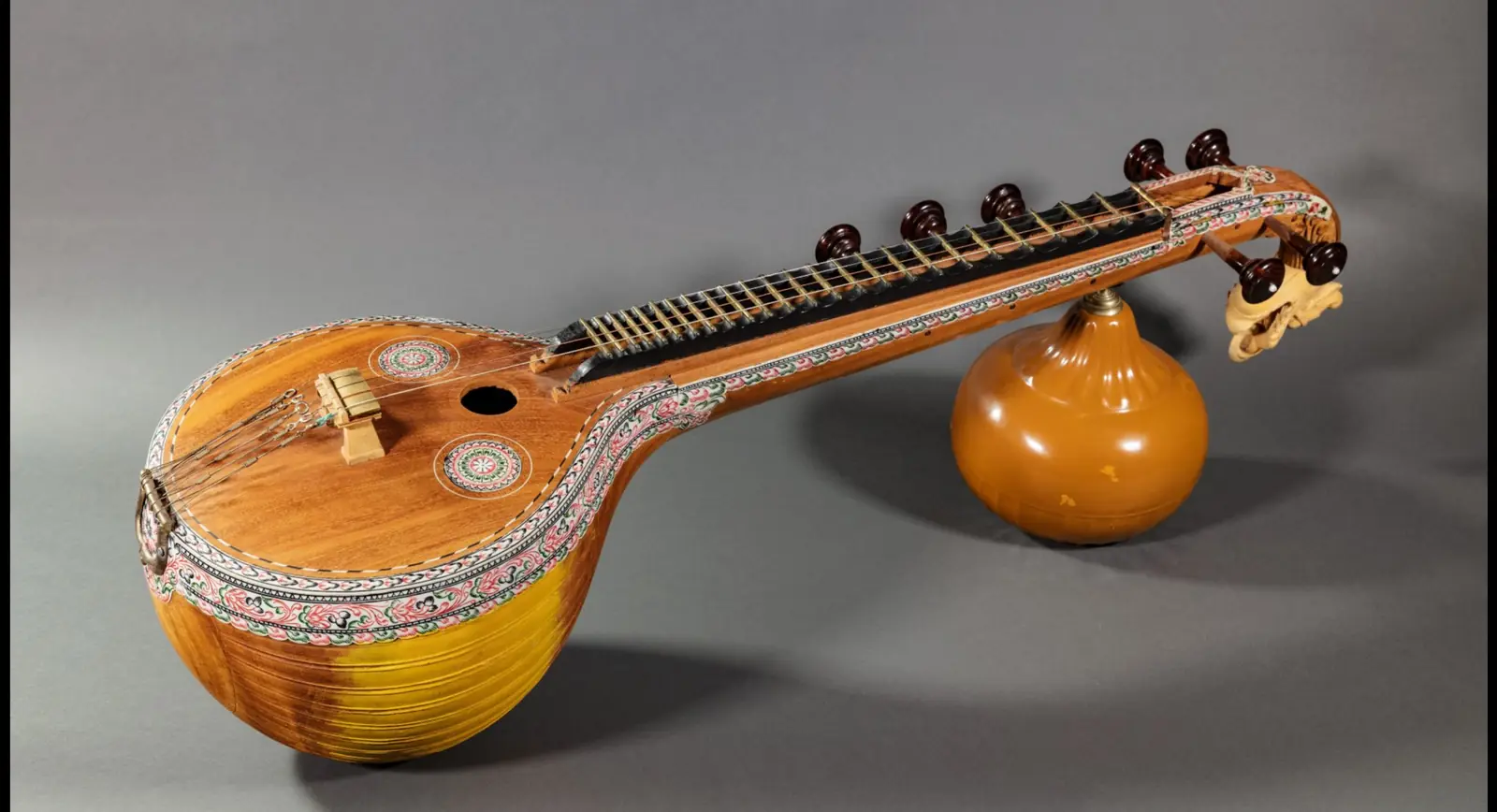
24 fixed frets (Saraswati veena)
- 02
Four main and three drone strings
- 03
Jackwood body, yali-headed neck
- 04
Rudra veena with two gourds
01In the shastras
Vedic ritual texts mention the veena played at the yajna, and Narada is never without his Mahati. The Natya Shastra describes the harp-like vipanchi and chitra veenas of seven and nine strings. Sangita Ratnakara treats the ekatantri, the one-stringed veena, as the finest of all, and the Yajnavalkya Smriti says that one who knows veena playing and the shrutis reaches moksha without effort. Saraswati is shown with the veena on the walls of temples from the Gupta age onward.
02Thanjavur’s instrument
The Saraswati veena of today, with 24 fixed frets on a long neck, four playing strings and three drone strings, and a large sound-box carved from a single block of jackwood, took its shape at Thanjavur; the Nayaka king Raghunatha Nayaka (r. 1600–1634) is credited with fixing its frets, and it is still called the Raghunatha veena. Thanjavur makers still carve it, often with a yali head at the end of the neck. Muthuswami Dikshitar was a veena player, and many of his kritis lie naturally under the fingers.
03Players of the been and the veena
The rudra veena, with two gourds and a tube of bamboo or teak, was the instrument of the dhrupad masters; Zia Mohiuddin Dagar and Asad Ali Khan kept it alive in the 20th century. In the south Veena Dhanammal of Chennai, the Karaikudi brothers, Emani Sankara Sastri and S. Balachander were its great players. A Saraswati veena is placed and worshipped in many homes on Saraswati Puja in Navaratri, whether or not anyone plays it.