Cite
MLA
“Bengal famine of 1943.” Hindu History, 2026, https://www.hinduhistory.in/ghatana/bengal-famine-1943/. Accessed .
APA
Hindu History. (2026). Bengal famine of 1943. Retrieved , from https://www.hinduhistory.in/ghatana/bengal-famine-1943/
01How it came
Japan took Burma in 1942, cutting off the rice that Bengal used to import. Fearing invasion, the British carried out a ‘denial policy’ in coastal Bengal, removing rice stocks and seizing or destroying tens of thousands of country boats on which fishermen and traders lived. A cyclone struck Midnapore in October 1942. War spending drove prices up, and rice was bought up for the army and the cities.
02The streets of Calcutta
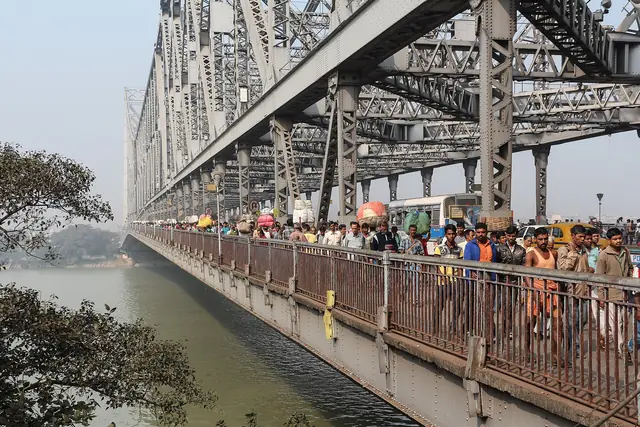
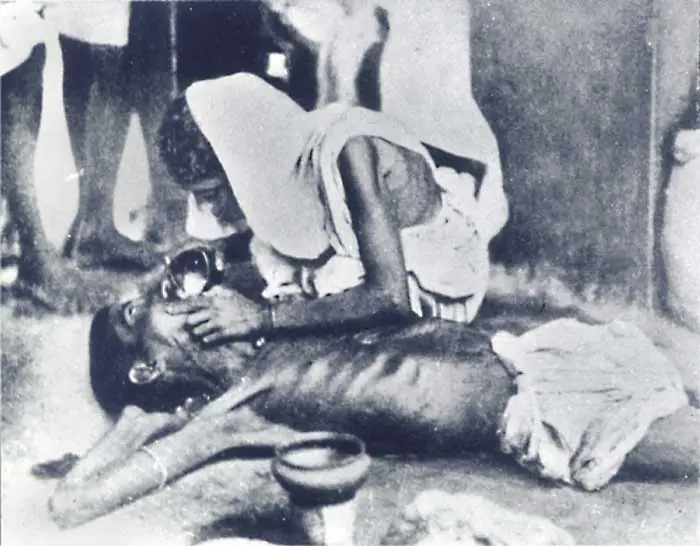
By the middle of 1943 villagers were walking into Calcutta and dying on its pavements. The government did not declare a famine. In August 1943 The Statesman, under its editor Ian Stephens, published photographs of the dying, and the news reached London. Relief kitchens were run by the Ramakrishna Mission, the Marwari Relief Society and others. The army took over relief only in the autumn under the new Viceroy, Lord Wavell.
03The count and the blame
The Famine Inquiry Commission under Sir John Woodhead reported in 1945 that about 15 lakh people had died of famine and disease. Amartya Sen, in Poverty and Famines (1981), put the toll near 30 lakh and showed that Bengal’s food supply in 1943 was not much lower than in earlier years; wages had collapsed against prices. Madhusree Mukerjee’s Churchill’s Secret War (2010), from cabinet papers, showed that the War Cabinet turned down or cut requests to ship grain to India.